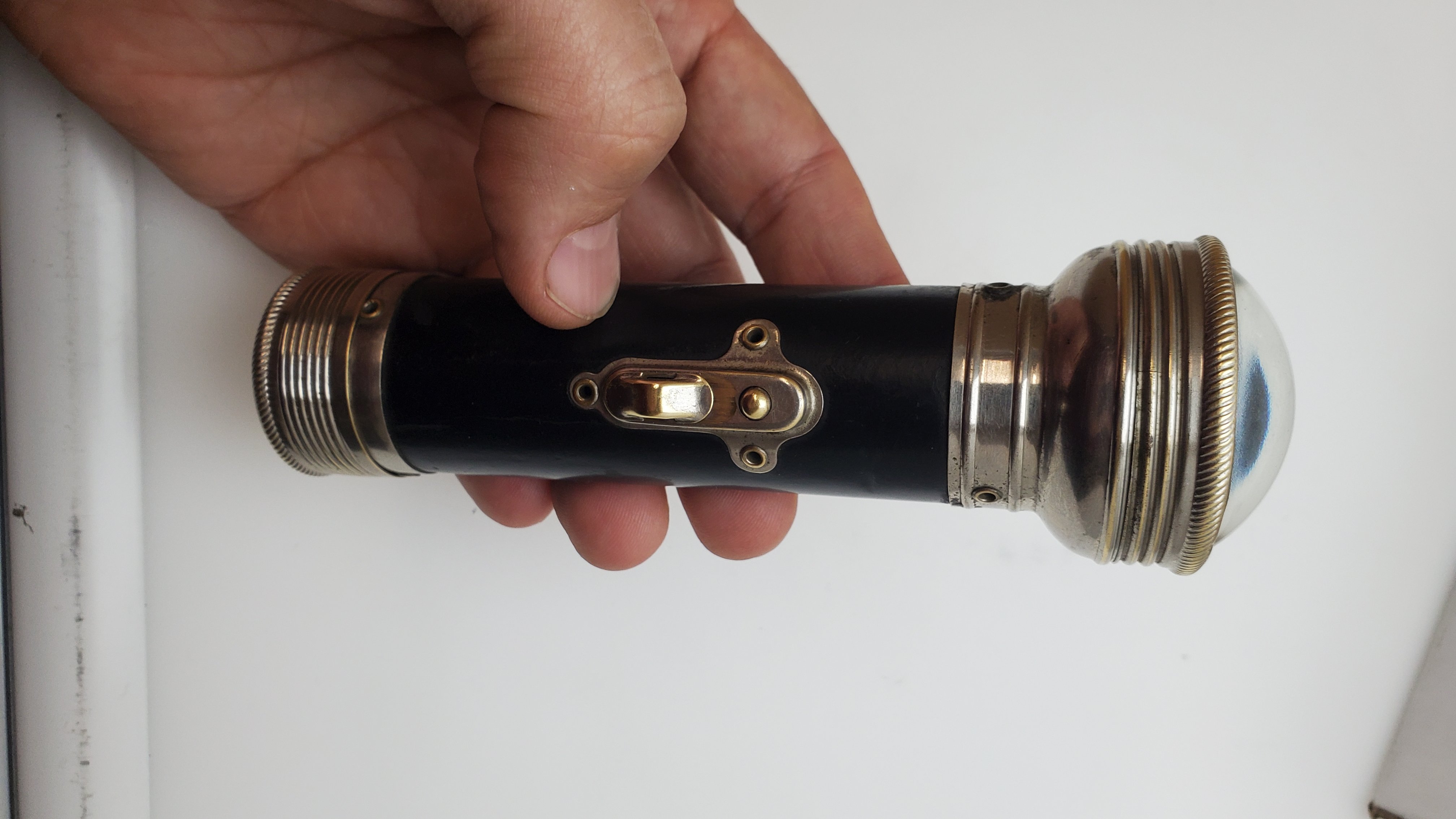
It's unfortunate there isn't more info. out there.


...and just to add a word to that, although I've not seen / touched it, I believe it's likely that it is a category of 'phenolic' materials (of which Bakelite is a member, but is different from this?), just to throw out a word that can be searched for more info. Phenolic materials varied took many different forms and were widely used back in the day. Its insulating properties, among other things, saw them widely used in electronic / electrical applications. It showed up in all sorts of equipment I dealt with. If you run into any brown colored paper-like insulation inside the light, that is likely in the same category.From what I can tell (google?) it's, a natural volcanized rubber fiber, or a pressed paper covered in same. Both were common. Some 'higher end' 'upscaled' items may have used a leather veneer, but that wasn't common. Some binoculars (and other things) of that era used the same material.
Tin was the most commonly used metal, but yes, steel and even stainless* was sometimes used.
*Some stainless steel can be magnetic
Extremely minor possibility that the black material is delrin.From what I can tell (google?) it's, a natural volcanized rubber fiber, or a pressed paper covered in same. Both were common. Some 'higher end' 'upscaled' items may have used a leather veneer, but that wasn't common.
It very well could be bakelite.Extremely minor possibility that the black material is delrin.
Though again, not likely at all. Delrin breaks down after awhile. You don't get sticky residue like modern-day cheap plastics. But it stinks of rotten fish. I'm sticking with Bakelite. Common as dirt back then.

Some were thin brass or thin copper. And some were smooth vulcanized rubber while some were ribbed vulcanized rubber. The parts that conduct electricity were usually copper but not always.From what I can tell (google?) it's, a natural volcanized rubber fiber, or a pressed paper covered in same. Both were common. Some 'higher end' 'upscaled' items may have used a leather veneer, but that wasn't common. Some binoculars (and other things) of that era used the same material.
Tin was the most commonly used metal, but yes, steel and even stainless* was sometimes used.
*Some stainless steel can be magnetic
I forgot about mentioning plating. That's what I get for going down rabbit holes on the web. I end up seeing lots of cool vintage lights and forget why I was looking to begin will. LOLEDIT: I would speculate that the metal housing / body might be nickel plated, perhaps steel(?)

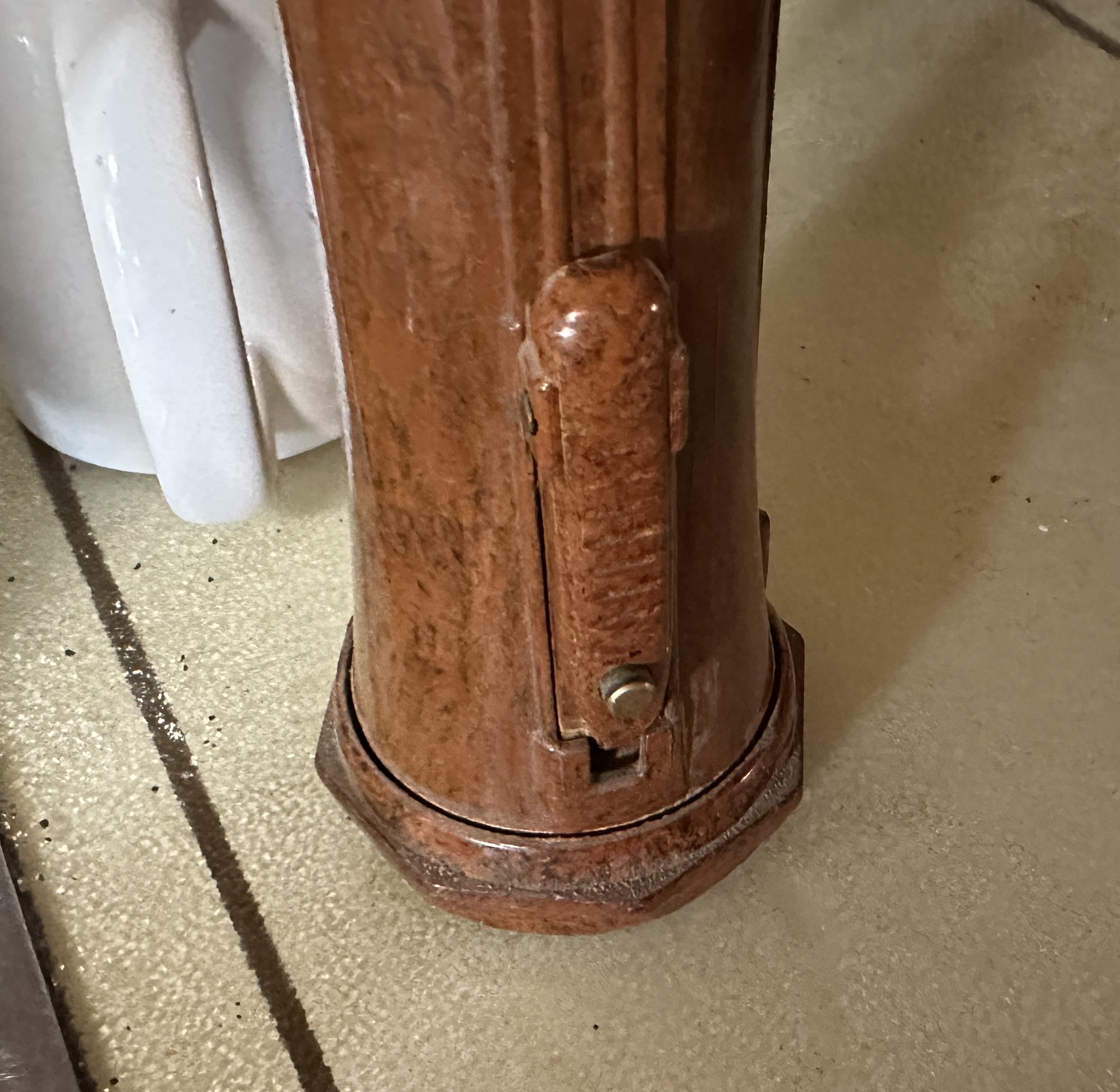
Vulcanite? It's a rubber baked hard as heck from 30'sThe one I have doesn't seem like acetal/delrin. Bakalite sounds reasonable (although that is not the specific word I recall reading) I suspect that the metal components are nickel plated tin. They are not magnetic.
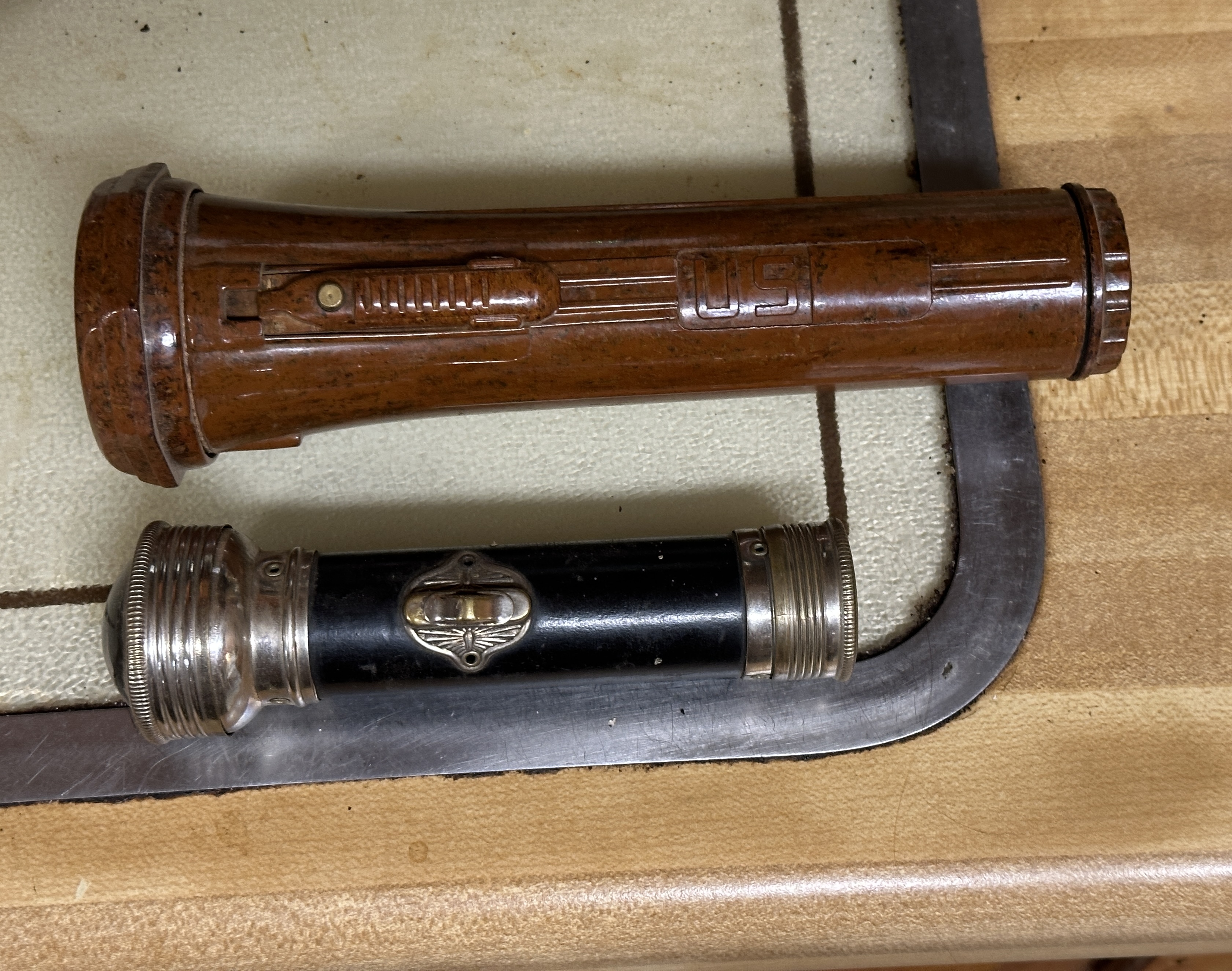

I remember seeing those "house lights" at both Montgomery Ward and Sears when I was a kid. Beautiful restorations, by the way.
Although not very old this vintage looking "house light" (ie generic, sold at hardware stores etc back when) was made in PA in the 80's by Bright Star. It was a gift by Scout24 who lives not far from where it was made.
It's one of my favorite flashlights.

I started restoring these two WW1 military issue Eveready Daylo Soldier Boys about the time I started a flashlight store. They arrived not working. Both work now but are fickle. The project is on hold while I source parts and pursue other avenues.

I turned the enlisted person one with a #222 (left) to turn it into a thrower and a #14 was used in the officer version to use as a room lighter. Idea being enlisted need to see distances and officers need to light the tent with the plans.

A baby Sportsman from circa 1960's. Another favorite, a bedside table light.

Probably the last one I've restored... I forget...maybe not but the store distracts me from restoring old lights lately. A circa 1917 2C nickel plated Ray-o-lite miner light. A bifocal lens made it thrower and a flooder.

A very unique beam

Here it is after.

These 2 old gals await restoration. One is a Ray-o-light light from the late 1910's. The other is a Rayovac 3D once used by the Santa Fe railroad yard workers in the 1920's. Both work after a bit of cleanup, but can use some TLC and a rivet or two.
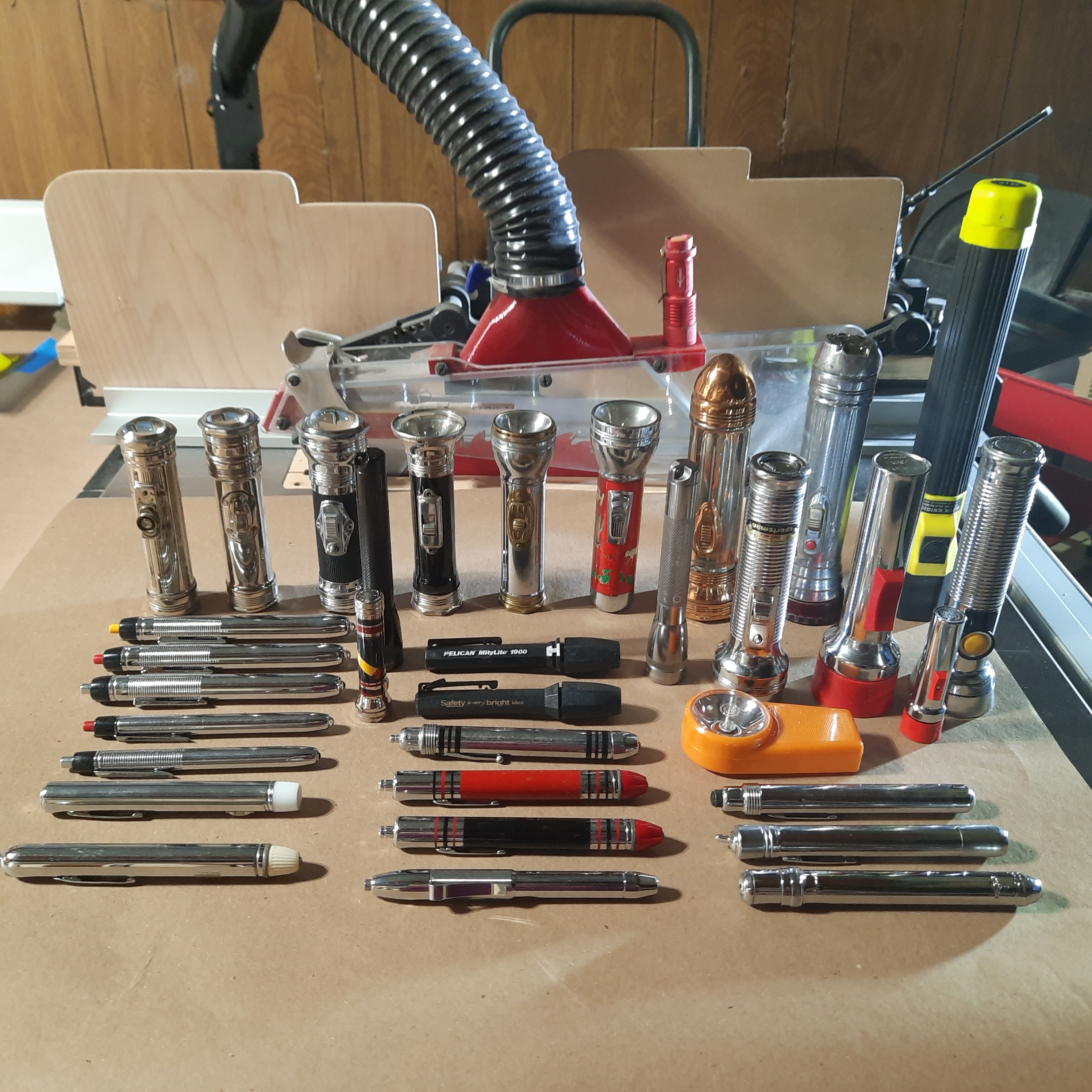
There were some bake-a-lite numbers made back then but I'm pretty sure the one in question is rubber, like KG said 'vulcanite'.
Bakealite was used to make cereal bowls, counter tops and things where a hard plastic would be good. You'd know if it is plastic.
View attachment 73811
- Bottom is a vulcanized rubber Franco with nickel plated tin at both front and rear and a nickel plated brass switch. I don't know that vulcanite was not a brand name hence saying vulcanized rubber to describe it.
Is there supposed to be a picture here too?Left to Right - Eveready Vulcanite Baby Flashlight with Walleye Lens - 2xC Model 2602 c.1914 - Eveready/Union Carbide Baby Captain Chrome 2xC c.1963 - Top-Lite Ford/Chevy 2xD c.1960 - Ranger Chrome 2xD c.1948 - Ray-O-Vac Sportsman 2xD c.1965 - Homart Copper 2xD c.1904 Post em if you got them!! That copper homart looks Newer than 1904 . Fooled me!
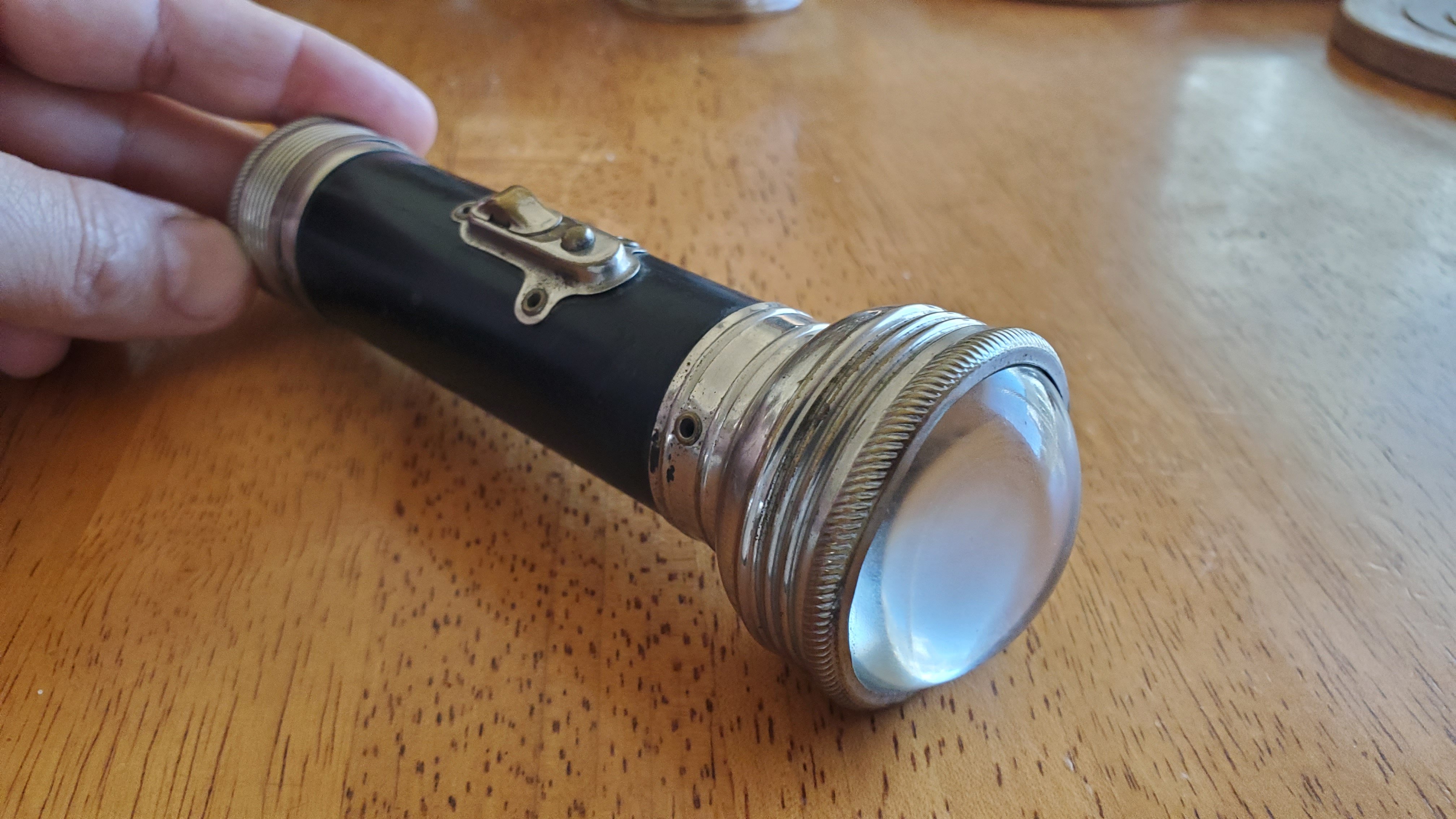
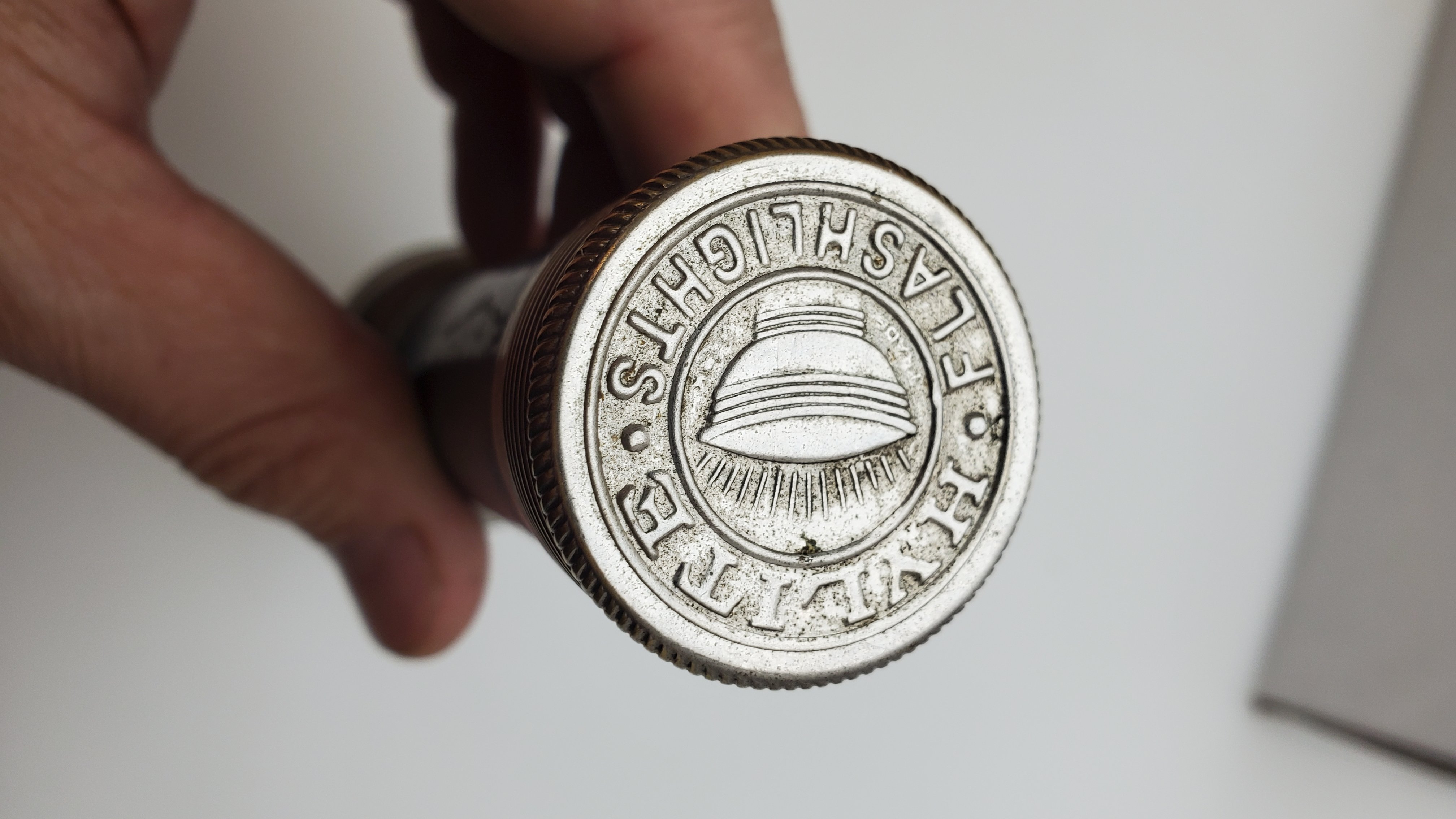
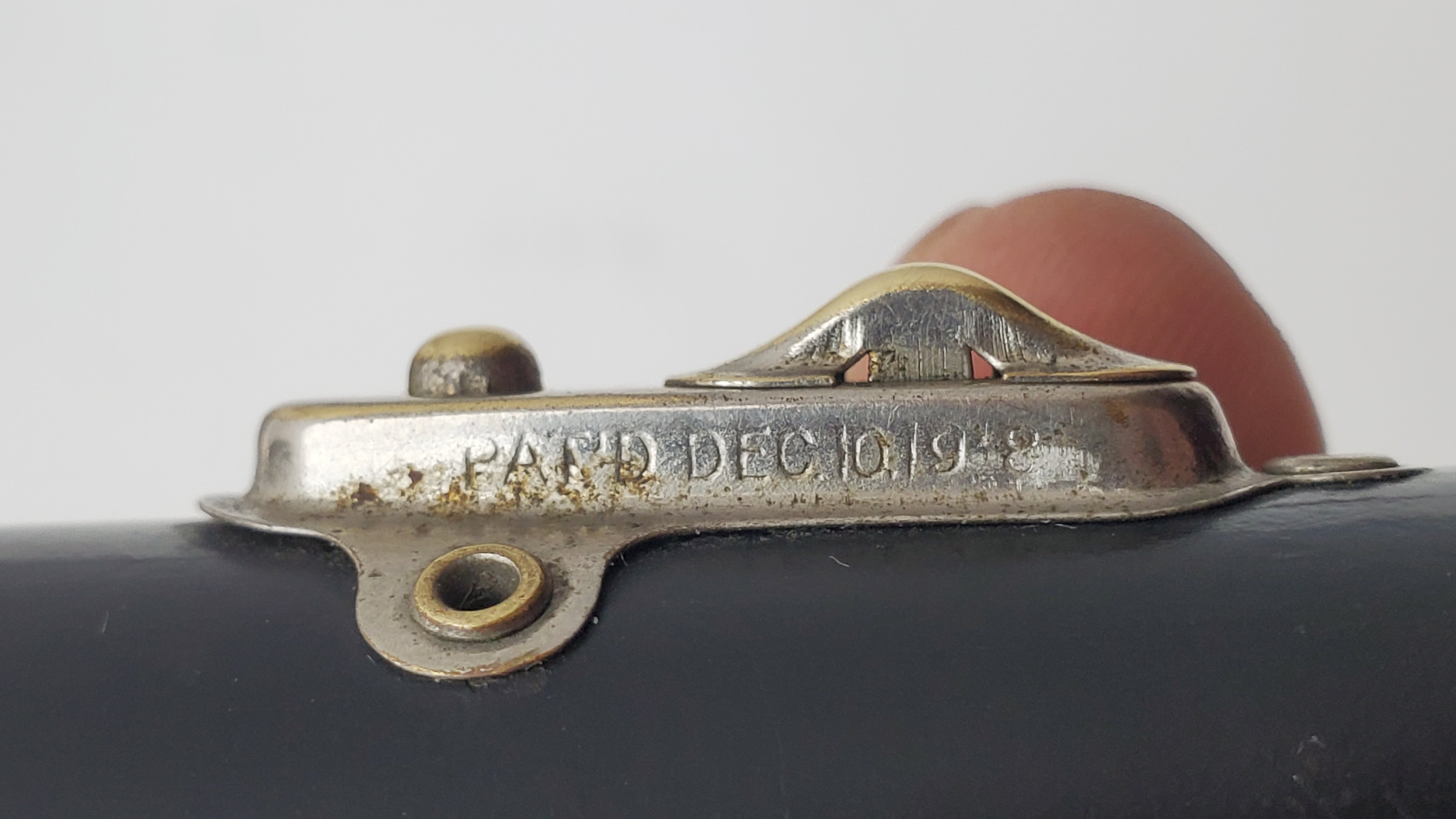

I would surmise that even if they were the original company, most of the people working the lines probably would not be versed in vintage lights...Well so far pursuit of the Origin Story of my flashlight is not going so well. I tried searching the patent in the USPTO data base
USPTO Search Query: flashlight.TI. AND @PD<="19181210"
USPTO: https://ppubs.uspto.gov/pubwebapp/
It did turn up 2 patents. The first of which looked promising, but I don't think its the right one. That patent is from 1915. Which led me to a neat brand Hipwell flashlights, but I still don't think its my light since the patent was Dec 10 1918.
I also called this company https://hyliteledlighting.com/ and they said this old light was NOT their product. I'm wondering if maybe this was made in another country, but no search I've done so far turns up any results.
View attachment 78577View attachment 78578View attachment 78579