Anyone else completely against lights with built in batteries?

Candle Power Forums

Help Support Candle Power:

+

would I knowingly buy a light with a non-replaceable battery,
NEVER

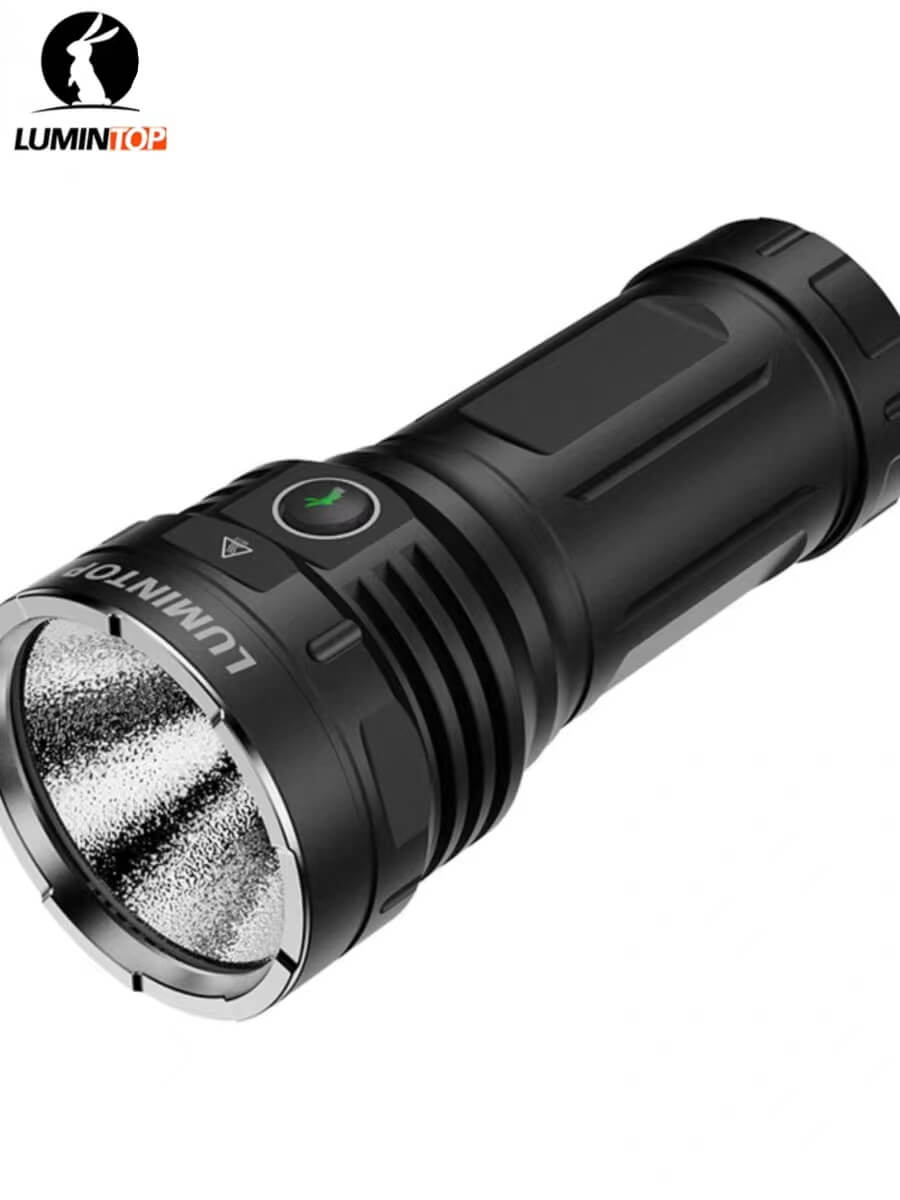
..although I purchased a Lumintop GT4695 (SFP55 emitter)
has a 46950 battery, the battery tube is sealed

that one is ok with me, since there is no other way to charge that battery than Type C anyway.
Type C input on the other side of the light in picture

1780409451786.png

 
Built in or proprietary batteries is a no go for me.
If i cant run it on a bare flat top cell its junk.
If a aa light wont run on nimh aa cells its pure trash. Looking at you energizer.
3aaa lights get a 18650 or 18500 or they hit the garage sale too. Very few of those are worth anything more than handouts where they may not make it back.
 
As long as the battery is easily user replaceable I don't mind. I have a bunch of bike lights with a pair of either 18650 or 21700 cells. Just a little soldering and removing some screws if they stop taking a charge. No big deal.

That said I would prefer that anything with built-in batteries uses LiFePO4. I'll gladly trade the lower energy density for thousands of cycles of life.
I'm going to be the one who cautions against thinking 18650/21700 in Li-ion is future proofing.

Remember when 18650 was obscure and weird? Then it became THE STANDARD.
Until 21700 came around...started as obscure and weird, and is now THE STANDARD.

I mentioned this recently, but electronics people seem to space out that THE STANDARD is essentially - what Li-ion cell is Tesla using in it's car's battery packs?

So, 18650 and 21700 Li-ion cells are only cheap, plentiful, and available because of cars. 18650 has fallen out of favor for EV car manufacturers, so who knows how long those will stay cheap and plentiful.

Ford just opened a joint venture LFP factory in the U.S.

Ironically, LiFePO4 cells STARTED as the hot lithium cell, but then fell out of favor for the higher-energy-density Li-ion cells.
BUT, Li-ion uses rare earth metals, catches fire, has a shorter lifespan, releases toxic gases, and is expensive.

I think we're at the beginning of the reversal of this, where LFP will become the dominant lithium rechargeable. Sure, they have less energy, but they are WAY more economical. No rare metals, WAY cheaper, WAY safer, WAY more robust. Ford scrapped their BILLIONS OF DOLLARS worth of EV production, looked at what the Chinese companies are doing to DOMINATE EVs, and are moving towards that.

Once LFP cells become the norm, Li-ion cells will become niche. That means they'll start getting expensive, assuming anyone even keeps making them.
Due to cell phones, I think lithium polymer pouch cells will stay in production, though.

MEANWHILE, Grandpa AA cell is still alive and kicking, over a century later.
For me, the trick is that we standardized on AA batteries for the household. We always have AAs charged up and ready to go. Also keep energizer Li AAs around for lights that need to work no matter what the temperature conditions are.

I do keep a few AAA s around but not a lot. The just don't store enough power to be interesting.

I hand out headlamps to the family as gifts including the grand kids, and they are already used to charging phones from USB, so it is easy for them to keep them charged up. They are not expensive ones so lights are lost more often than they wear out anyway.


or even the little cheap energizers sold at target and similar.
____________

In a worst case situation, I can directly charge things via USB using just a 100 - 150 watt solar panel and one of these USB charge ports attached. No chargers, batteries or solar charge controller needed.

The AA (and AAA) really are the future-proof cells.

I, too, have mostly settled on AA cells as my primary cells. No matter what happens, AA cells will be around in a few decades. They won the format war DECADES ago.
Been there, done that, before I swapped to 21700 options.

I found AA batteries not lasting long enough when the power is out for hours. And they didn't produce enough light to my liking. And their formfactor making them hard to tail stand or otherwise get the light where I wanted it.

21700 lights and lanterns solved all my problems in that regard. For one, a lot more options at a not too higher price. Then there's the increased runtime, output, and (to me) better formfactor options. I used to have Fenix AA lights spread around the house, but now I have Convoy S21E's, and they have already proved better than the AA solution (and the Convoy 3X21-series is excellent in this regard).

Having a solar backup is interesting, and is something I am looking into. But having such a system on the scale I would like is expensive! Though I am looking at sufficient solar power for running a fridge and freezer (and preferably more) simultaneously. So the battery pack would have to be big. And on that note, back to proprietary battery solutions - not sure how much I trust a LiFePO4 battery (EcoFlow), which is what I am looking at. But that is a discussion for another place.

What to you mean they don't last long enough?


1.2 hours on max, 180 hours on low. x4 AA configuration. 2000 lumens max. 7 lumens low.


1.8 hours on max, 200 hours on low. x6 AA configuration. ~1500 lumens max. 9 lumens low.


7 hours at 200 lumens.
15.5 hours at 100 lumens.
37 hours at 50 lumens.
8 days at 0.7 lumens in red.
x3 AA configuration.


Almost 4 hours of 57 lumens, easy tail standing, from a single AA, and it's not even $17.


1.1 hours at 210 lumens.
5.5 days at 2.6 lumens.
4.5 MONTHS at 0.01 lumens

Gets over 500 lumens from an AA cell.
75 minutes at about 250 lumens.
11.5 hours at 28 lumens.


Then again, if you think the 3x21 form factor is more convenient...I think we're just far too different of people, haha.
I tend to prefer to not need a kickstand for my lights ;)
 
I have a Nitecore EDC that I bought for work. It has a built in battery. I'm not crazy about that, but it will almost certainly be lost, dropped, smashed or just flat worn out before it needs a new pack. For lights that I NEED to work, but don't get used every day, I definitely prefer stand alone cell. But it's hard to beat that flat form factor when your already carrying 3 sets of keys, a radio, a tool belt, etc, etc, etc.
 
Then again, if you think the 3x21 form factor is more convenient...I think we're just far too different of people, haha.
I tend to prefer to not need a kickstand for my lights ;)
Different people, different preferences, my guy. 🙂
And I don't think the 3X21 is more convenient - to me, it is more convenient. Give me 6X21 - no, scratch that, give me 9X21, and I'd be happy. I'd probably still want a 12X21, all in parallel, because that's the kind of crazy runtime I'd like to have in my life.

And I'm not saying the AA, 18650 or 21700 is best for the future either. I'm saying, to me, it is the best option right now. And as far as battery durability goes, I have yet to throw away a battery that wasn't so cheap I should have known better when I bought it.

We have long winters here. Around 6 months of it. That mean little light every day for several months. I like to have flashlights available that can give the impression of normalcy when the sun is gone, should I want it. Because darkness outside already when I'm driving home from work at 15:30 eventually gets really depressive (thank goodness for having discovered the joy of the 519A 1800K).

Max Lumen has never really mattered to me - I want runtime. And don't tell me an AA-light can match a 15000 mAh 21700 configuration. 2x 3X21 can light up a room with the intensity I like when it's just black outside, and for the duration of my stay in the room without dimming. Say, 2x 250+ Lumen for 6 hours. And I won't have to recharge the batteries the next day.

I am also a floody guy, so a narrow, bright hotspot doesn't interest me either. I want enough spread from as few lights as possible to evenly light up a room. And I got different lights for different purposes - the ones I have around the house are not the lights I bring with me when I leave the house.

So I think we'll just have to agree to disagree - and that is fine, because different people, different preferences. And this world would be so boring if everyone wanted the same. 😎

P.s.
Full disclosure, I have a few large AA lights as well. One Streamlight Knucklehead (4x AA) and a pair of Fenix TK45's (8x AA). They have the runtime and brightness I want, but I don't use them anymore because I don't like the cold tint and their low CRI. Much the same as my 12x 18650 Fenix TK75 and TK76.

The 3X21(E), on the other hand, offers the runtime, the CRI, the tint, and the beam pattern I want, even the features, like tailstand and smooth dimming.
So who's to say I only think it's more convenient.
 
Last edited:
Different people, different preferences, my guy. 🙂
And I don't think the 3X21 is more convenient - to me, it is more convenient. Give me 6X21 - no, scratch that, give me 9X21, and I'd be happy. I'd probably still want a 12X21, all in parallel, because that's the kind of crazy runtime I'd like to have in my life.

And I'm not saying the AA, 18650 or 21700 is best for the future either. I'm saying, to me, it is the best option right now. And as far as battery durability goes, I have yet to throw away a battery that wasn't so cheap I should have known better when I bought it.

We have long winters here. Around 6 months of it. That mean little light every day for several months. I like to have flashlights available that can give the impression of normalcy when the sun is gone, should I want it. Because darkness outside already when I'm driving home from work at 15:30 eventually gets really depressive (thank goodness for having discovered the joy of the 519A 1800K).

Max Lumen has never really mattered to me - I want runtime. And don't tell me an AA-light can match a 15000 mAh 21700 configuration. 2x 3X21 can light up a room with the intensity I like when it's just black outside, and for the duration of my stay in the room without dimming. Say, 2x 250+ Lumen for 6 hours. And I won't have to recharge the batteries the next day.

I am also a floody guy, so a narrow, bright hotspot doesn't interest me either. I want enough spread from as few lights as possible to evenly light up a room. And I got different lights for different purposes - the ones I have around the house are not the lights I bring with me when I leave the house.

So I think we'll just have to agree to disagree - and that is fine, because different people, different preferences. And this world would be so boring if everyone wanted the same. 😎
Indeed. Different strokes for different folks.

I'm in the upper Midwest, so I hear you on the long winters. Though, as hilarious as geography is, I'm like somewhere in the Pyrenees by latitude, but with winters probably colder than yours (since I have no ocean currents nearby). We get to about just below -30C on the bad days, and 60-100kph winds depending on how much mother nature wants to punish us.

Incidentally, I prefer very warm CCT, low level lights all winter. I only use bright ones at night in summer, haha.
With there being less sun in winter, I often don't need much light, meanwhile, because the US does stupid Daylight Saving Time, sunset is something like past 20:00-21:00 around the summer solstice. -_-
I like the coziness of winter. I absolutely hate heat and summer, haha. I sunburn too easy, so I avoid the midday sun, so I think that's also why really bright light generally bothers me.

I'm built for that overcast, oceanic NW Europe climate where it's always cold and rainy, haha. Sunshine makes me sad and depressed. I am happy and energetic when it's overcast and rainy, much to the chagrin of many people around me, haha.
 
As an Amazon Associate we earn from qualifying purchases. Product prices and availability are accurate as of the date/time indicated and are subject to change.
Indeed. Different strokes for different folks.
Doesn't sound like we're that different after all. You're on the ~45th parallel by the sound of it. I'm on roughly the 65th.
Enjoying warm CCTs as well, check. Cold weather, check (-41,5°C is the coldest I've experienced, by the river further down the valley). -20°C is more the local norm. Not so much wind, but all the more snow.

Norway does the stupid Daylight Saving Time too, so another check there. I hate the heat as well, that's a definite check! Much over 20°C in the sun, and I'm done for. Over 30°C, and you'll find me in the basement, surrounded by cool brick walls with a floor fan next to me. Or trying to cool down by getting into the freezer (I actually did that once, no joke). After only 15-20 minutes in the sun (unlotioned and trying to enjoy it), my whole body itches, so that's enough for me that day.

And I do believe we agree that built-in and / or proprietary batteries are stupid. So we're sharing much of the same.
 
Last edited:
Just today picked up a light for my collection with a non-replaceable battery. It's from the '80s and is now a complete paperweight since it's riveted closed. Not a fan of this kind of construction, from any era.
 
I'm going to be the one who cautions against thinking 18650/21700 in Li-ion is future proofing.

Remember when 18650 was obscure and weird? Then it became THE STANDARD.
Until 21700 came around...started as obscure and weird, and is now THE STANDARD.
In the context of this thread, these are still standard size cells compared to many other non-user-replaceable cells. While they may be more difficult to obtain at some point, they'll be infinitely easier to acquire than some random pouch style battery commonly used in sealed devices. Try getting batteries for older cell phones. In general you can't these days.
 
You can not compare cell phone batteries, you can find any size pouch battery relatively easy, with cell phones it is more than just a pouch, it is specialized contact position. as well as a plastic housing in many cases, either full, or skeleton.
 
You can not compare cell phone batteries, you can find any size pouch battery relatively easy, with cell phones it is more than just a pouch, it is specialized contact position. as well as a plastic housing in many cases, either full, or skeleton.
All the more reason to dislike the whole phone market. With the old phones (and I am still on a Nokia 3720), you could at least replace the battery yourself with ease. Got a coin or a flathead screwdriver? That's all I need to replace the battery in mine.

And even if the battery was replaceable in all new phones, no way would there ever be a standard for them. Much like the powertool brands. Anything to lock a user to their own ecosystem and milk them for money. At least most powertool batteries are transferrable to new tools, except when there's a whole shift in the design, which fortunately don't happen so often.

And at least the powertools manufacturers usually use standard cells - 18650 or 21700 - in their battery packs, so while not recommended, someone knowledgable could swap out faulty cells in a battery pack. Good luck doing that with a phone battery.

Good thing this thread is about flashlights, because I strongly dislike "modern" phones for this reason. Because with phones, just like built-in, proprietary flashlight batteries, once the battery no holder holds a charge, it's effectively waste. Exactly according to the manufacturer's plan - and they hope you will just buy a new product from them.
 
I pass on a flashlight with a built-in battery. A proprietary maybe as long as I can still buy them but generally a no go. There are plenty of replaceable battery flashlight options. My Olight SR95s-UT is my exception flashlight. At the time I bought it I figured I could always buy a new battery pack. I was wrong and Olight lost a customer.
 
All the more reason to dislike the whole phone market. With the old phones (and I am still on a Nokia 3720), you could at least replace the battery yourself with ease. Got a coin or a flathead screwdriver? That's all I need to replace the battery in mine.

And even if the battery was replaceable in all new phones, no way would there ever be a standard for them. Much like the powertool brands. Anything to lock a user to their own ecosystem and milk them for money. At least most powertool batteries are transferrable to new tools, except when there's a whole shift in the design, which fortunately don't happen so often.

And at least the powertools manufacturers usually use standard cells - 18650 or 21700 - in their battery packs, so while not recommended, someone knowledgable could swap out faulty cells in a battery pack. Good luck doing that with a phone battery.

Good thing this thread is about flashlights, because I strongly dislike "modern" phones for this reason. Because with phones, just like built-in, proprietary flashlight batteries, once the battery no holder holds a charge, it's effectively waste. Exactly according to the manufacturer's plan - and they hope you will just buy a new product from them.
The things with phones, they themselves get outdated and replaced before batteries fail, it is not like old nokias, nowadays smart phones need constant updates, and newer apps require more and more memory/ processing power. modern sim cards which are slowly phased out themselves in favor of e-sim, will not even work with old dumb phones,
 
Definitely not my favorite thing, with lighting. The longevity of Li-Ion battery tech in general demands easy ability to replace when they eventually become sub-par. In the case of built-in, of course, sadly that requires wastefully ditching the whole platform.

Aside from a couple of cycling lights that have built-in, non-replaceable Li-Ion cells, I don't purchase flashlights without the ability to swap-in my own battery cells.
 
No built-in batteries for me either. I've decided to standardize on lights that accept AA or AAA Eneloops. If they won't work, pass.....thanks for playing.
 
Doesn't sound like we're that different after all. You're on the ~45th parallel by the sound of it. I'm on roughly the 65th.
Enjoying warm CCTs as well, check. Cold weather, check (-41,5°C is the coldest I've experienced, by the river further down the valley). -20°C is more the local norm. Not so much wind, but all the more snow.

Norway does the stupid Daylight Saving Time too, so another check there. I hate the heat as well, that's a definite check! Much over 20°C in the sun, and I'm done for. Over 30°C, and you'll find me in the basement, surrounded by cool brick walls with a floor fan next to me. Or trying to cool down by getting into the freezer (I actually did that once, no joke). After only 15-20 minutes in the sun (unlotioned and trying to enjoy it), my body itches, so that's enough for me that day.

And I do believe we agree that built-in and / proprietary batteries are stupid. So we're sharing much of the same.
And we hate modern cell phones!

Norway is a place I always thought sounded nice. The language isn't too far from German, so I feel like I could pick it up.
But, I'm not a fish person, haha. I think that'd be my downfall.
In the context of this thread, these are still standard size cells compared to many other non-user-replaceable cells. While they may be more difficult to obtain at some point, they'll be infinitely easier to acquire than some random pouch style battery commonly used in sealed devices. Try getting batteries for older cell phones. In general you can't these days.
Yes and no. I learned within maybe the last year or so, pouch cells are fairly standardized. They do the whole number code thing like round cells, but it's all for the cubic dimensions. There's quite a non-zero number of places you can buy pouch cells from.
You can not compare cell phone batteries, you can find any size pouch battery relatively easy, with cell phones it is more than just a pouch, it is specialized contact position. as well as a plastic housing in many cases, either full, or skeleton.
Yes and no for this, too. It depends on the company and brand.

Many times, the way the pouch cells are installed, you CAN swap them (maybe you need to (de)solder the leads at most), and then the electronics are on the board, and the phone frame protects the cell.

Motorola (Lenovo) got behind Right to Repair, and has a site of guides, and links to parts:

If you poke around, you can see how a lot of their batteries are set up this way; the phone itself is the case, and the leads go to the board where all the important stuff is.

I don't use Apple products, so I'm sure they make it miserable and proprietary on purpose, haha.

Definitely not my favorite thing, with lighting. The longevity of Li-Ion battery tech in general demands easy ability to replace when they eventually become sub-par. In the case of built-in, of course, sadly that requires wastefully ditching the whole platform.

Aside from a couple of cycling lights that have built-in, non-replaceable Li-Ion cells, I don't purchase flashlights without the ability to swap-in my own battery cells.
I HIGHLY recommend the Sofirn BS01 bike light. It's got the German-style cutoff reflector (so you don't blind oncoming traffic), it uses a standardized Garmin mount, AND you can actually unscrew the back plate to swap the cell down the road.
It's also pretty cheap (they can be found on AliExpress during sales for $20-25), and has good performance. I have a much more pricey Busch & Mueller light that runs on 4xAA cells that has maybe a neater beam, but the Sofirn is way cheaper, still being made, and has that replaceable cell!
There's a "smart" mode on it, so it just automatically powers on when there is movement. That's actually very cool for a bike, cause you can just leave it on all the time. It can also be used as a battery bank for other USB devices.

I got one for cheap, liked it so much, I got one as a present for another cyclist in the family. You'd never guess it's $25 or less.
 
All the more reason to dislike the whole phone market. With the old phones (and I am still on a Nokia 3720), you could at least replace the battery yourself with ease. Got a coin or a flathead screwdriver? That's all I need to replace the battery in mine.
Actually, the Nokia BL-5C has taken on a second life and is used in many radios these days. My dad has a Grundig which uses one and I have a shortwave radio which also uses one.
The things with phones, they themselves get outdated and replaced before batteries fail, it is not like old nokias, nowadays smart phones need constant updates, and newer apps require more and more memory/ processing power. modern sim cards which are slowly phased out themselves in favor of e-sim, will not even work with old dumb phones,
I'm still using a 7 year old Samsung S10+, and hope to continue to do so. I've had to replace the battery once in it so far. I can't find a phone which has the same features, such as the microSD card slot and headphone jack, and I use both every week. I also have it doing all sorts of things Samsung/Google never intended, but works great for what I use it for. All sorts of accessories connected to it. Keyboards, remotes, sensors, lights, etc. I even have a TiVO remote connected to it, which gets used when it's in the airplane, car, or venues. HUGE improvement over the typical Android Auto interface and controls. Being able to just pop it off my belt clip without having to go fishing around in my bag for a USB dongles and external USB drives is nice. It's been connected to some rather unusual audio systems over the years. Everything from Boeings to large-format touring systems, and everything in-between. I was actually doing some audio mastering for the wedding on it while at the dealership waiting for an oil change today. Just the phone, Sony HDR-7506 headphones, and a keyboard.
 
I hate the heat as well, that's a definite check! Much over 20°C in the sun, and I'm done for. Over 30°C, and you'll find me in the basement, surrounded by cool brick walls with a floor fan next to me. Or trying to cool down by getting into the freezer (I actually did that once, no joke). After only 15-20 minutes in the sun (unlotioned and trying to enjoy it), my whole body itches, so that's enough for me that day.
Same here. I never liked warm weather from the time I was a kid. Now that summer's starting I'm in hibernation counting the days until fall.
And I do believe we agree that built-in and / or proprietary batteries are stupid. So we're sharing much of the same.
Built-in batteries are OK in my book if they're a readily available form factor and easily user replaceable. Propriety and/or non-user replaceable batteries are a non-starter for me.
 
I'm going to be the one who cautions against thinking 18650/21700 in Li-ion is future proofing.

Remember when 18650 was obscure and weird? Then it became THE STANDARD.
Until 21700 came around...started as obscure and weird, and is now THE STANDARD.

I mentioned this recently, but electronics people seem to space out that THE STANDARD is essentially - what Li-ion cell is Tesla using in it's car's battery packs?

So, 18650 and 21700 Li-ion cells are only cheap, plentiful, and available because of cars. 18650 has fallen out of favor for EV car manufacturers, so who knows how long those will stay cheap and plentiful.
True but there are lots of devices now that use both cells. While they're not quite as universal as AAs I don't think they're going anywhere anytime soon.
Ford just opened a joint venture LFP factory in the U.S.

Ironically, LiFePO4 cells STARTED as the hot lithium cell, but then fell out of favor for the higher-energy-density Li-ion cells.
BUT, Li-ion uses rare earth metals, catches fire, has a shorter lifespan, releases toxic gases, and is expensive.

I think we're at the beginning of the reversal of this, where LFP will become the dominant lithium rechargeable. Sure, they have less energy, but they are WAY more economical. No rare metals, WAY cheaper, WAY safer, WAY more robust. Ford scrapped their BILLIONS OF DOLLARS worth of EV production, looked at what the Chinese companies are doing to DOMINATE EVs, and are moving towards that.

Once LFP cells become the norm, Li-ion cells will become niche. That means they'll start getting expensive, assuming anyone even keeps making them.
Due to cell phones, I think lithium polymer pouch cells will stay in production, though.
I agree 100% with this. Other than lower energy density LFP checks all the boxes-longer cycle life, longer calendar life, no risk of fire or explosion, less costly, etc. LFP is also now closing the energy density gap. The latest cells from CATL are something like 230 Wh/kg. When built into an EV battery pack the energy density matches Li-ion because you don't need a lot of added weight simply to keep the cells from going boom.

Sodium-ion is also starting to come into its own. It promises to be even less costly than LFP, perhaps only $25 to $30 per kW-hr.

As for China, this is a good read:

 
I have old samsungs that still work, they do have removable batteries, and micro sd slots, my parents gave them to my kids to play, they get new phones for free every time they sign new contract, every 2-3 years. those phones can probably still work on the network, but my kids use it to watch you tube, go online, take photos and call via messenger apps, but compared to new phones my parents got that replace those, they are slow, camera resolution is low. my parents do not really care for removable battery, cuz they get it replaced before it noticeably degrades, nor they care about sd cards, new phones have plenty of memory.
Yes, old phones will still work, but newer ones will work a lot better, and considering you get them for almost free, with new contract, I see no reason not to upgrade.


Imo, removable battery today is not relevant with phones, unless you want to be able to go dark, new phones will not shut off completely even if you turn them off, they will still broadcast your location and god knows what else. But if that is not a consearn, removable battery does not have many advantages.

As for lights it really depends, if we talking about small keychain lights, then there is no other choice, sure there are keychain lights running on coin cells, but they are much weaker than small lights with built in cells, Large lights with build in batteries are not such a problem either, they are usually big enough to last at least several hours on reasonable brightness, and they are not hard to replace, I have replaced cells in old P7 light that had a propriatary battery pack with switch build into them, they had 3x18650, two packs crapped out pretty quick, when I opened i reralized why, crappy cells from unknown manufacturer, I replaced them with panasonnics, and they still work, a decade later,that light are not used a lot. the guy who has it does not really care about latest most efficient leds, that light does its job just fine today as it did 10 years ago.

someone was actually selling exact light on blf years ago, (second p7 light) but theirs had a short and long battery, ( pretty sure bigger one had 6x 18650) the one my friend has only has a short battery.
 
Last edited:
Back
Top