As long as the battery is easily user replaceable I don't mind. I have a bunch of bike lights with a pair of either 18650 or 21700 cells. Just a little soldering and removing some screws if they stop taking a charge. No big deal.
That said I would prefer that anything with built-in batteries uses LiFePO4. I'll gladly trade the lower energy density for thousands of cycles of life.
I'm going to be the one who cautions against thinking 18650/21700 in Li-ion is future proofing.
Remember when 18650 was obscure and weird? Then it became THE STANDARD.
Until 21700 came around...started as obscure and weird, and is now THE STANDARD.
I mentioned this recently, but electronics people seem to space out that THE STANDARD is essentially - what Li-ion cell is Tesla using in it's car's battery packs?
So, 18650 and 21700 Li-ion cells are only cheap, plentiful, and available because of cars. 18650 has fallen out of favor for EV car manufacturers, so who knows how long those will stay cheap and plentiful.
Ford just opened a joint venture LFP factory in the U.S.
Ironically, LiFePO4 cells STARTED as the hot lithium cell, but then fell out of favor for the higher-energy-density Li-ion cells.
BUT, Li-ion uses rare earth metals, catches fire, has a shorter lifespan, releases toxic gases, and is expensive.
I think we're at the beginning of the reversal of this, where LFP will become the dominant lithium rechargeable. Sure, they have less energy, but they are WAY more economical. No rare metals, WAY cheaper, WAY safer, WAY more robust. Ford scrapped their BILLIONS OF DOLLARS worth of EV production, looked at what the Chinese companies are doing to DOMINATE EVs, and are moving towards that.
Once LFP cells become the norm, Li-ion cells will become niche. That means they'll start getting expensive, assuming anyone even keeps making them.
Due to cell phones, I think lithium polymer pouch cells will stay in production, though.
MEANWHILE, Grandpa AA cell is still alive and kicking, over a century later.
For me, the trick is that we standardized on AA batteries for the household. We always have AAs charged up and ready to go. Also keep energizer Li AAs around for lights that need to work no matter what the temperature conditions are.
I do keep a few AAA s around but not a lot. The just don't store enough power to be interesting.
I hand out headlamps to the family as gifts including the grand kids, and they are already used to charging phones from USB, so it is easy for them to keep them charged up. They are not expensive ones so lights are lost more often than they wear out anyway.
or even the little cheap energizers sold at target and similar.
____________
In a worst case situation, I can directly charge things via USB using just a 100 - 150 watt solar panel and one of these USB charge ports attached. No chargers, batteries or solar charge controller needed.
The AA (and AAA) really are the future-proof cells.
I, too, have mostly settled on AA cells as my primary cells. No matter what happens, AA cells will be around in a few decades. They won the format war DECADES ago.
Been there, done that, before I swapped to 21700 options.
I found AA batteries not lasting long enough when the power is out for hours. And they didn't produce enough light to my liking. And their formfactor making them hard to tail stand or otherwise get the light where I wanted it.
21700 lights and lanterns solved all my problems in that regard. For one, a lot more options at a not too higher price. Then there's the increased runtime, output, and (to me) better formfactor options. I used to have Fenix AA lights spread around the house, but now I have Convoy S21E's, and they have already proved better than the AA solution (and the Convoy 3X21-series is excellent in this regard).
Having a solar backup is interesting, and is something I am looking into. But having such a system on the scale I would like is expensive! Though I am looking at sufficient solar power for running a fridge and freezer (and preferably more) simultaneously. So the battery pack would have to be big. And on that note, back to proprietary battery solutions - not sure how much I trust a LiFePO4 battery (EcoFlow), which is what I am looking at. But that is a discussion for another place.
What to you mean they don't last long enough?

www.eagtac.com
1.2 hours on max, 180 hours on low. x4 AA configuration. 2000 lumens max. 7 lumens low.
www.eagtac.com
1.8 hours on max, 200 hours on low. x6 AA configuration. ~1500 lumens max. 9 lumens low.
7 hours at 200 lumens.
15.5 hours at 100 lumens.
37 hours at 50 lumens.
8 days at 0.7 lumens in red.
x3 AA configuration.
Convoy T3 blue AA 14500 flashlight

convoylight.com
Almost 4 hours of 57 lumens, easy tail standing, from a single AA, and it's not even $17.
1.1 hours at 210 lumens.
5.5 days at 2.6 lumens.
4.5 MONTHS at 0.01 lumens
<p><strong><span style="font-size: medium;">Metal button is glued by deault, if you prefer not to glue it, please send us a request.</span></strong></p> <p><strong><span style="font-size: medium;">NTG35 LEDs are recommended for good tint, beam pattern, h

intl-outdoor.com
Gets over 500 lumens from an AA cell.
75 minutes at about 250 lumens.
11.5 hours at 28 lumens.
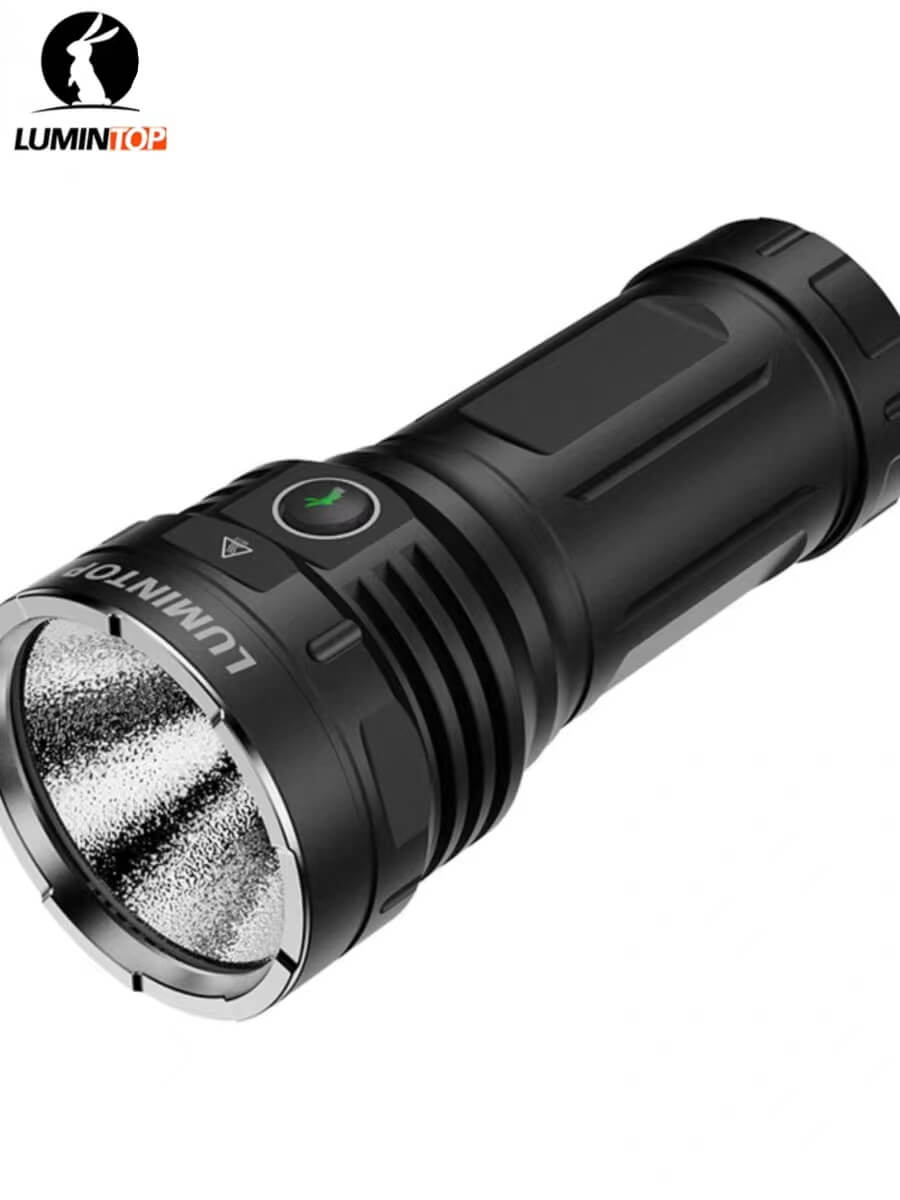
Then again, if you think the 3x21 form factor is more convenient...I think we're just far too different of people, haha.
I tend to prefer to not need a kickstand for my lights ;)




![Pampers Sensitive Baby Wipes, Clinically Proven, Fragrance Free, Unscented, Water Based, Hypoallergenic, Multi-Use, Hand Wipes 336 Wipes Total (6X Flip-Top Packs) [Packaging May Vary]](https://m.media-amazon.com/images/I/41KLBHu9CAL._SL500_.jpg)