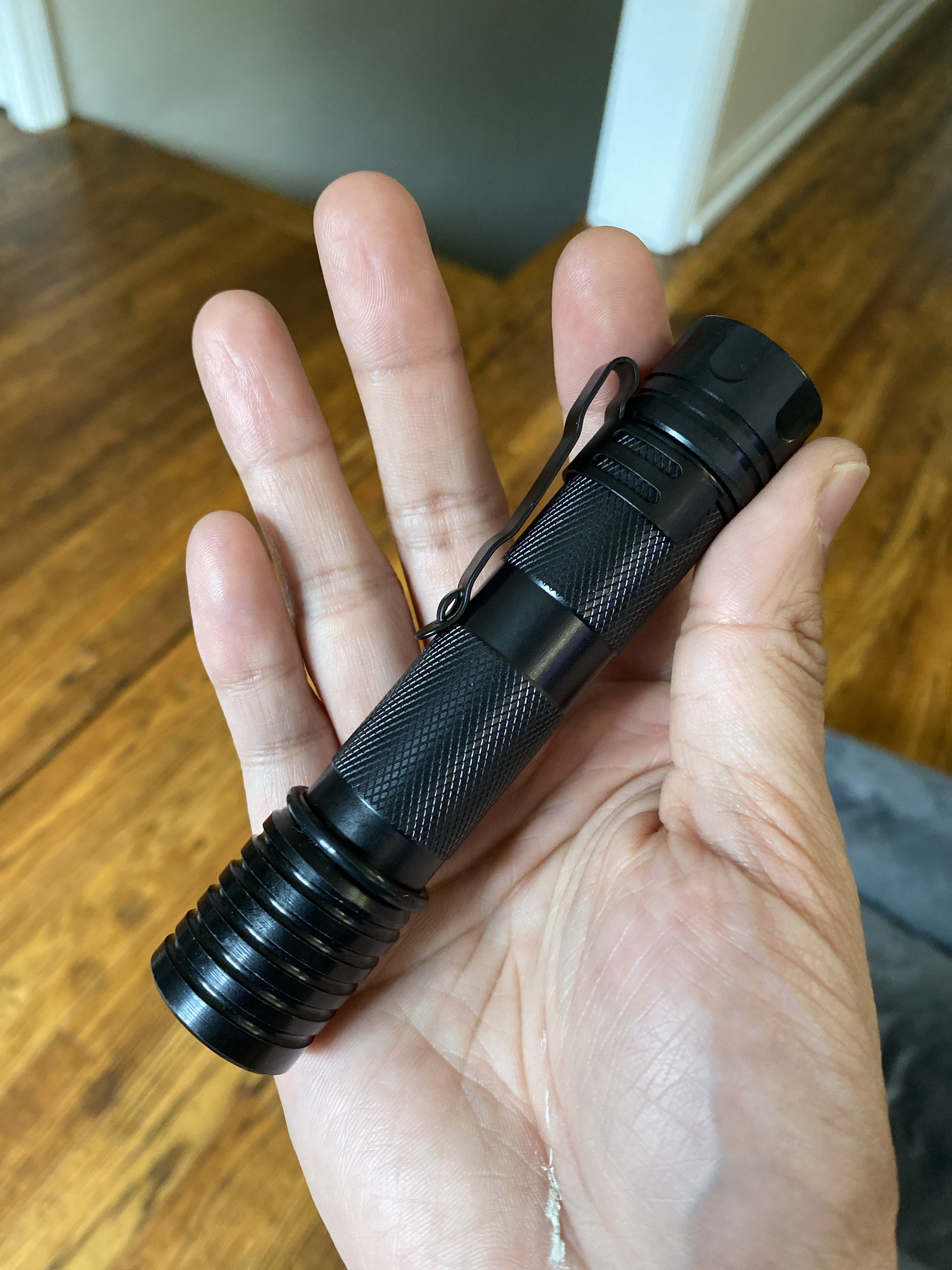
Peak aficionados, show and tell!

Candle Power Forums

Help Support Candle Power:

Okay, I finally took the plunge, ordered a Logan 17500 and the Delrin adapters. In Alu with the high-CRI emitter and narrow lens. I’m a sucker for multi-fuel lights.
Congrats! Personally, I love the 17500 as it feels perfect in the hand. Also, good choice on the Al as it will cut on the weight of the SS (SS still VERY nice).
Two questions for the assembled Peak sages:
1) I ordered the hi-CRI, but I would like to know more about which emitter I am getting. Is that the Nichia 219-B? Is there a way to specify a particular emitter if I want one, or a particular temperature for the 219-B? I didn’t see it on the form.
You can message Robyn directly using the email on the website and ask. I believe she still has some sw40 219b left. You can also ship emitters to her directly if you want to go that route (3.5mm x 3.5mm size LEDs only I’m pretty sure..519a, 219b, FFL351A, SST-20, etc.).

2) The main complaint I see about these lights is about the QTC pills. Is there a way to order spares of these pills? I didn’t not see anything on the website, but I’d love to be able to order the light plus maybe two extra pills for when the first one wears out. Possible?
So I’ve asked Robyn when I first ordered about a back-up QTC pill but didn’t get a response. You can surely ask about it but from my understanding they are good for up to 1,000,000 compressions. Take that for what you will. Personally, I’d just get a backup body with QTC installed and one without for single high output as a lot of people prefer. I prefer QTC as I use mine a lot in the evening and want the output variability, even if it can be finicky but I like that about it. Either way you’ll have to reach out. Enjoy the light and keep us posted!
 
Last edited:
Good news: My Lumens Factory spacers came in!

Bad news: They're too thick to use in my S.S. Logan with the pressure switch, and Prometheus Ti clip attached. To be clear, not too wide. Too thick. So, removing the QTC pill makes the CR123 Logan work MUCH better than with it attached. And the Pressure switch alone is no problem. Add the clip, problem! It increases the height of the pressure switch just enough (without the QTC installed) that contact cannot be made with the battery, in order to switch the light on. So a spacer is needed. Best and nearly only option are the spacers sold through Lumens Factory. No doubt, they are quality spacers. But too thick. Attached behind the CR123 battery, the light switches on.... and cannot be switched off. Put the spacer in front of the battery.... about half the o-ring is exposed. No good on either end.

The thing that gets to me is knowing that if my dad was still alive, and had access to the equipment he was provided with at his Metro-North job, he could easily fabricate the perfect sized spacer for me. That's how good of a machinist he was. He could blink and it would come into existence. How much of that ability did I inherit? If his ability was a massive beach full of sand, I'd have one tiny grain of it. That right there is what gets to me.... The fact that he could so easily solve this problem on something that was never supposed to be a project light. Now turned into one, and a headache.

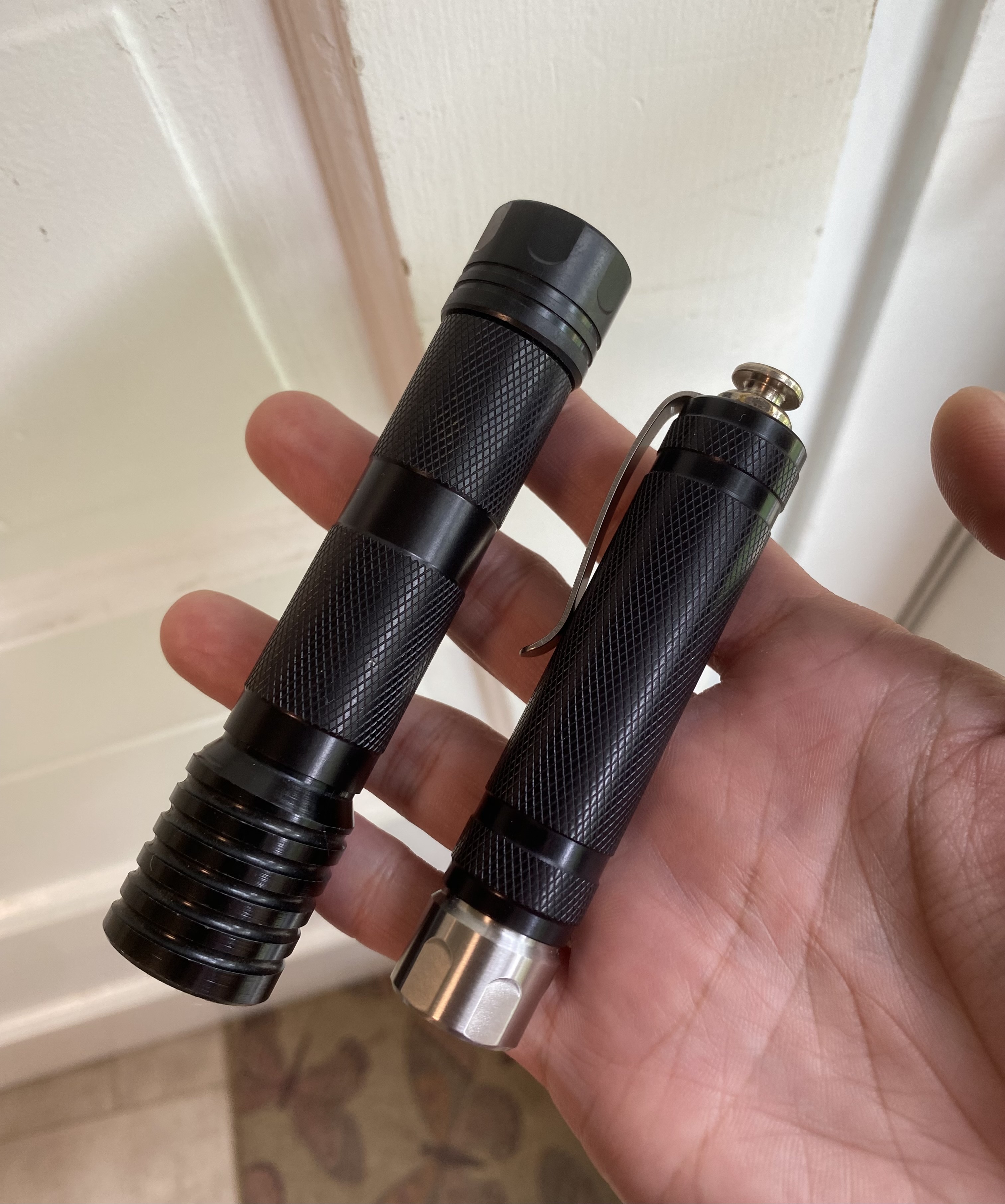
Bit more good news, my Peak black aluminum El Capitan with the keychain top finally arrived from Peak. Yay for that. And, I'm keeping it stock!
 
Last edited:
I am not familiar with the spacer so I am not sure what you are dealing with. Is it possible to use a flat sanding block and remove a little material manually? On a side note I also got my El Capitan and was happy to see their current offerings are just as solid as the ones I bought many years past.
 
Bad news: They're too thick to use in my S.S. Logan with the pressure switch, and Prometheus Ti clip attached. To be clear, not too wide. Too thick. So, removing the QTC pill makes the CR123 Logan work MUCH better than with it attached. And the Pressure switch alone is no problem. Add the clip, problem! It increases the height of the pressure switch just enough (without the QTC installed) that contact cannot be made with the battery, in order to switch the light on. So a spacer is needed. Best and nearly only option are the spacers sold through Lumens Factory. No doubt, they are quality spacers. But too thick. Attached behind the CR123 battery, the light switches on.... and cannot be switched off. Put the spacer in front of the battery.... about have the o-ring is exposed. No good on either end.
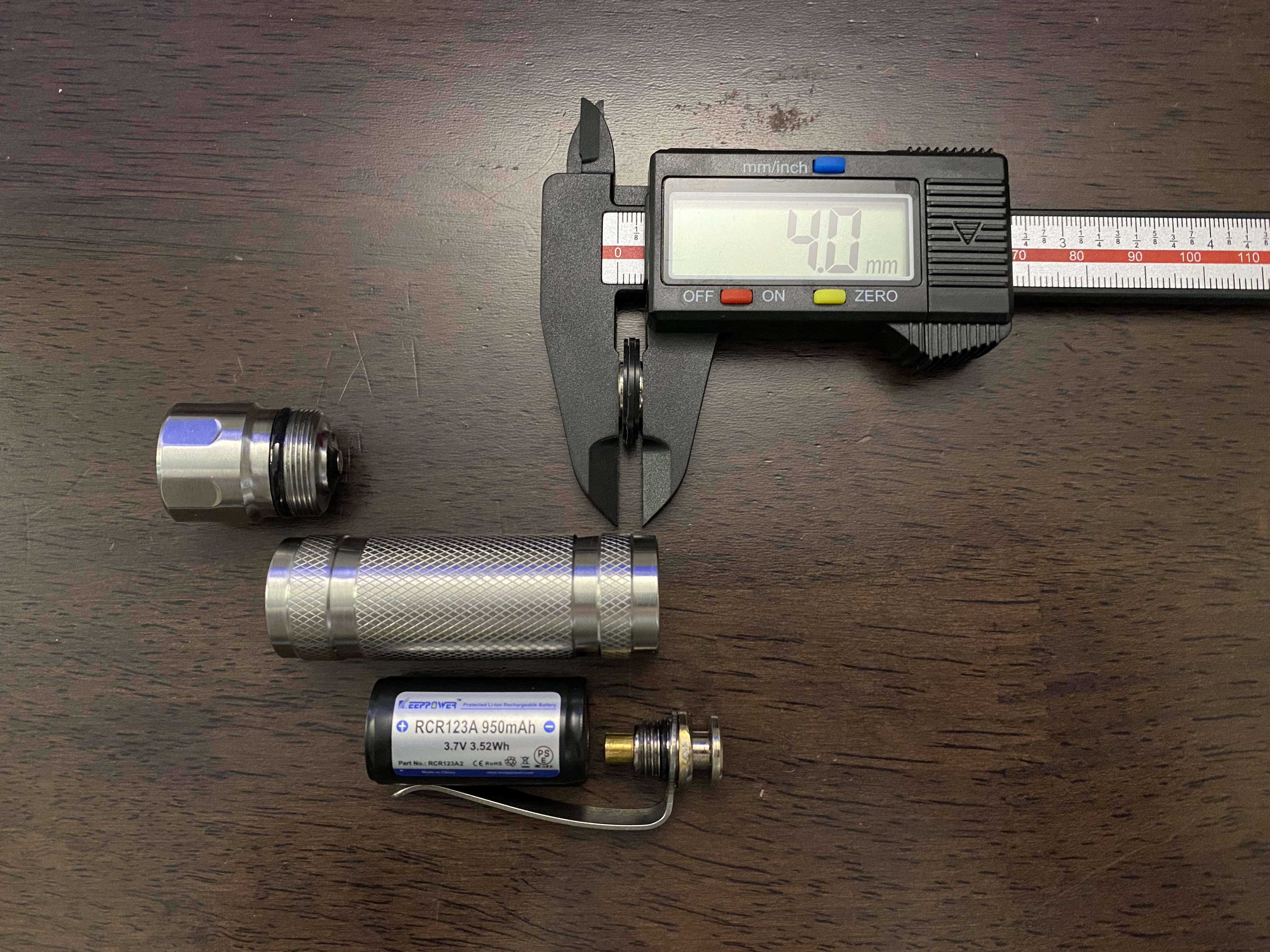
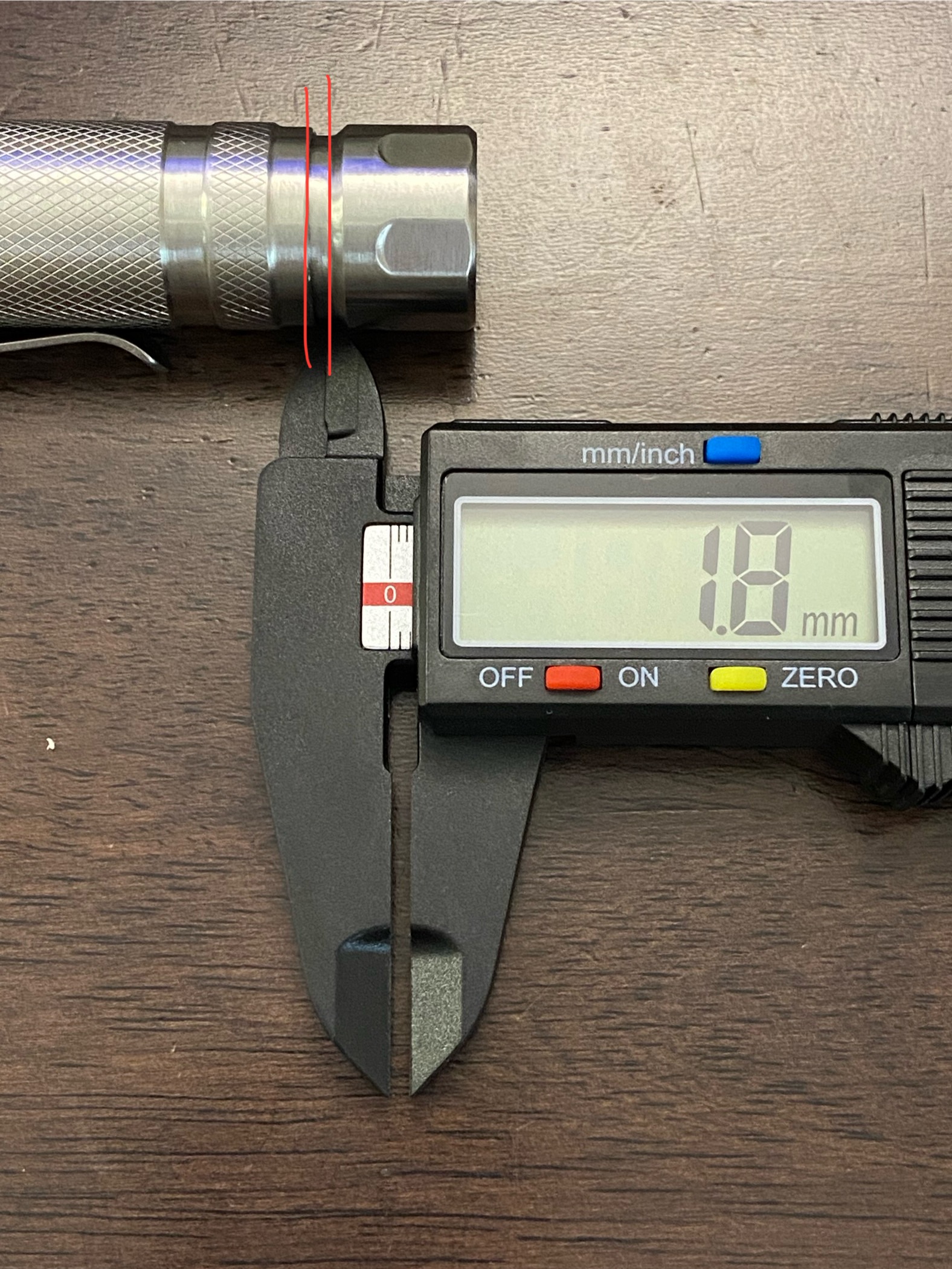
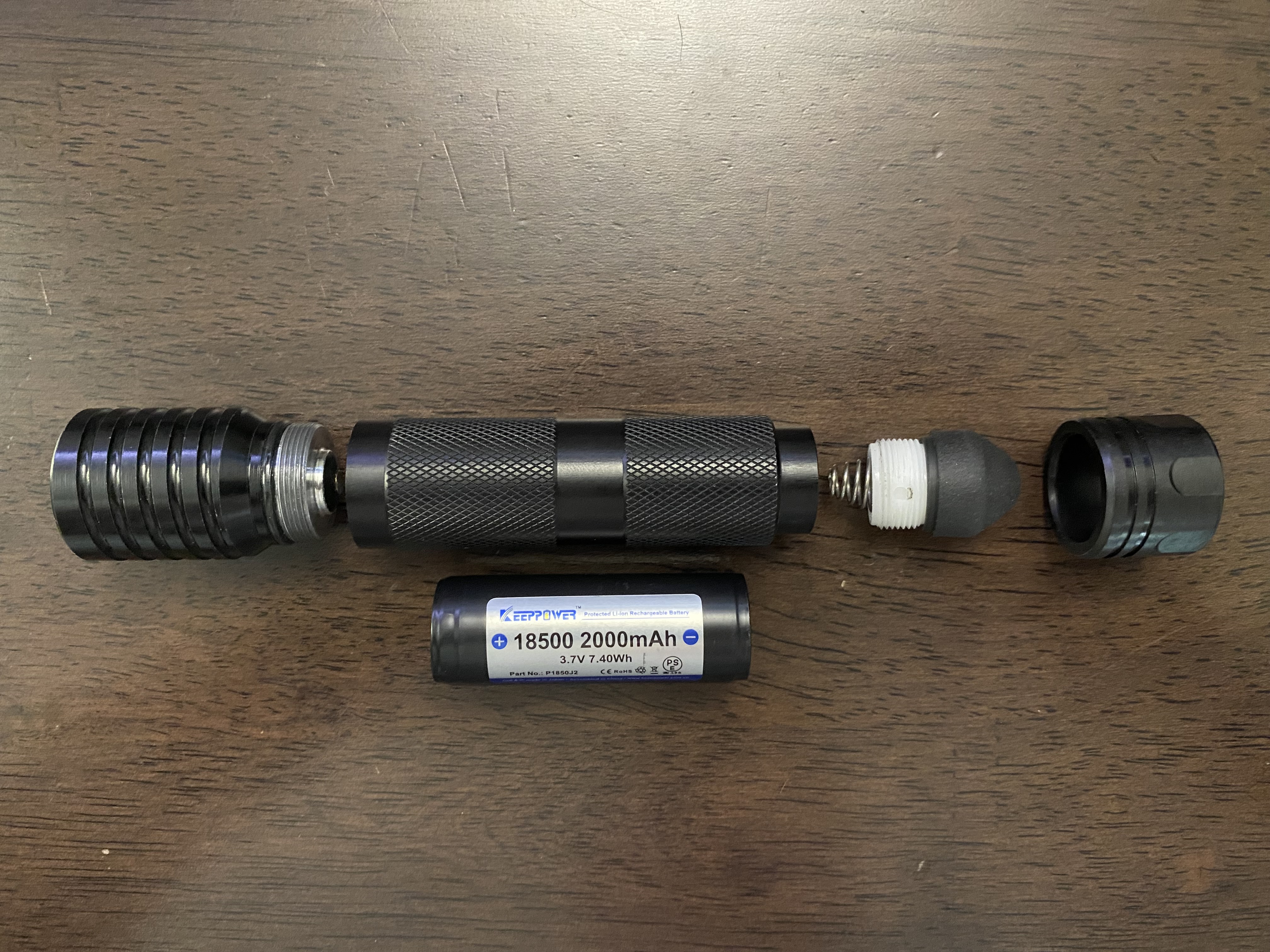
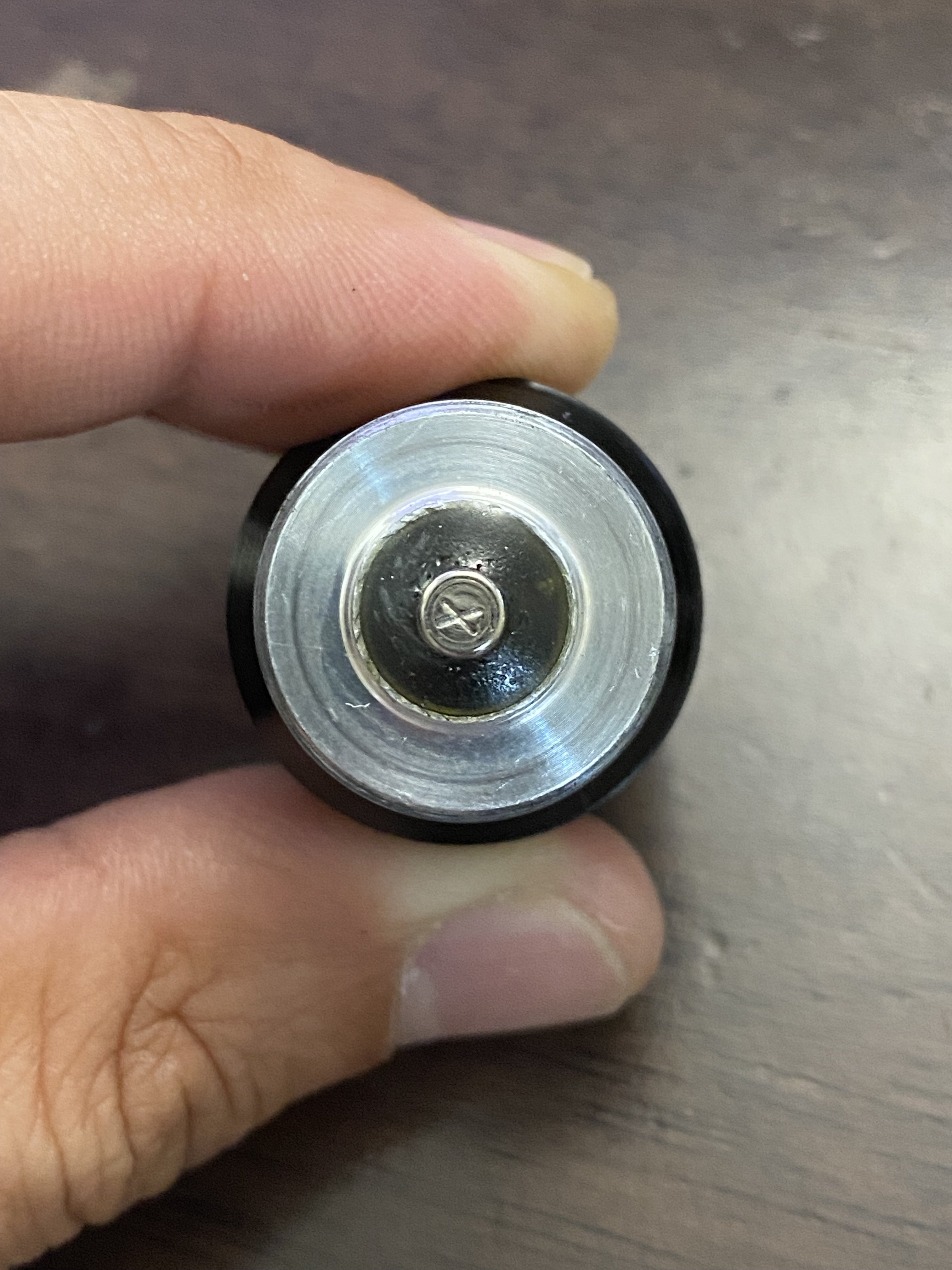
You're 1mm away. I recently ordered a Logan 17500 in black aluminum with NO QTC as I wanted a pill without it to switch back and forth from bodies. I really enjoy the diminutive size of the standard logan (1xCR123) but using it WITH QTC can be a bit challenging as I can only get a 3-finger grip on the body. Once my order arrived I switched the NO QTC pill into the standard SS Logan and it's lovely to actuate now. Pictured below you'll see the NON-QTC pill and it is 4mm thick. I also included a picture of the cell I'm using and the distance between the base of where the head tapers of and the top of the body at physical lockout. No o-ring is visible until 1.25 - 1.5 rotations which is acceptable.
IMG_1254.jpeg

IMG_1255.jpeg

The thing that gets to me is knowing that if my dad was still alive, and had access to the equipment he was provided with at his Metro-North job, he could easily fabricate the perfect sized spacer for me. That's how good of a machinist he was. He could blink and it would come into existence. How much of that ability did I inherit? If his ability was a massive beach full of sand, I'd have one tiny grain of it. That right there is what gets to me.... The fact that he could so easily solve this problem on something that was never supposed to be a project light. Now turned into one, and a headache.
The fact that you're already thinking of how he would go about fabricating it shows you've already inherited his abilities. You're only 1mm off and as @Robocop mentioned you could just sand it down to keep the project going. Or, you could just reach out to Robyn and she'll take care of you once you explain the situation.

Bit more good news, my Peak black aluminum El Capitan with the keychain top finally arrived from Peak. Yay for that. And, I'm keeping it stock!
The El Capitan is the only size body I don't own in the collection (only Eigers and Logans). How do you like the size? What LED did you go with?
 
Last edited:
As an Amazon Associate we earn from qualifying purchases. Product prices and availability are accurate as of the date/time indicated and are subject to change.
I am not familiar with the spacer so I am not sure what you are dealing with. Is it possible to use a flat sanding block and remove a little material manually? On a side note I also got my El Capitan and was happy to see their current offerings are just as solid as the ones I bought many years past.
Afraid not, the disks from LF are cooper in the center surrounded by what looks like glass reinforced nylon plastic all around it. That combination, you can forget about trying to shave that down at all.
 
The El Capitan is the only size body I don't own in the collection (only Eigers and Logans). How do you like the size? What LED did you go with?
It's a good size. About what I expected from a typical single-AA light.
I went with the stock narrow beam LED that Peak offers. No issues there.
Thank you for the rest of the advice. I think I will send Robyn an email.
 
Afraid not, the disks from LF are cooper in the center surrounded by what looks like glass reinforced nylon plastic all around it. That combination, you can forget about trying to shave that down at all.
Sand paper and a flat surface, no problem.
 
I'm looking to source some o-rings so I can have spares for my Logan heads. Has anyone ever replaced theirs with something different/better and why? Does anyone know what material the o-rings on the Logan series are made of in addition to what size they are? Also, is it worth it to get Viton (FKM) o-rings over nitrile?
 
I'm looking to source some o-rings so I can have spares for my Logan heads. Has anyone ever replaced theirs with something different/better and why? Does anyone know what material the o-rings on the Logan series are made of in addition to what size they are? Also, is it worth it to get Viton (FKM) o-rings over nitrile?
Can’t help you regarding what Peak use but the best choice for o-rings on torches is EPDM or sometimes silicone but for the vast majority of locations (position on the body of the torch) and applications, EPDM.
 
Can’t help you regarding what Peak use but the best choice for o-rings on torches is EPDM or sometimes silicone but for the vast majority of locations (position on the body of the torch) and applications, EPDM.
how does it fare with grease, lube, or oils?

**quick reading says hydrocarbon grease like nyogel 760g would be bad for EPDM...
 
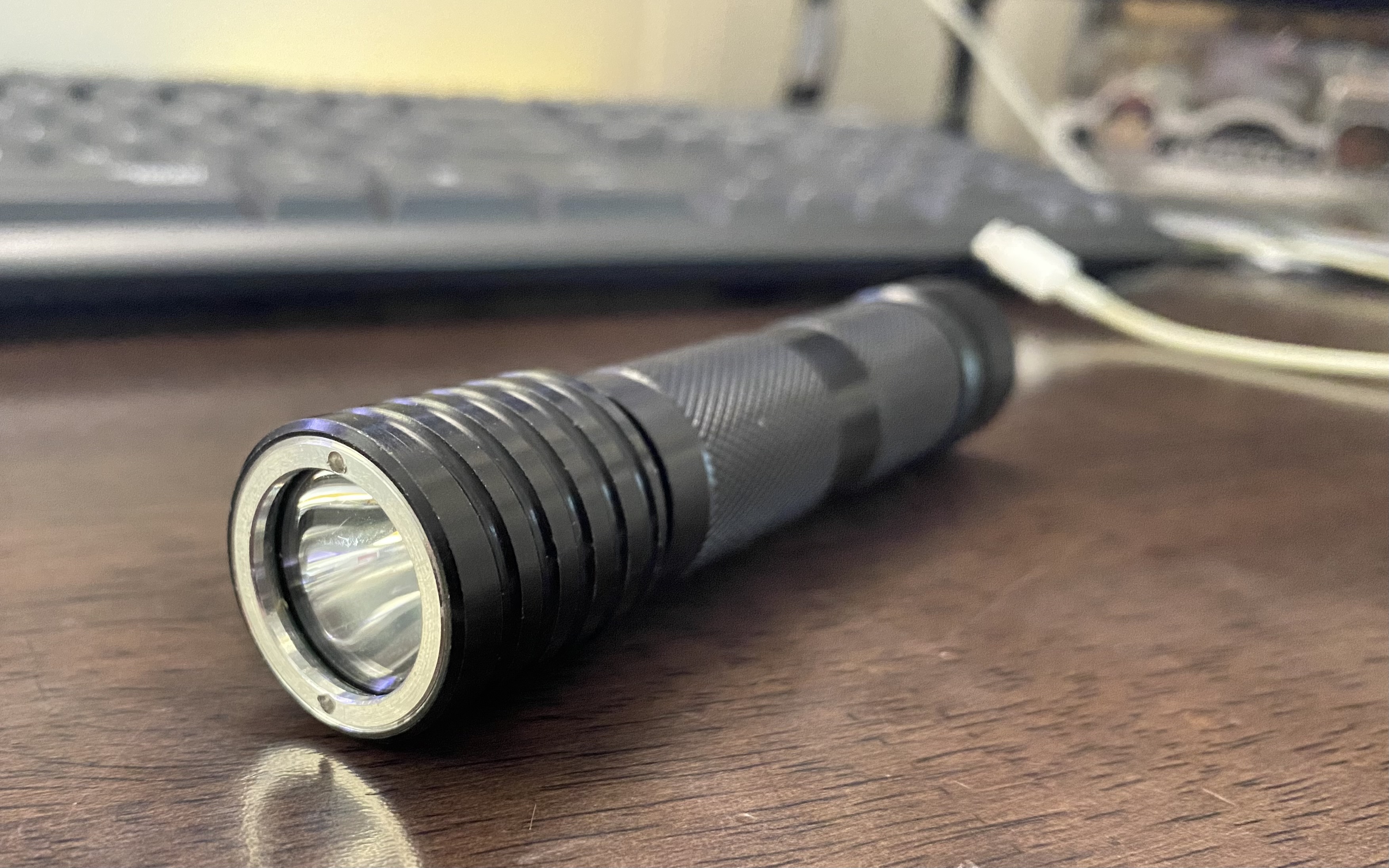
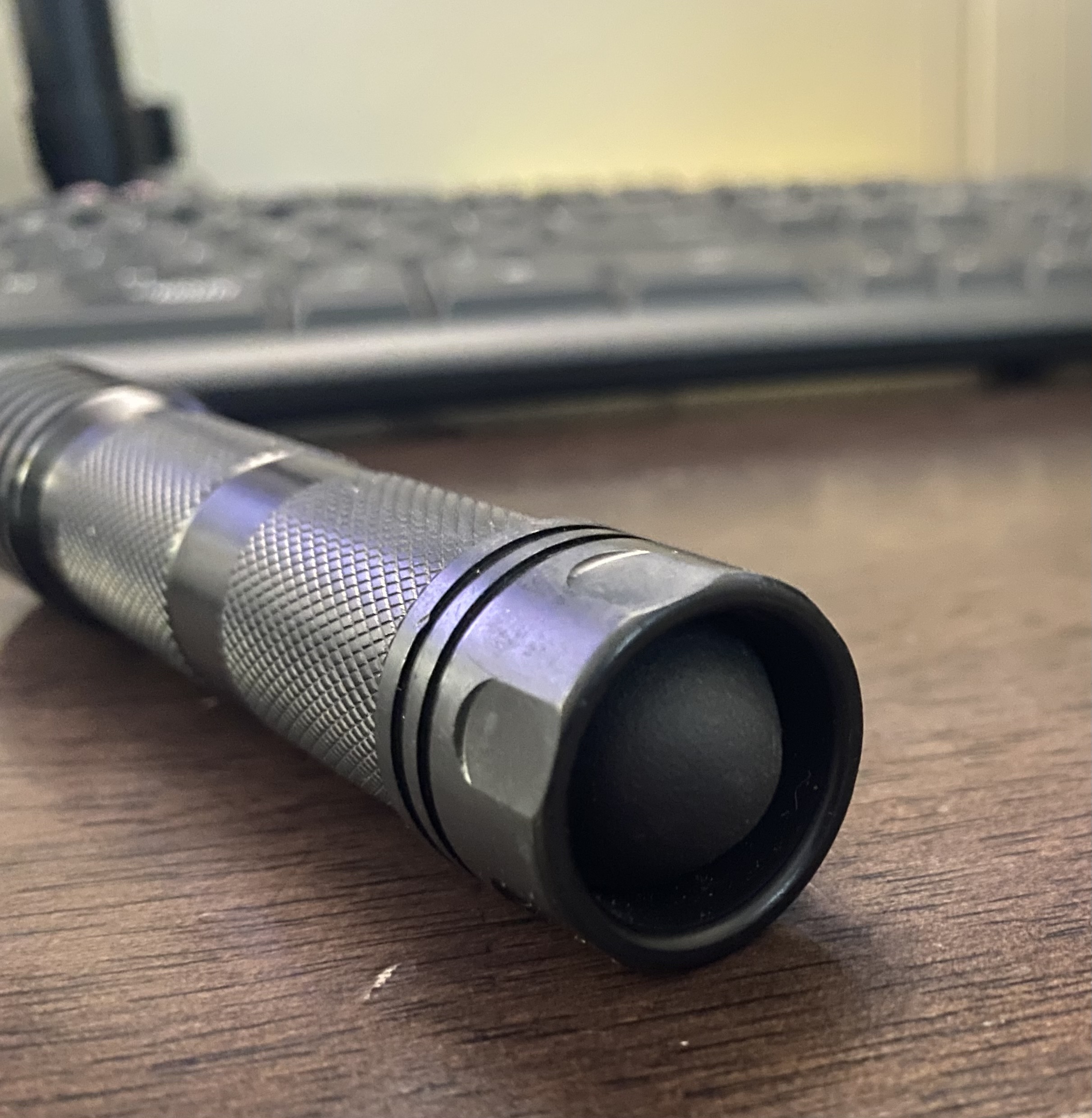
I'm a little late on posting this one but I recently acquired this piece thanks to my curiosity and Robyn's hospitality and delightful customer service. I discovered this light from a picture (see below) on their second to last instagram post (2017) and I was intrigued by the design as I'm a sucker for old-school diamond knurling patterns. I could also tell it was a clicky of some sort so I really wanted to have a Peak with a proper clicky switch. Nothing against the momentary switch on the Eiger/Capitan/Logan but I think most individuals here will understand. I reached out to Robyn with a picture from the post and she did some digging around and found one!

IMG_1068.jpeg


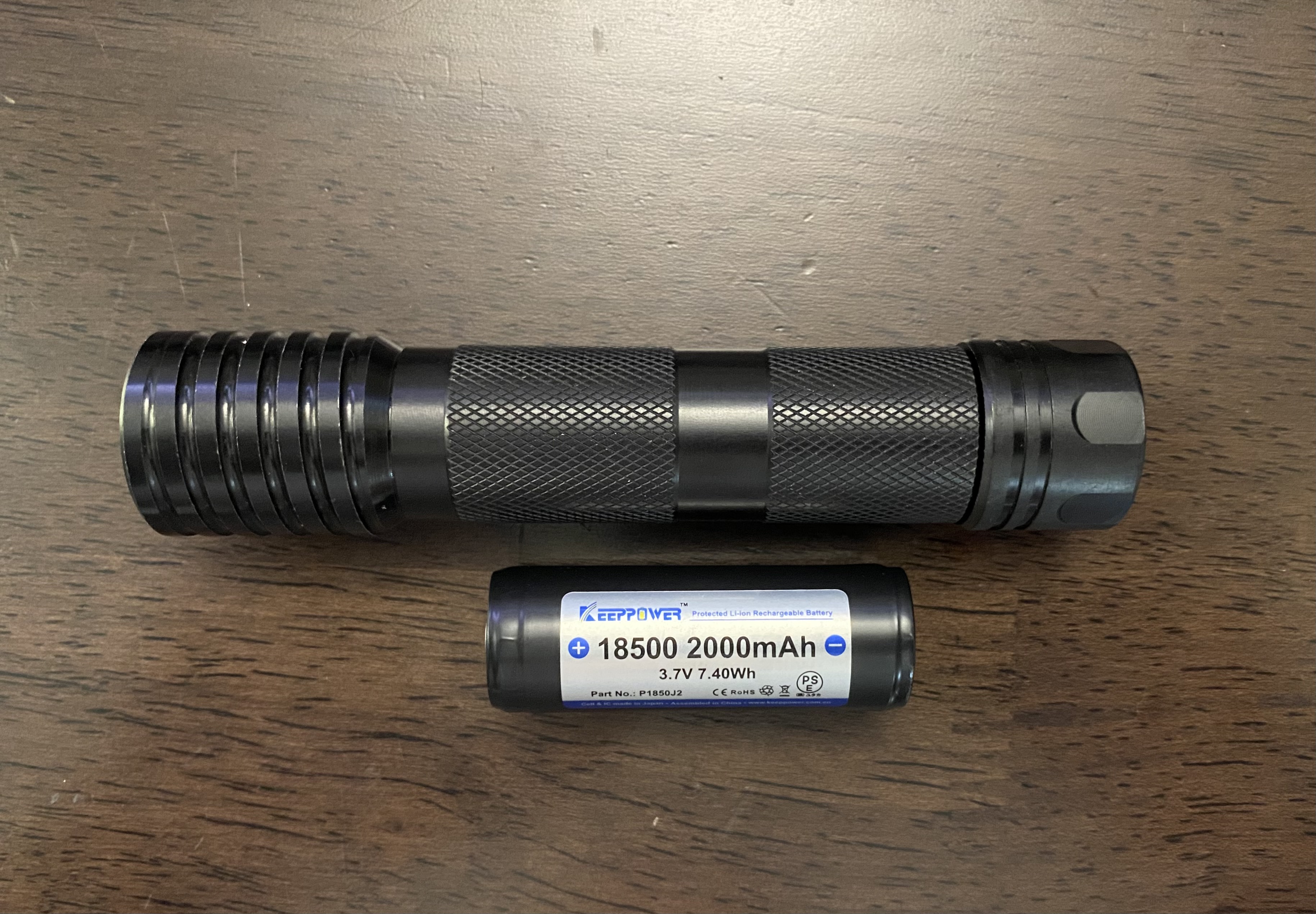
I had maybe thought they were for a contract but according to Robyn, Curt had made 20ish of them for a TacOps East show that she was a vendor at some 11 years ago. Apparently, Curt thought the LEOs would like them but didn't come to fruition for some reason. I did the dirty work and sourced all of the details about the light from Robyn. I'm interested in everyone's thoughts as to why they think the LEOs passed on these? Also, for those who are familiar with their Mil/LEO offerings.. is there any of the design language in this model? I think it's a really interesting piece. Funny story, when I was discussing this light with Robyn, she initially thought it was an 18650! Then she sent a follow-up saying it was a 17500 which I was initially bummed but still cool with since I have all the delrin spacers from the Logan 17500. However, when it arrived I was thrilled when my 18500s from my MD3 I recently sold fit perfectly in it.

Peak LED Solutions PROTOTYPE flashlight
Power source
: 18500 li-ion direct-drive. 3V-4.2V? (NOTE: I was able to use one of the delrin spaces from the Logan 17500 to run a 3V primary and 3V Li-ion rechargeable.. does not run on NiMH though.)
LED/emitter: Cree XM-L (appears to be cool white)
Optics/Reflector: Smooth reflector
Material: Hard-anodized aluminum
Potted: Yes
Activation: Forward-clicky Judco tail switch
Features: Adjustable black delrin tailcap to allow tail-standing
Dimensions: Length: 4.59" / 116.6mm;
Head Diameter: .98" / 25.00mm ;
Body Diameter: .86" / 22.00mm
# Units made: ~20
IMG_1270.jpeg

IMG_1275.jpeg

IMG_1271.jpeg

IMG_1272.jpeg

IMG_1274.jpeg

IMG_1225.jpeg

IMG_1277.jpeg

IMG_1221.jpeg

image.jpg
 
Last edited:
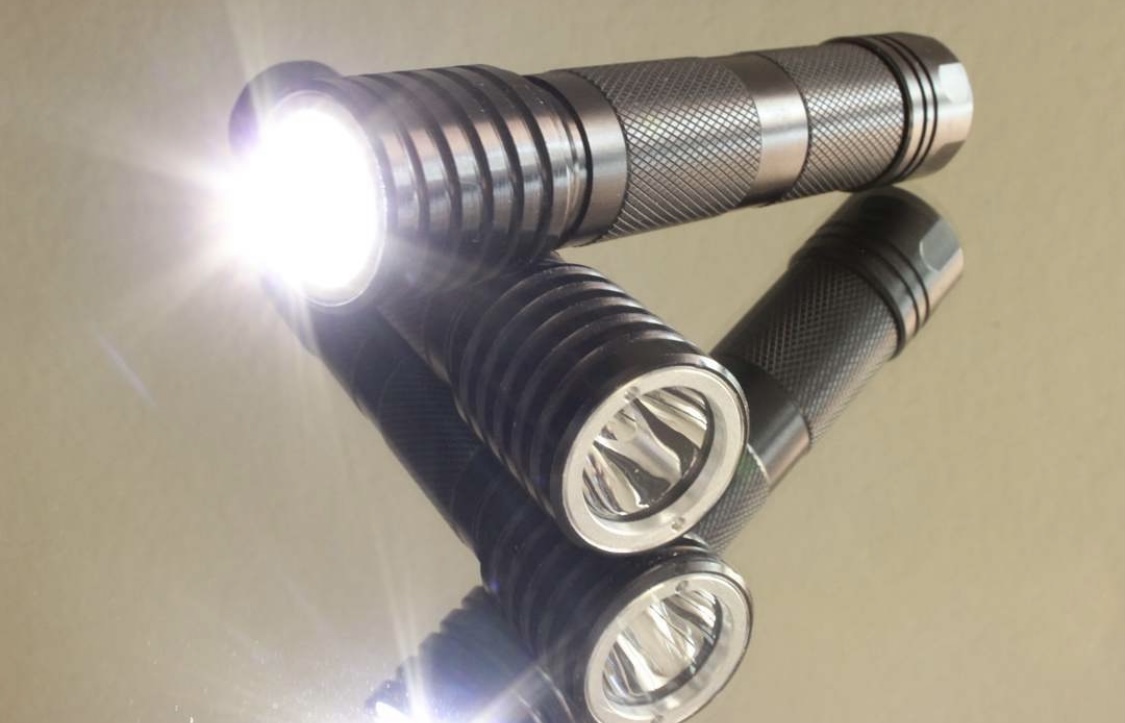
Received my Logan 17500 and like it so far.
Just got it last night, so these are *very* preliminary reactions, not a report of extended use.

On batteries:
1) I'm glad that I got this model, in the "pocket" version. It is no larger than lots of AA models, and it can run on AA batteries, but it can also run on CR123/16340s. (The tube diameter at its largest is slightly smaller than the end cap of a ZL H53 AA light. And the length is 86mm, vs. 77mm for the ZL H53). I suspect that the slightly longer tube than the normal Logan makes it easier for my XL hands to clamp the battery tube with the ring finger while twisting the head with thumb and index finger.
2) My CR123 (branded by Streamlight) is a close fit, and this makes me wonder whether the opening really can accommodate a 17500 as opposed to a 16500. This may not be an issue, since there are almost no 17500 rechargeables to be found, and the one clear choice (a Keeppower from Illumn) looks like it will be too long (protected cell, so more like 52mm in length). I have ordered some 16500s, which seem to be more readily available, and I'll see how they do.
3) The Delrin adapters are necessary for proper operation with a CR123 or an AAA. In some lights, you could just toss in a spring or a ball of aluminum foil to make up the gap, but since the QTC works on pressure, those mechanisms will not work with the QTC. I plan to use it primarily with XX500 format cells (i.e. AA, 14500, 16500, 17500) so I will not need to use any adapter.

On the output:
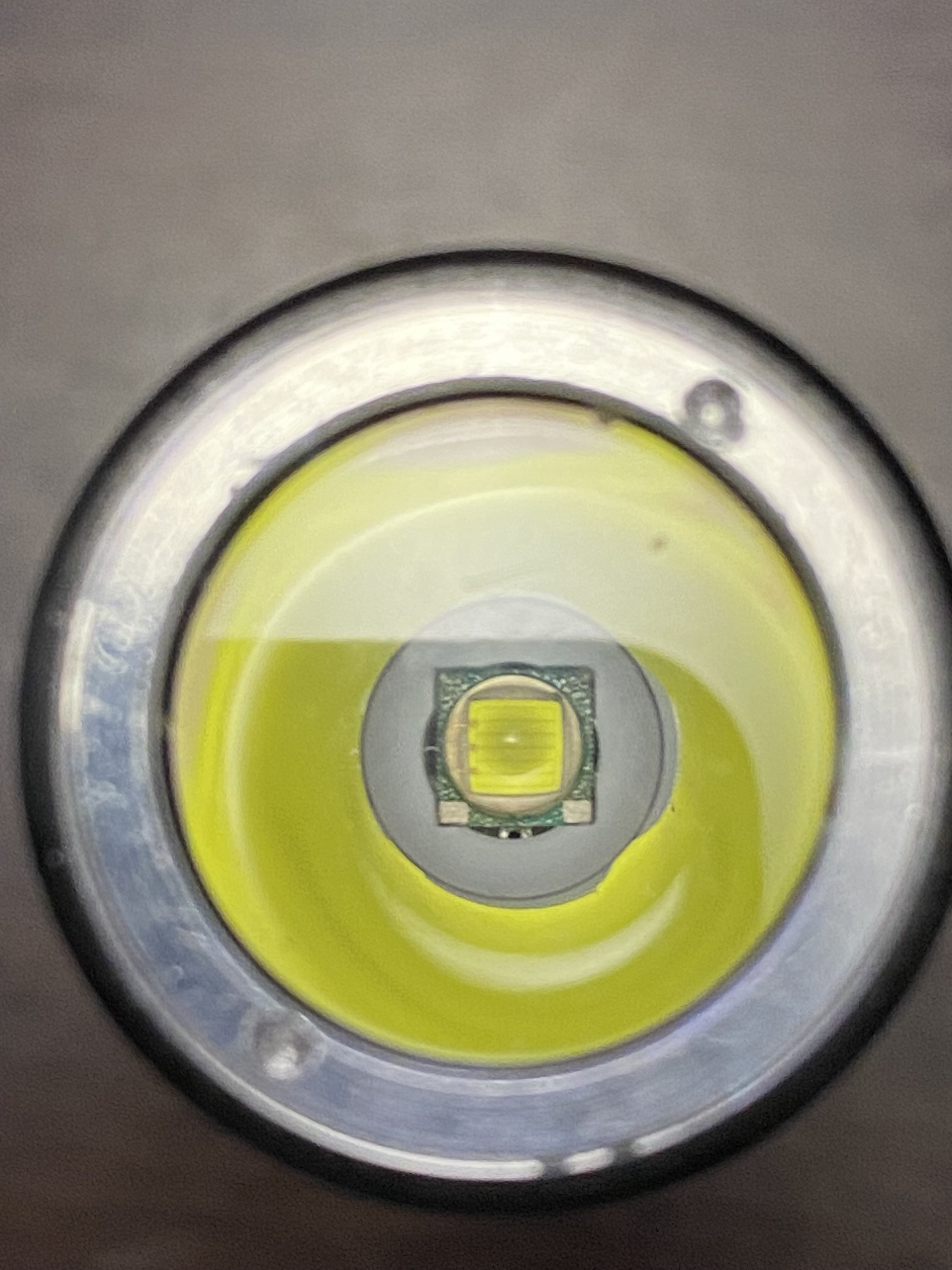
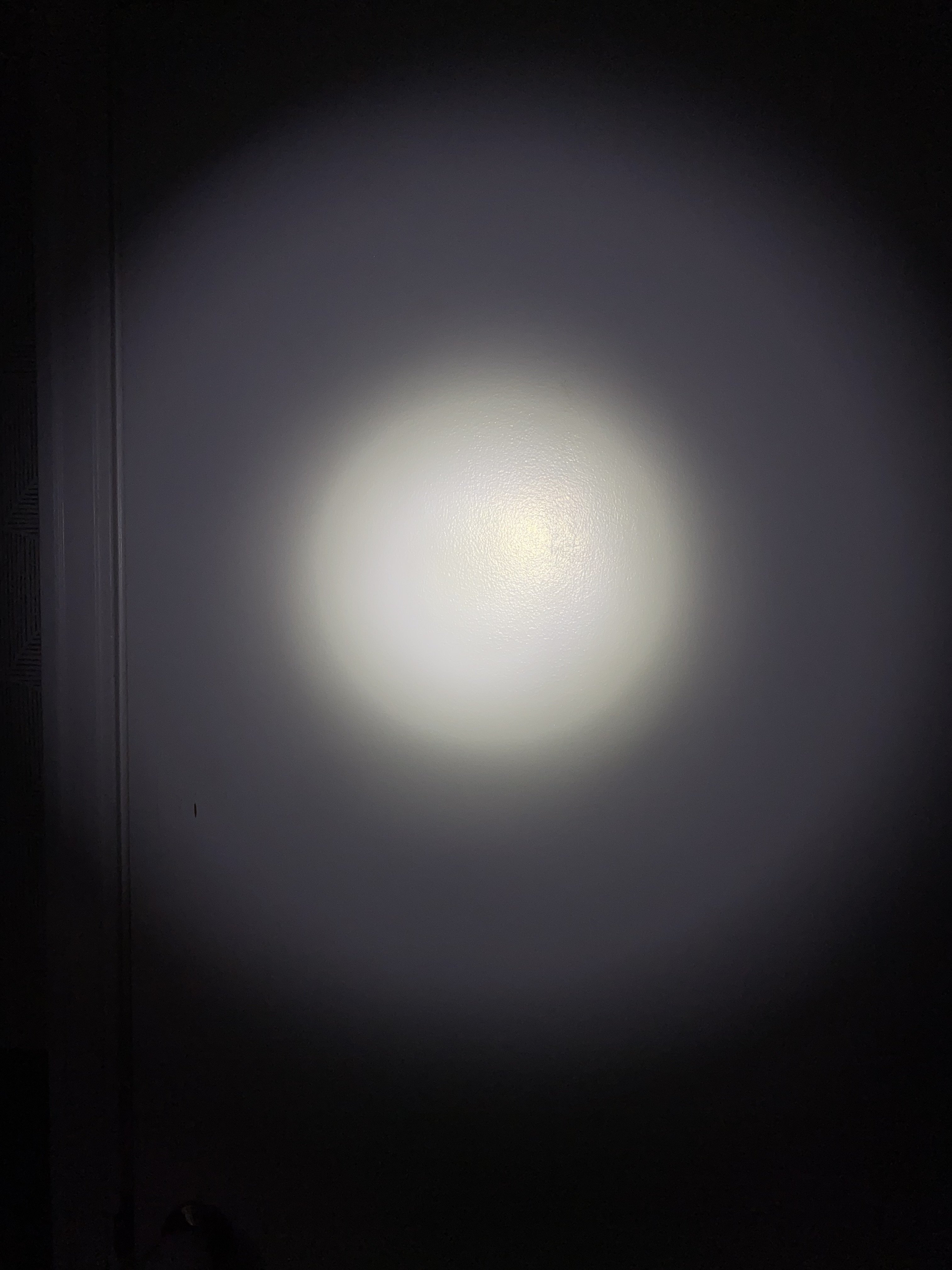
4) I love the beam and the color. I asked Robyn to use an sw40 219b with a clear, narrow-focus optic. I love the result. It looks great at every output. And I say this as someone who much prefers reflector-beams to optic-beams. The beam does have artifacts, and it's not a white-wall queen, but it has a good hotspot and spread.
5) I'm a sub-lumen fan, and I also love how low the output can go. It seems to stay lit right down into the lowest of the ZL AA levels (0.01). Love love love those firefly modes. And the narrow optic means that they are still generating light you can use. Yes, the lowest levels are a bit fickle, and there is a tendency for the light to slowly creep brighter over time (if you set it at 0.01 lumens, it may creep up to the 0.02-0.05 range.) I assume that has to do with the QTC composite material expanding over time?? It's not a huge problem.
6) What's the most lumens this thing can generate? That depends on the cell, and on how tightly you are willing to crank down on the QTC. I'm running a primary CR123 right now, and I'd estimate that its high output is between the H1 and the H2 of the H53w, both when running 14500. That means somewhere between 250 and 450 lumens. Let's call it 300-350. Plenty for indoor use, and it covers the majority of outdoor uses, too. Once I get some 4.2v 16500 cells, that number may go up.

Random:
7) I have seen people say that these are joule-thieves. Maybe in the sense that the low-lows will last a long time. But not in the sense that they will start up with a low-voltage cell. My Logan would not start up with an AA that still measured well over 0.8v, where my Gerber Infinity Ultra is happy to start up on 0.6v. And so far as draining a cell to the last drop: that's a nice feature in some lights, but not in an $80. handmade light. When you drain an alkaline cell down to 0.3v, you run a much bigger risk of it bursting, and I do not want a burst cell in my Peak light.
8) I'm a little worried about the light's tendency to turn on in my pocket. I guess I have to loosen it up more than I think. Loosening it further increases the battery-rattle, which is unfortunate. Dunno -- time will tell whether I can remember to untwist it to just the right point, where it does not turn on, but also keeps the O-ring covered, and doesn't rattle too much.

General utility:
9) Is this light going to find a place in my daily load-out? Is it going to displace either of my standard carries, sc. a ZL H53w and an SC64w Hi? I like to have one higher-output Li-ion light (the SC64w HI) and one light that will run on the most common cells in the world, sc. AA and AAA. In principle, the Logan 17500 should be able to do both. But will it work that way? Only time will tell. But it is a nifty design, well-executed, and I'm glad to have one.
 
how does it fare with grease, lube, or oils?

**quick reading says hydrocarbon grease like nyogel 760g would be bad for EPDM...
There’s a few things to consider with orings depending on the application. Resistance to particular chemicals, oils, acids and so on but also tensile strength, wear resistance, compression set, UV and weather resistance and so on.

When you weigh up all the factors EPDM is the universal choice (for a torch). Considering orings are used not only at the head or tail of the body (where there will be lubricant contact) but also for sealing lenses etc.
EPDM is excellent for water and weather sealing with high UV resistance. It also has desirable strength in wear resistance, tensile strength, compression set and hardness.

If you were particularly worried about the interaction of such grease you could use a different material oring at that location.
I don’t think EPDM would struggle under the application with nyogel although perhaps not ideal, but I’d suggest that there’s better lubricants to use than dielectric grease.
 
Might as well give that a try. Might work. Got nothing to lose.
I reckon you’ll get it done.
Sand paper on a flat surface, a couple of different grades would be helpful. A medium grit and some patience should be alright and finishing off with some 2000 grit or so.
 
I'm considering jumping in and getting a Logan 17500. I love the idea of continuously variable output, multiple cell configurations, and getting a unique light.

One thing that has held me back previously is reading about the QTC wearing out. Is this a real and common thing, or perhaps just something that requires maintenance?

I'm imagining it's user choice, but are there advantages/disadvantages to SS, Aluminum, and brass bodies?

Does this have some sort of driver circuitry, or is it essentially a resistor (QTC) and a LED? Seems like there must be at least a boost driver to get up to LED voltage from an Eneloop or aliki.

Any reason other than personal preference to select Peak over Franz Labs for QTC? I'm definitely more interested in an AA/CR123 form factor than something larger.
 

Latest posts

Back
Top