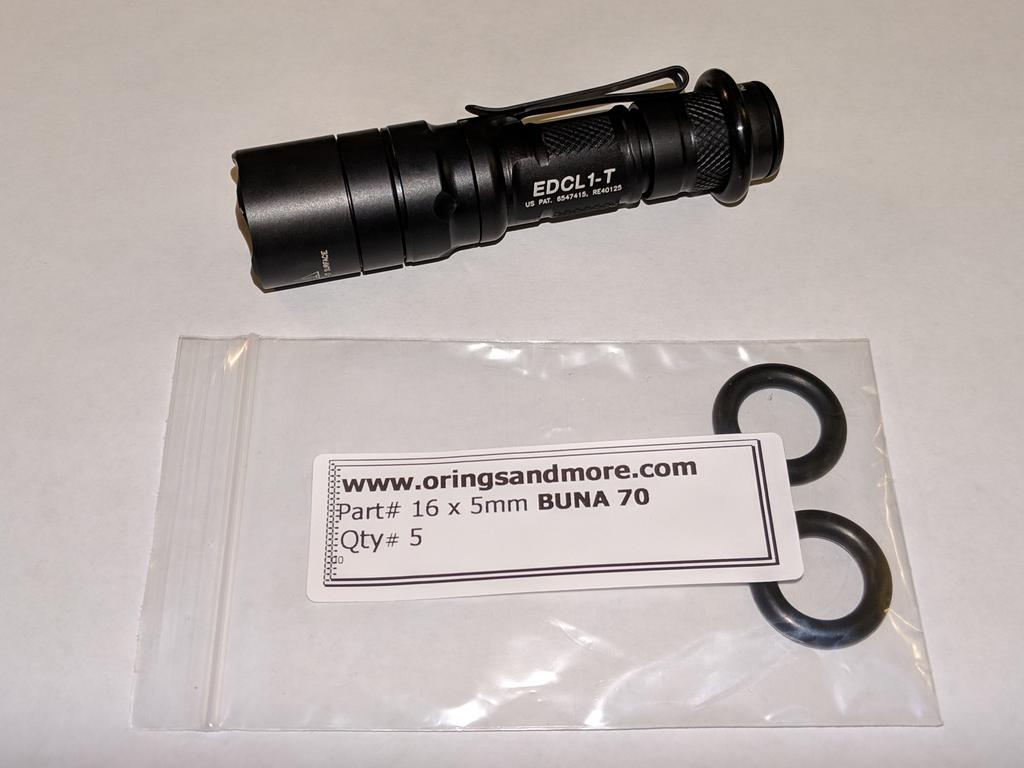
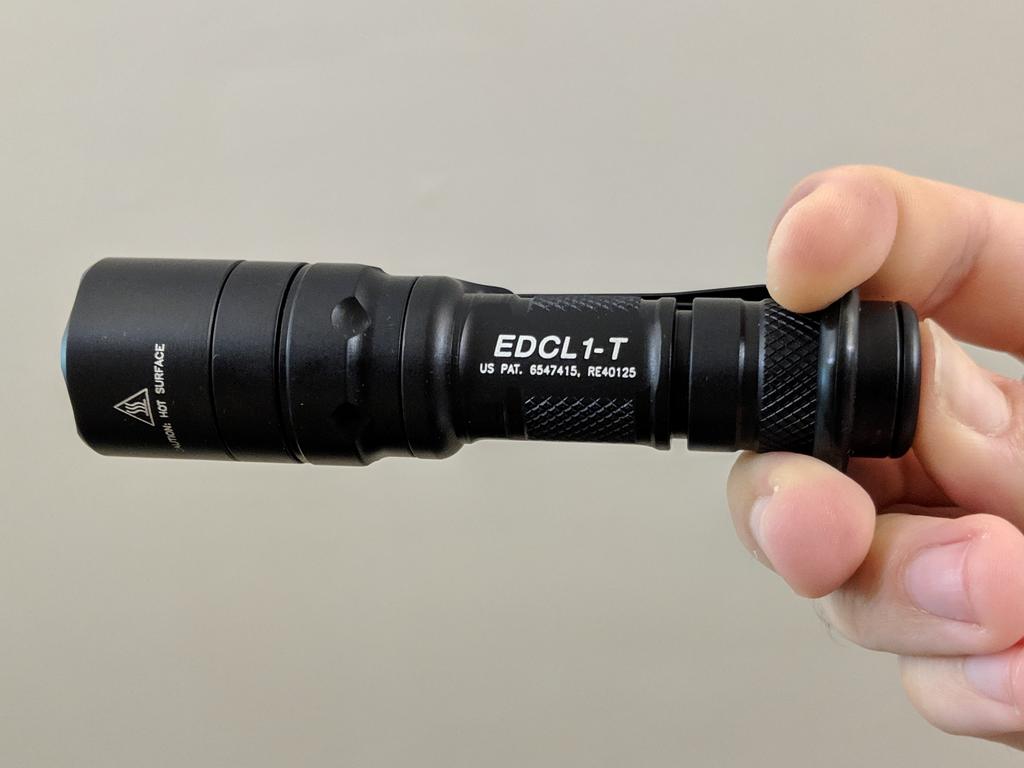
Re: Surefire EDCL1-T Runtime Tests
I get the idea that a resistor in the tailcap is used to signal the controller with the Surefire tactical tailcap from PK's patent 7344270 "Flashlight with incrementing brightness selector switch":
https://patents.google.com/patent/US7344270
That is an...interesting...choice of wording on Surefire's part. Reading the patent description, it appears that Surefire was trying to patent
any switch-and-driver combination that achieves multiple brightness settings by way of operating the power switch. (good thing it didn't work, or almost all the cool flashlights that exist nowadays would've never existed.) But the driver circuit in the EDCL1-T (and in the earlier L1 Lumamax) doesn't "detect" the resistance of the tailswitch in any way that we would describe as intelligent. The driver isn't receiving a
signal from the tailswitch like HDS lights do.
There is a single electrical pathway from the negative terminal of the battery, through the switch, through the battery tube, to the negative contact of the driver circuit. That single electrical pathway is, by necessity, the pathway that provides power to the driver. A second electrical pathway would be required for signaling, which is why HDS lights have an extra wire that passes through the wall of the battery tube to make contact with a secondary contact on the driver circuit. Hypothetically the primary electrical pathway could also be used for signaling if the switch were sophisticated enough to create small voltage fluctuations that the driver circuit could interpret while simultaneously receiving enough continuous power to stay operational, but Surefire's switch design is not that advanced. Indeed, a switch design that intricate would almost certainly fail Surefire's "give it to a Marine and see if they can break it" durability tests.
No, the low setting on the EDCL1-T's two-stage switch simply obstructs some of the battery's power, so the driver circuit can't power the LED at full brightness. Based on the article you linked, It's
possible the driver has a low-power regulated mode that engages when there isn't sufficient power available to run the high-power regulated mode, rather than just letting the LED run unregulated in the low setting, but that's the upper limit of potential fanciness in this particular design.