USB on board charging....

Candle Power Forums

Help Support Candle Power:

Robocop

Mammoth Killer
Joined
Nov 13, 2003
Messages
2,967
City & State/Province
Birmingham Al.
When I really got into better lights I remember the advice of many here to buy a quality charger. I did purchase an expensive intelligent charger and found this gave me excellent service life and just made my batteries even better. The algorithm used to monitor all aspects of any cell charging again just greatly improved my battery experience.

I now see many lights using proprietary cells that require charging through a USB port on the light. I have a new purchase planned with the Nitecore P27IX that uses this set up. I am concerned about the charging and battery health using the built in charging. Can anyone here give any info on this? Does the little built in USB port have the same features of the nicer intelligent chargers?

I actually prefer charging my cells outside the light again simply as it seems to give the best results. I have not found an intelligent charger yet that will actually charge these weird proprietary cells with both positive and negative terminals on the same end. So it appears if you want one of these new Nitecore lights you are forced to use their on board charging. Thanks for any info on this as I do like all the other features I am just concerned about the charging.
 
I have always bought lights where I can remove the cells and charge them outside the light.

In the last 6 months I purchased a Streamlight Protac 2.0 HP which uses one of Streamlights proprietary SL-B50 batteries (ie; 21700, 4900mAh). You can charge the battery inside the light through a side portal or you can take the battery out and charge it since it has a USB-C port built into the battery. Later I purchased another SL-B50 so I can run a fresh battery and charge the depleted one outside the light at the same time with any USB-C cord since charge time is approximately 6 hours if completely dead.

It is a great light with massive throw and a long runtime.
 
Heat reduces battery service life.

If a battery is charged too fast, so it gets hot, it wont last as long.
If a light is used at a high output that gets the battery hot, it wont last as long.

Imo charging at a rate that takes over 2 hours is good, because the battery does not heat up too much.
Using a light at an output that takes over 2 hours to drain is also good, because the battery does not heat up too much. ;-)

The NITECORE MH25 v2 USB-C Rechargeable Flashlight takes almost 4 hours to do a full charge.. imo this is slow enough not to get the battery too hot, and therefore the battery will have a good long service life.
 
Last edited:
When I really got into better lights I remember the advice of many here to buy a quality charger. I did purchase an expensive intelligent charger and found this gave me excellent service life and just made my batteries even better. The algorithm used to monitor all aspects of any cell charging again just greatly improved my battery experience.
If you're using NiMH or NiCd cells then an intelligent charger is a must IMO. These types of cells have a fairly complex algorithm to charge correctly without unduly shortening their life. In particular, charge needs to be terminated by either -delta V, or even better delta T.

Lithium cells of all flavors (regular li-ion and LiFePO4) charge with a much simpler constant current/constant voltage algorithm. In layman's terms that means they initially charge at a constant current (which should be limited to 0.5C or less for optimum cell life). When they reach maximum voltage (4.2V for most li-ion, 3.6 to 3.65 volts for LiFePO4) then they enter the constant voltage phase. During the constant voltage phase current starts decreasing. Generally charge is terminated when current falls to a very low value, often C/20.

Because this algorithm is so simple, even $1 USB charging boards from AliExpress can do a decent job. You just have to match the current to the battery. For lights with built-in charging this should already be taken care of by the manufacturer. As was mentioned already, if the battery takes two hours or longer to charge then it sounds like you have nothing to worry about.

For what it's worth I've never been much of a fan of built-in batteries myself, and even less of a fan of lithium-ion. In the beginning I considered them too dangerous to consider using but that's improved enormously. That said, I'm still a fan of LiFePO4 over regular lithium-ion. The tradeoff of lower capacity for much greater safety is worth it. And lately the gap has been closing. CATL has reached 230 Wh/kg for its best LiFePO4 cells, versus maybe 300 for regular lithium-ion.

As for built-in batteries, I've come to accept them. They're very convenient. The only caveat is that the manufacturer uses quality cells which last at least 500 to 700 cycles. I have a bunch of bike lights with built-in batteries. Very convenient. They all tell me how much charge time is remaining in hours and minutes. No guessing when I'll run out of light during a ride.
 
Last edited:
+

Handy to have the Type C charging option on many lights.

Even with that, I still take my batteries* out and put them in my charger for 3Amp charging.
Why 3A,, because my Vapcell charger doesn't do 4A ___❄️

*21700

edit: I'd do 4A on my best Molicel or EVE batteries, that would not be pushing them at all.
3A for my others
 
Last edited:
So from what I can understand is that for li/ion cells it is heat that determines battery health more so than the actual charging algorithm. I was going to try the new P27IX and just deal with the battery by charging it outside the light. I then realized you can not even do that due to the contact points. It simply has to be charged in the light.

Is there some logical reason many are using the proprietary cells with the negative and positive on the same end? Does it give better contact or maybe more capacity....you know any good reason other than forcing us to buy their expensive batteries. I am ok with slower charging times for longer life however only having one charging option is frustrating. It would be nice to know if something went wrong with the usb port I could still charge the cells in one of my other chargers.

Thanks for the input and info and I am still trying to decide if I want to try it.
 
As an Amazon Associate we earn from qualifying purchases. Product prices and availability are accurate as of the date/time indicated and are subject to change.
If a light is using some form of internal lithium battery with built in charging, it's going to have its own battery management circuitry. In such case, it probably is best to let it charge inside.

I personally prefer lights which use standard batteries and will charge them outside of the lights. 1) I trust external chargers' logic better than whatever cheap chip is in the cheaper lights I buy. 2) If a battery goes into thermal runaway inside a sealed flashlight, that becomes a pipe bomb. If it goes nuclear in my charger, at worst it'll leave some marks on my explosive containment pie dish.
 
The light I am considering (Nitecore P27IX) has a battery that can be removed however even so it can not be charged with my external charger due to the proprietary contact points on the cell. Like yourself I trust the external chargers much more. If my charger fails I can buy another one or use one of many more I already have. If the small usb built in charger on the light fails I am forced to buy a whole new light.

It is frustrating as for me personally I see no clear advantage to proprietary cells nor built in charging. I believe I have decided to go with the Nitecore MH12 PRO as it still allows normal 21700 cells. I also feel like I should maybe even buy two as it seems in the future everything is headed towards this proprietary design. I think persons like myself who do not want this design will eventually have no other options.
 
  • Like
Reactions: TPA
If it goes nuclear in my charger, at worst it'll leave some marks on my explosive containment pie dish.
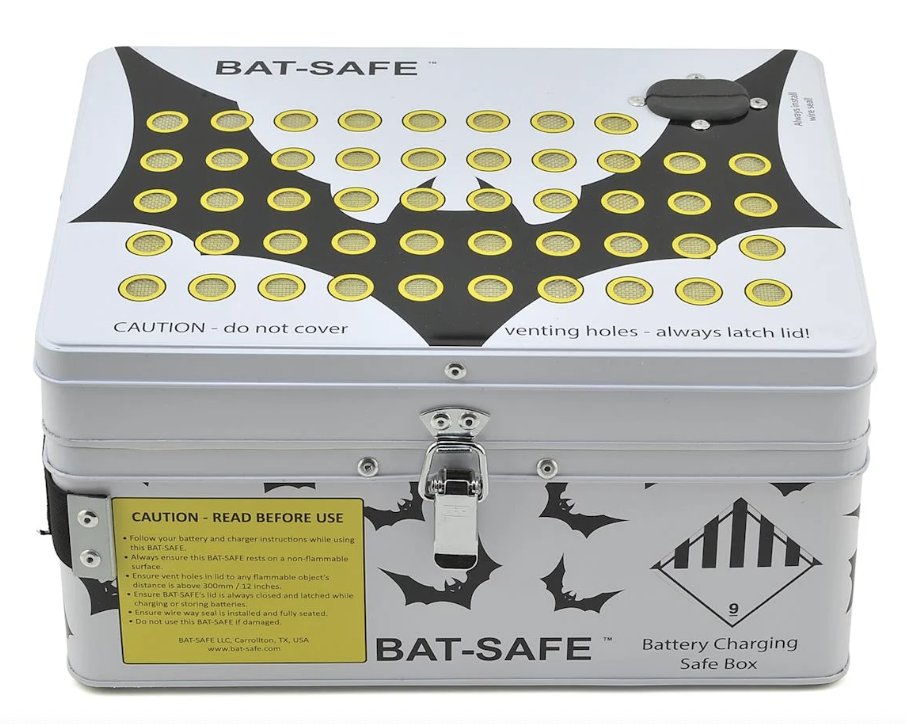
when a battery explodes it can launch accross the room and injure things in its path.. that is what this BattSafe charging box aims to prevent:
Screen Shot 2026-07-06 at 7.23.24 AM.png

feel like I should maybe even buy two
spoken like a true flashaholic! LOL
 
+

A few years ago I had a Panasonic 18650 go bad in my charger. Was charging 2 or 3 batteries
Wasn't charging at a high rate or anything, it just went bad.

The battery got hot, but the charger simply shut off that bay,,,,, thought I ruined my charger
... the charger was fine, the Panasonic was toast.

That was my only true failure in aaaaaaalllllllllllllll the Li-Ions I own.
(I own alot of batteries)

>>>> Important,, nothing against Panasonic at all
 
Yes some habits never leave me and I have duplicates and triples of many favorites. I may eventually learn to appreciate these newer designs as it seems lights are kind of taking off again. For a while it seemed emitters had just stalled however today I see many that I have never heard of and they are breaking performance records. I have always hated change however many times in the past was just blind to something better.

I actually very much remember a time when I did not like these "fancy new LEDs" and was a die hard incandescent guy. I very much remember telling anyone who asked that this LED stuff would never catch on. The output was weak and the tint would never even come close to natural color rendition of incans. I gave it maybe a year before they just failed miserably. Holy smoke was I way wrong on that and today feel like an idiot for being a flashaholic back then and not able to see the advantages of LEDs.

I have toyed with the idea of buying two of the MH12 PRO as they will take a normal 21700 and also buy the P27IX just to mess with. If I do not like it I can keep it for a camping light and stick with the others for duty use.
 
This thread just made me realize I also have a massive amount of batteries. I have tried to use up anything alkaline and stick with Eneloops, Lithium Primary and Li/Ion rechargeable. I have them sorted by size and chemistry however they are all in a single upstairs room with all my hobby stuff (my man cave room)

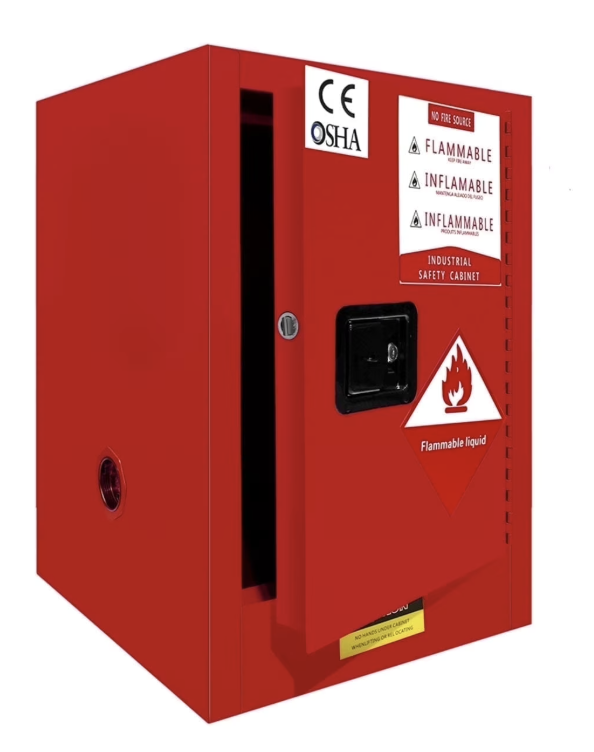
I really think I am going to move all my batteries to the storm shelter in my basement area. It has very thick concrete walls and a very tough metal roof with reinforced beams throughout. All kinds of stuff could explode inside that room and it would most likely be fine. It would also isolate and contain any fire. I can not believe I have not even thought of this until today. I seriously have at least 250 cells of various sizes, capacity, chemistry and shape. If only one single cell decided to vent wildly it would probably set off a chain reaction to all the other batteries nearby.
 
  • Like
Reactions: TPA
This came in my feed today. Interestingly, it was a battery pack being tested from a hybrid car. The battery went up in flames at 50% charge.
And then we have ignition! 🤣

This is why I think we should only use LiFePO4 or sodium-ion batteries on vehicles. Too many hazards with the regular lithium-ion.
 
can you please share what insights the video offers, and what caused the fire?
(I dont like to watch videos)
The fact 5 employees tried to put out the (battery pack from Kia) lion fire using common extinguisher chemicals to no prevail until they finally covered (smothered) with a fire blanket.
Just for some piece of mind, imo it wouldn't be a bad idea owning a quality lithium fire blanket
 
Back
Top