The Malkoff Front Porch

Candle Power Forums

Help Support Candle Power:

25% is nice but unfortunately I’ve tried all the ones that interest me that he offers.
I literally pretended I didn't see that e-mail, because I had gotten some boots and replaced my cell phone, so my budget was tapped out, and I knew I'd end up getting something mostly redundant. I'm still going to get that 2xAA one day, but I guess I'll have to pay a bit more as a penance, haha.
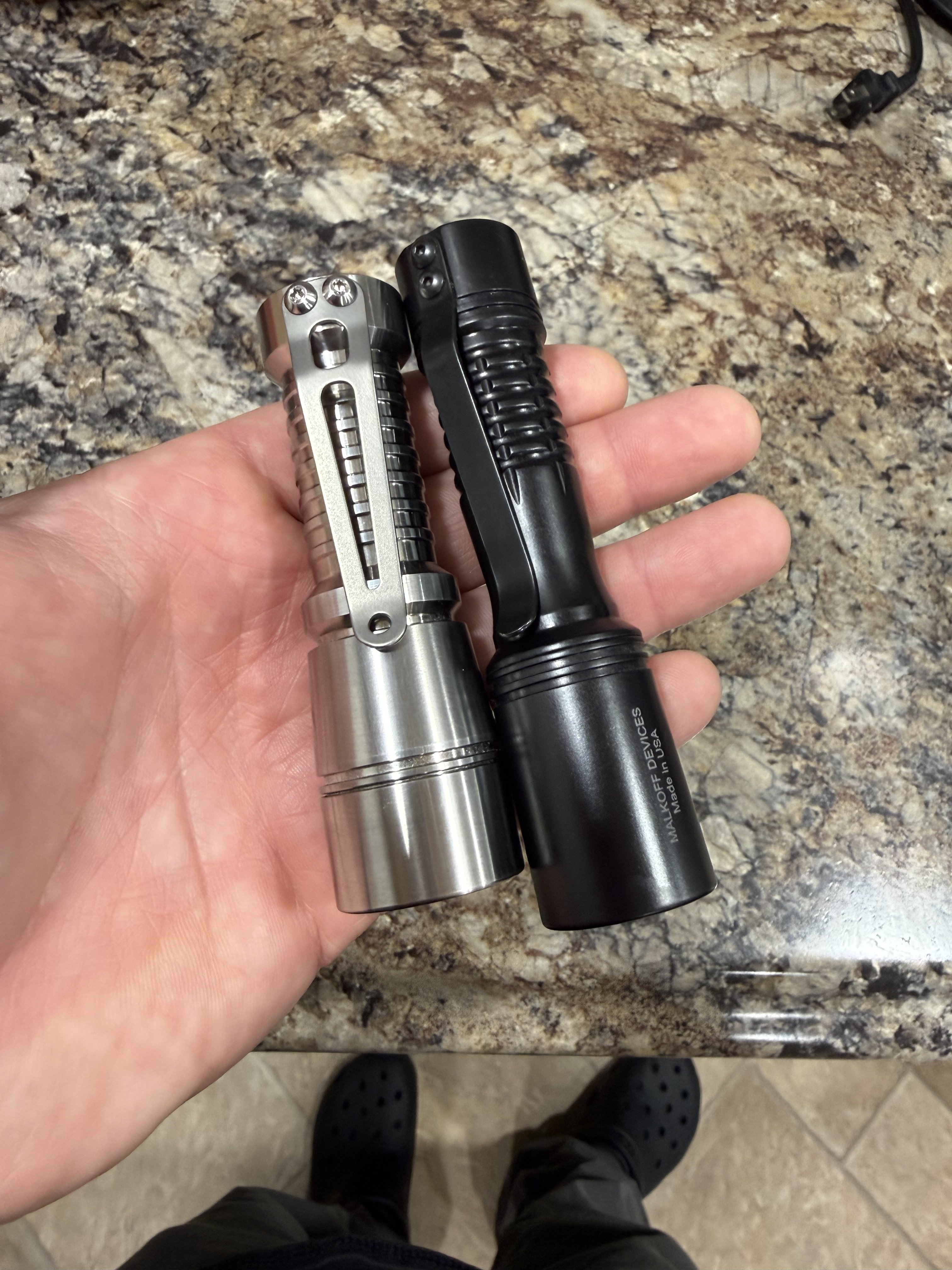
Very nice! McGizmo AA body is probably the best host I’ve ever felt. I’m eyeballing a 2xAA McGizmo Pak next

Those Ti VME heads are definitely worth it. I was surprised how smooth the threads were. Machining is impeccable as well
The McGizmo titanium threads absolutely run counter to every single other titanium object I've ever threaded. I had assumed it was just an inevitable property of the metal, but...nope. Turns out they can be as smooth as brass, too.
Kosen 1800k MDC AA: looks like a release (again) Friday. Maybe the last batch with this version of this LED according to his email. You guys enjoying them who got in on the first batch? After seeing the first batch for sale I immediately had the LED put into an AAA light I have and love it for some warm nightstand illumination. The MDC AA intrigues me but indoors and outdoors at night, 3500k is my preference. I love the MDC AA, and enjoy this emitter, but not sure about the use of the combination of the two. What are you guys using yours for? Still tempted!
I picked one of these up used in the "For Sale" section on a bit of a whim, because I love the 219F (that mimics the high pressure sodium lights). Honestly, I love it way, way more than I thought. It's become my go-to wintertime "pee light." That amazing MDC AA low low is perfect for the middle of the night, and the 1800K is even softer on the eyes. For me, I could use a deep red SST-20 at a brighter output, OR this at the low low. It's an interesting middle ground. If Kosen releases an DR SST-20, then I'm going to have a real mid-night dilemma on my hands, haha.
Still waiting for the day he gets rid of those ugly SST LEDs and starts using nice ones like Nichia
THAT'S MY WIFE YOU'RE TALKING ABOUT
hahha :)

Kidding aside, if he does switch, I'll have to buy a bunch of MDC AA Neutrals and hoard them, haha. I actually prefer how Don's reflector works with the SST-20 vs the Nichia emitters; the edges of the hotspot are just ever-so-softer on the SST-20. It's a really minor difference, but it's the "perfect beam" with the SST-20, versus a "great beam" with the 519A. Interestingly, the Haiku, with it's MUCH deeper reflector ends up looking similar to the SST-20's beam in the more shallow reflector. It's got to be something with geometry and the emitter size.
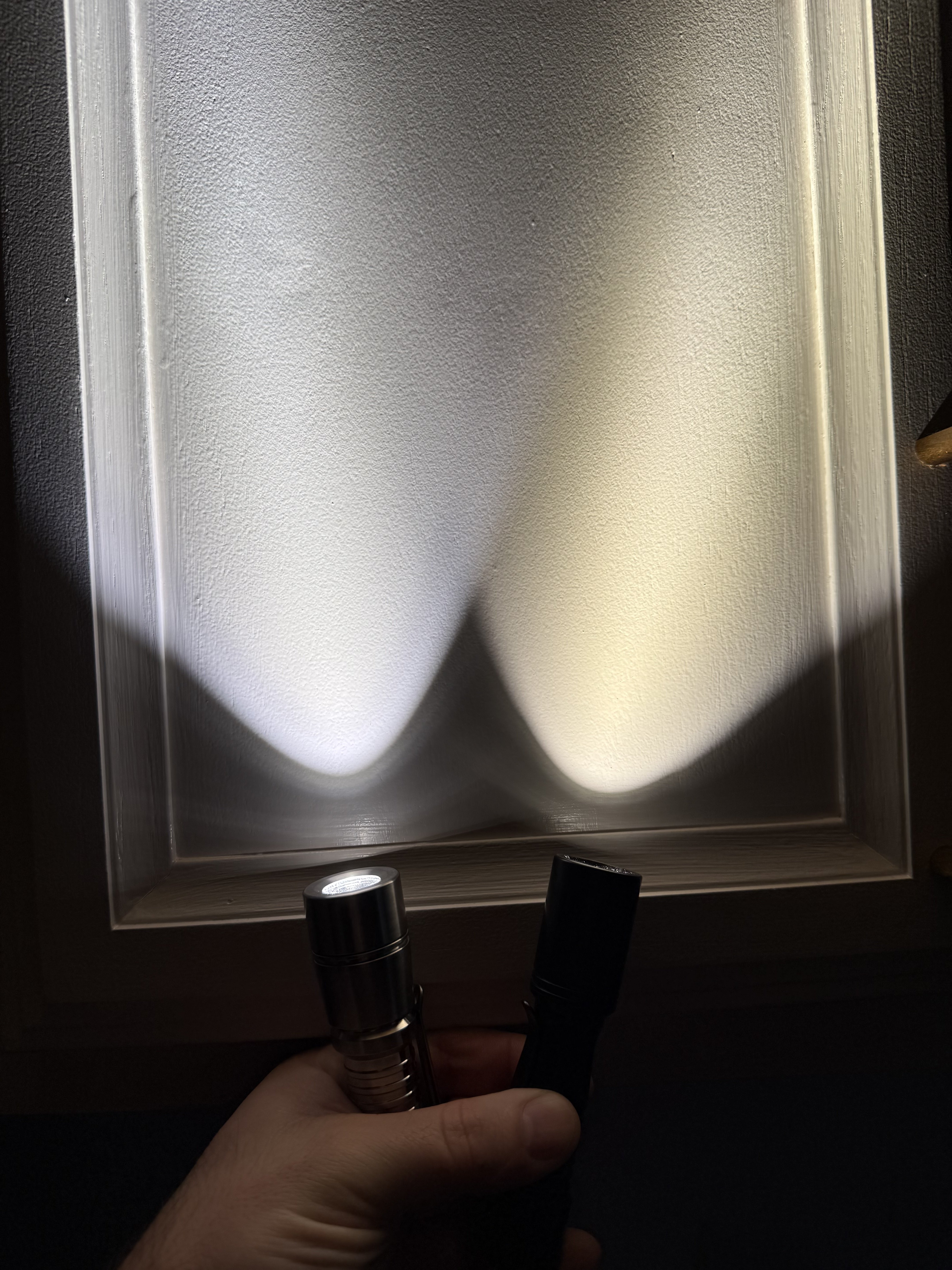
I finally bought the M91BN during the last sale. I loaded it into an Elzetta Charlie with 3x CR123s and ZFL head. At first I was quite disappointed with the beam indoors and at close range (aka white wall hunting). It has a green spot/corona and purple tinge at the edges.

Then I took it outside. It’s glorious! At mid to long range, the beam profile evens out nicely, providing a wide swath of light. It’s gonna be a keeper.
The M91BN is nuts. I find its output is extremely similar to my neutral Wildcat, which is kind of unbelievable, since the M91BN can fit into so much smaller packages.

Also, try the M91BN in a newer MDX head, I think the ZFL heads have the more narrow opening, which causes more of the rings and funkiness in the beam.
I’m gonna assume that 2x18650 M91 build will run 2 hours at 1000 lumens and then proceed to taper in output?
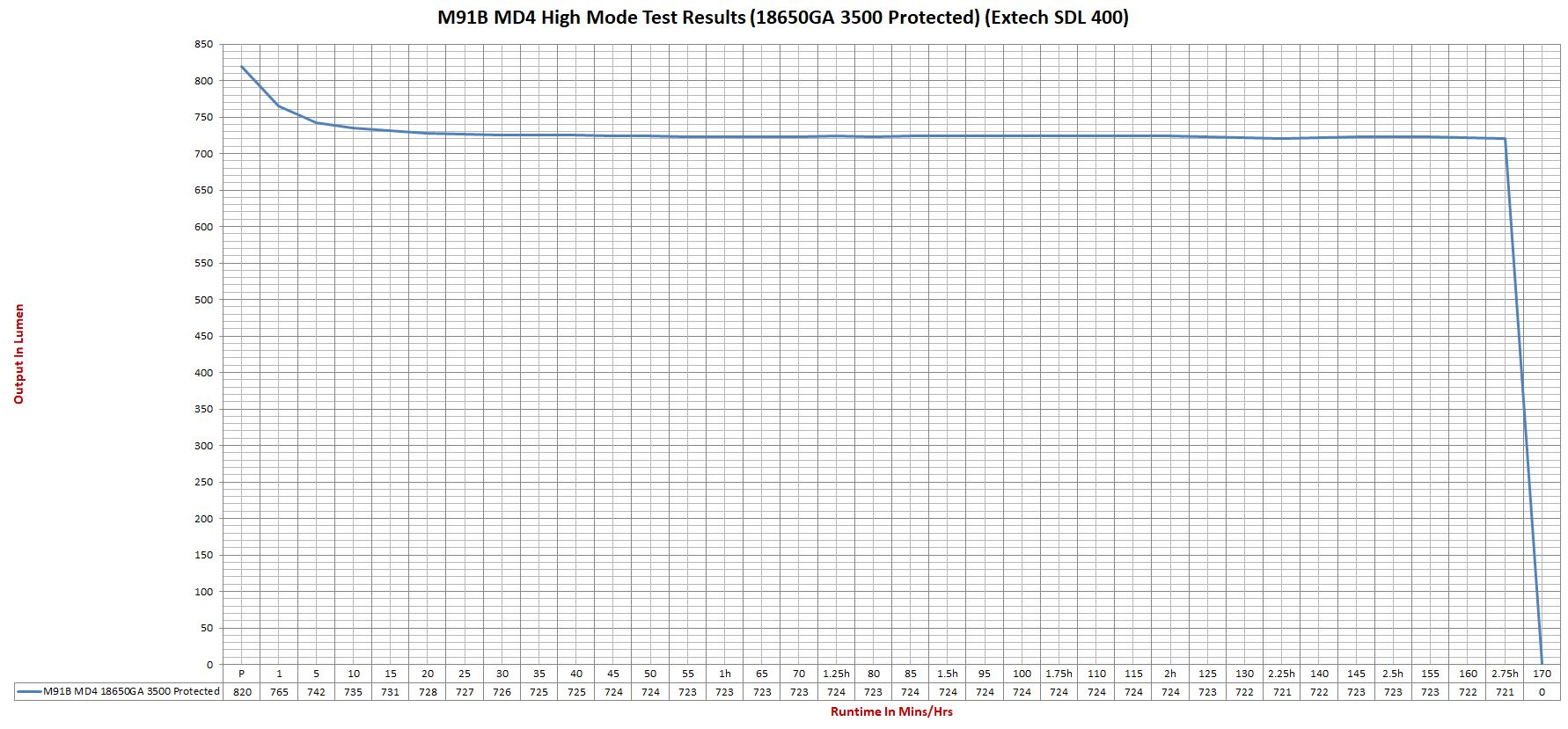
The INFRNL chart I could find that would be most similar is an MD4 with 2x18650, and that puts it into totally flat output:
1766246160023.png


This is the M91T using a single cell:
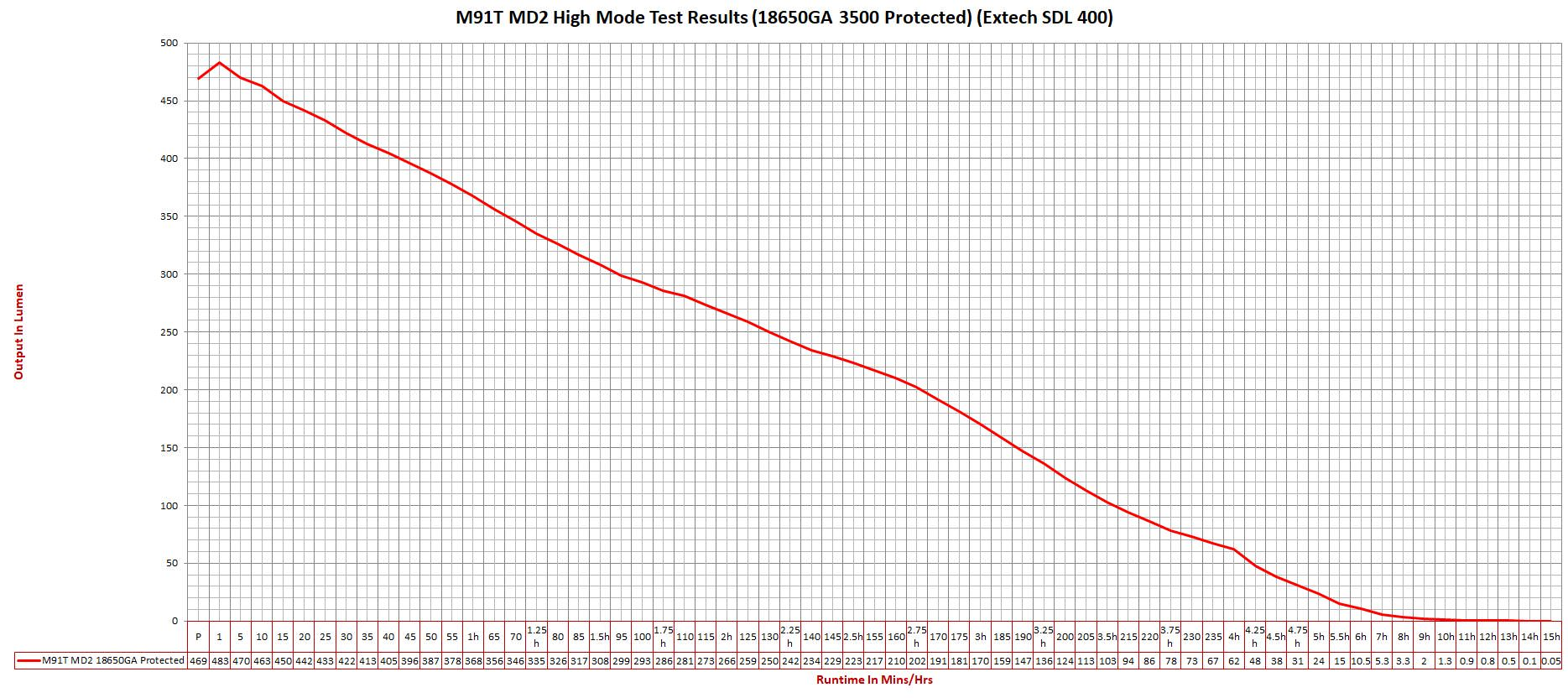
1766246200235.png
 
Just out of curiosity, does the relative tinting make the bowl look yellow but the stream look clear? 🤔
It's a really weird CCT. It looks almost as orange as the 219F that mimics the high pressure sodium lights, but it is high CRI, whereas the 219F is low CRI, haha. If I compare them side-by-side, I have to let my eyes adjust for a few seconds before I can tell them apart, and then the 1800K is very clearly a warm light, where the 219F is clearly an orange one.

So, the end result is that it's VERY VISIBLY ORANGE, but your brain adjusts pretty rapidly, so you "see" colors just fine. IIRC, the 1800K CCT mimics candlelight, so it's very much that same experience; you can SEE the light is very orange, but your brain corrects the inputs, so you still recognize the colors of things. You kind of do this under high pressure sodium, but with the 1800K, there's really no ambiguous situations; i.e. with high pressure sodium, you can tell that maybe two colors are different (contrast is preserved), but you might not know what colors they are, but with the 1800K, you can still discern the base color, but you also kind of get the initial enhanced contrast feeling.

Then, comparing them both to true amber (I have both a Cree and Osram amber), it all gets so much weirder. Suddenly, the 1800K looks downright neutral, and the colors start to be super easy to discern, and the 219F starts looking almost high CRI.

In terms of color discernment, it goes 1800K > 219F > Amber. BUT, on initial turn on, they all look almost exactly the same. It's only after adjusting your eyes and/or doing a side-by-side that they look so distinctly different.

Honestly, I like these the 1800K, 219F, and amber LEDs just for the mind-bending fun of comparing them. It's a very strange experience, but very fun.
 
It's a really weird CCT. It looks almost as orange as the 219F that mimics the high pressure sodium lights, but it is high CRI, whereas the 219F is low CRI, haha. If I compare them side-by-side, I have to let my eyes adjust for a few seconds before I can tell them apart, and then the 1800K is very clearly a warm light, where the 219F is clearly an orange one.

So, the end result is that it's VERY VISIBLY ORANGE, but your brain adjusts pretty rapidly, so you "see" colors just fine. IIRC, the 1800K CCT mimics candlelight, so it's very much that same experience; you can SEE the light is very orange, but your brain corrects the inputs, so you still recognize the colors of things. You kind of do this under high pressure sodium, but with the 1800K, there's really no ambiguous situations; i.e. with high pressure sodium, you can tell that maybe two colors are different (contrast is preserved), but you might not know what colors they are, but with the 1800K, you can still discern the base color, but you also kind of get the initial enhanced contrast feeling.

Then, comparing them both to true amber (I have both a Cree and Osram amber), it all gets so much weirder. Suddenly, the 1800K looks downright neutral, and the colors start to be super easy to discern, and the 219F starts looking almost high CRI.

In terms of color discernment, it goes 1800K > 219F > Amber. BUT, on initial turn on, they all look almost exactly the same. It's only after adjusting your eyes and/or doing a side-by-side that they look so distinctly different.

Honestly, I like these the 1800K, 219F, and amber LEDs just for the mind-bending fun of comparing them. It's a very strange experience, but very fun.
That's cool and all, but you still haven't answered my question about the pee...😅😂

Seriously, though, after using and visually adapting to that amber light, does everything look more cool in comparison?
 
That's cool and all, but you still haven't answered my question about the pee...😅😂

Seriously, though, after using and visually adapting to that amber light, does everything look more cool in comparison?
Hahah, it all depends on the night, man.

That's an interesting question.
After playing around with a few lights of different CCTs with the amber, it seems like it's not a broad effect. The lower the CCT, the more pronounced the effect. By about 4000K, I don't really notice a difference. 1800K, 2700K, and 3000K seemed to still see the effects, but by 4000K, I didn't really feel like it was shifting. It just looked really neutral. It seemed like it was a similar effect with deep red, albeit a VERY reduced effect, and also bound to the lower CCTs.

If you use them all side-by-side, you'll see the range, and the effect kind of disappears, too. It's really neat, but it is also oddly frustrating. OBJECTIVELY, I know what I am seeing isn't "accurate," but our perception isn't mechanical, and the relative comparisons are really what matter, and it's very strange to watch those shift...right before your eyes.

It reminds me of when you learn that orange and brown are actually the same thing, but you only see one or the other based on the context (which can affect your perceived saturation of the color); the same exact color can be seen as either (e.g. using a brown/orange square on a black background vs. a white one, but not looking between the two, and then looking at the two - the difference suddenly becomes clear, and you can no longer "see" the similarity, and they will stay fixed to the color you now see them as...until you forget and try it again down the road). Or, similar to the fascinating differences across cultures and languages for where does Blue end, and where does Green begin, or to "purple" and blue (wherein, historically, many things we'd categorize today as "purple" were blue in antiquity; e.g MANY flowers are named "blue," but look purple [my absolute favorite being the Great Blue Lobelia, because that also just looks awesome because it's a purple Cardinal flower]).

Sometimes, it's things like this that remind me, playing with human perception is probably a quite large reason of why I enjoy flashlights, haha.
 
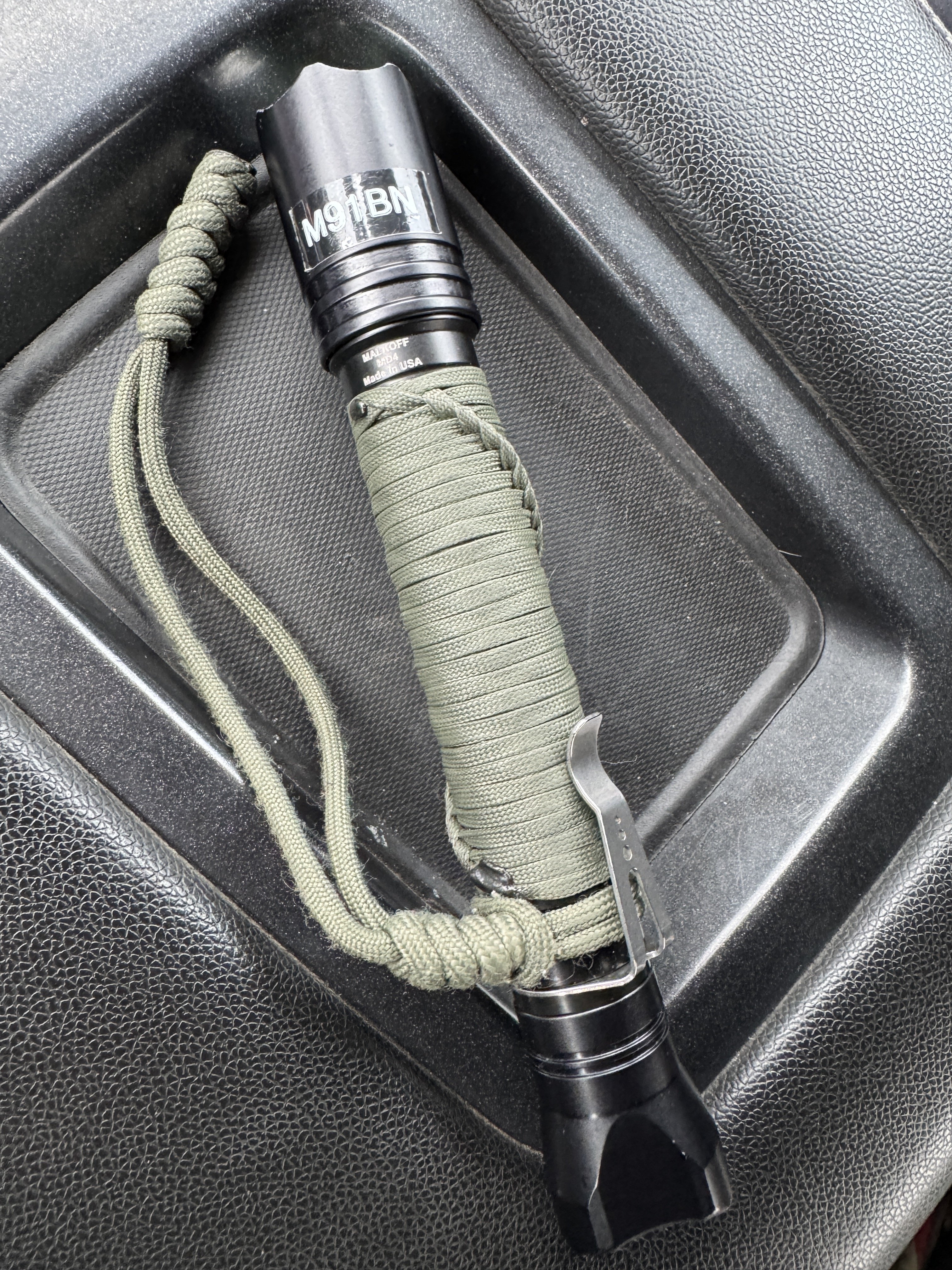
Reminds me of back in the day when Phil Elmore (The Martialist) was doing cord-wraps on traditional 2AA Mini-Mags. Looks good.
Thanks. There were many videos for “hiking stick wraps” available. My only suggestion is that the top knot and bottom knot are a “constrictor knot” versus a typical clove hitch. It makes it alot tighter.
 
I bought an MDC CR123 4000K SST-20 during the last sale. I only use rechargeables, but I like the brightness levels better on the CR123 model and was also hoping for better regulation on high vs the li-ion model. I got a set of keeppower 1000mAh 3v RCR123s to run it on.

On high I got almost exactly 50 minutes of regulated output which is good, but then it shuts off without warning which is less good. Maybe I need to find RCR123s that drop their voltage when capacity is low. I know I've seen 1.5v li-ion based AAs that do something like that.

The same battery gave me 37 minutes in an HDS 200 with burst disabled.
 
On high I got almost exactly 50 minutes of regulated output which is good, but then it shuts off without warning which is less good. Maybe I need to find RCR123s that drop their voltage when capacity is low.
You probably triggered the low discharge protection on the cell. That's a good thing, as it prevents you from overdischarging the cell. If you would like the tapered dimming effect, a primary would be the way to go. Otherwise, you'd have to convince Malkoff to put a "smart circuit" in there like HDS does, being able to monitor the voltage and adjust accordingly. Malkoffs are essentially direct drives with rev limiters.

**added, I wouldn't doubt that it's possible to have a circuit that variably drops the voltage in proportion to available voltage, i.e. cell 4.2V is 4.2V output, 3.7V cell scales to output 3v, 3V scales to output 2.5V, and near cutoff of cell 2.8V would be around 1.8V output. Something like that, right?
 
You probably triggered the low discharge protection on the cell. That's a good thing, as it prevents you from overdischarging the cell. If you would like the tapered dimming effect, a primary would be the way to go. Otherwise, you'd have to convince Malkoff to put a "smart circuit" in there like HDS does, being able to monitor the voltage and adjust accordingly. Malkoffs are essentially direct drives with rev limiters.

**added, I wouldn't doubt that it's possible to have a circuit that variably drops the voltage in proportion to available voltage, i.e. cell 4.2V is 4.2V output, 3.7V cell scales to output 3v, 3V scales to output 2.5V, and near cutoff of cell 2.8V would be around 1.8V output. Something like that, right?
Yeah the cells I have seem to hold 3v until they shut off. Some of the li-ion AAs are 1.5v but then drop to 1.1v when they're low. Haven't seen something similar for CR123 though
 
Most malkoff drivers will drop out of regulation below a certain voltage, which I actually like because it gives long and gradual decline with plenty of time to swap out cells. The new li-ion driver drops out of regulation almost immediately though.

Doesn't happen here because the cell voltage remains constant.
 
Back
Top