Convoy flashlight opinions?

Candle Power Forums

Help Support Candle Power:

+

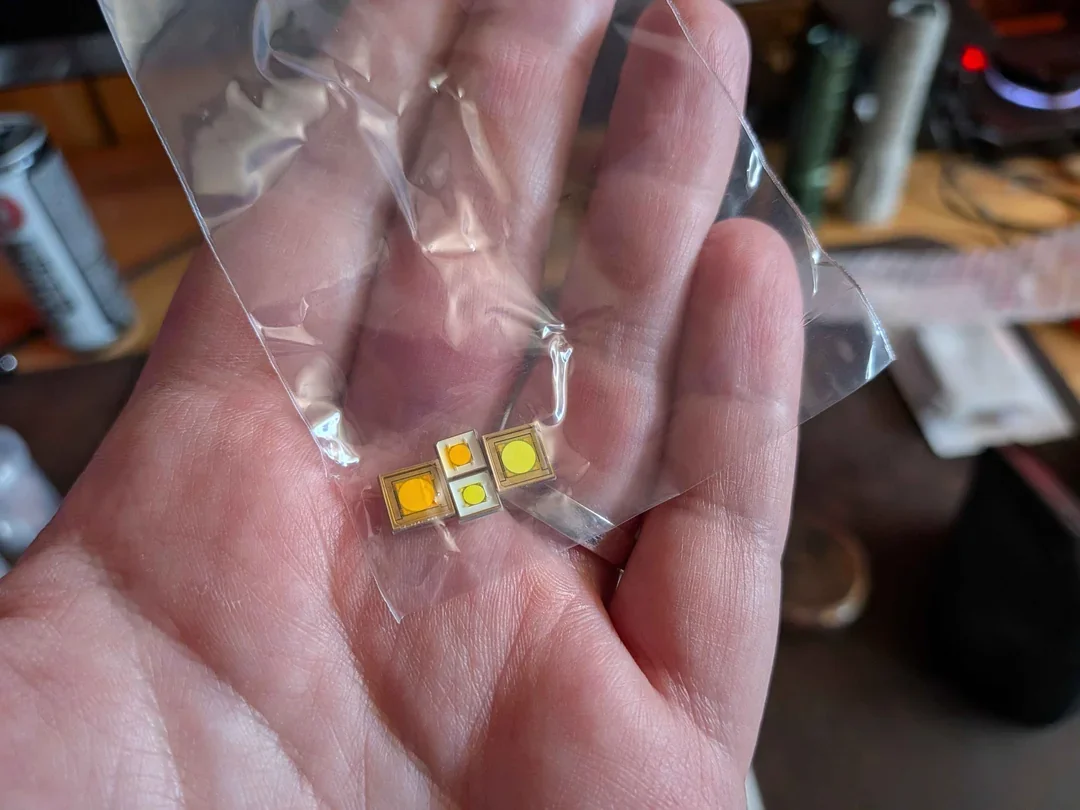
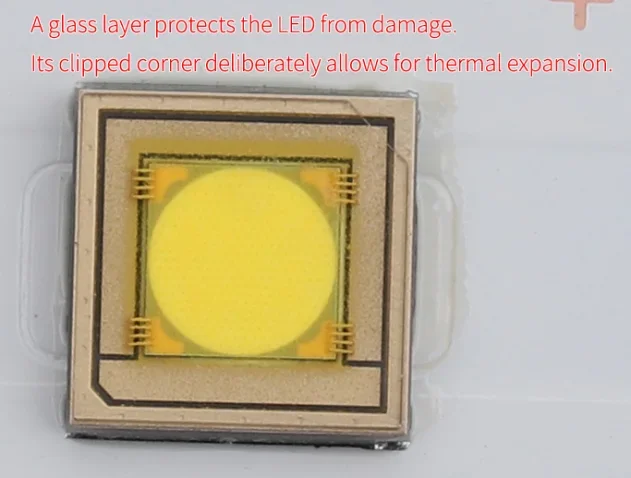
F150R emitter coming ~ High Current Capacity: Supports up to 30A maximum current,
the larger ones in picture

lumen numbers are going to be interesting

1785520337638.webp
 
+

Just noticed F150R are avail. in the L7 light in only 4000K at this time> so high'ish CRI
L7 is a more expensive Convoy for sure

L7 with an SBT90.2 still one of the best emitters ever.
1785522498226.webp
 
Last edited:
Speaking of the subreddit, has anyone else seen the new LHP531? Simon's data says they're testing as R9080, negative duv, and reduced cyan dip on par with the SFT40/70 3000K. In multiple CCTs too.

If true, the GT FC40 will finally have competition in the hi CRI large die emitter niche.

I think I'm gonna hold off on the M26D SFT70 4000K I was planning to get for now, and see what comes from this.

EDIT: This thread here specifically:
 
Last edited:
I think I'm gonna hold off on the M26D SFT70 4000K I was planning to get for now, and see what comes from this.

EDIT: This thread here specifically:
4klq5p.gif

Just shut up, and take all the upvotes!

Thanks a lot for the link!
I didn't know there was a LHP531 hCRI in the works, but that could really be a game changer. Presumably, this will be another Convoy custom chip?

Great timing too, because if it arrives in 2-3 months, that's just in time before the winter darkness sets in for real.
December is like the prime panda month for us - all you see is white snow during the day, and all you see any other time is blackness.

Only tried the LHP531's sibling, the LHP73B, and while I didn't like the tint very much (1800K, but way too Orange for my liking), the brightness was very impressive compared to the 519A 1800K.

A hCRI emitter even brighter than the SFT-70 would definitely have my attention! Maybe I should brush off my plans for a Convoy 3X21C again...
https://convoylight.com/products/convoy-3x21c-21700-flashlight
 
+

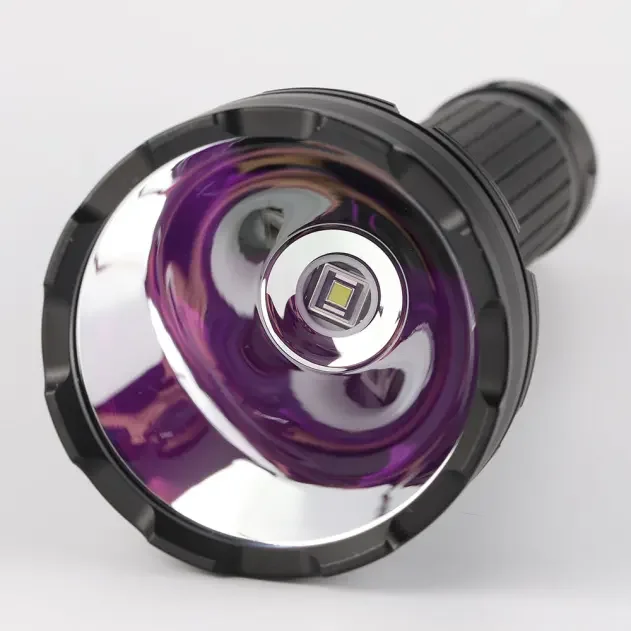
Better shot of the Convoy F150R

1785721585918.webp


Looking at the specs, believe it's saying 6800lm at 20A (68Watts)
doesn't say the color temp,, guessing it's for the 4000K, only tint available right now
(two tests done; the specs are very similar for both emitters tested)
They will take 30A,, so very strong 8000lm possible

Looks all business to me ^
 
Last edited:
+

Simon, if your tuning in
a higher voltage buck driver to 25A in some for your multi cell lights would be fantastic for your F150R

==== Series voltage in your three 21700 lights, instead of parallel.
two batteries down, one up👍
 
==== Series voltage in your three 21700 lights, instead of parallel.
two batteries down, one up👍
I'm game for having a 5000 mAh ~12 V option, but not at the expense of a 15.000 mAh runtime monster.

A series configuration would make it like the Emisar M44, right?
Can someone please explain to me the upside of that? As I understand it, with the Voltage going up, the Amperage goes down - and with that, less heat - but what does that mean for the emitters in terms of performance?

I may be off, but in my head that sounds like a better and easier regulated, longer Turbo with less heat, but with reduced runtime.
I definitely see the appeal of that, and I can only speak for myself here, but I would much rather have the longer runtime, and keep using common sense (and gloves, if need be) for the Turbo usage.
 
I'm game for having a 5000 mAh ~12 V option, but not at the expense of a 15.000 mAh runtime monster.

A series configuration would make it like the Emisar M44, right?
Can someone please explain to me the upside of that? As I understand it, with the Voltage going up, the Amperage goes down - and with that, less heat - but what does that mean for the emitters in terms of performance?

I may be off, but in my head that sounds like a better and easier regulated, longer Turbo with less heat, but with reduced runtime.
I definitely see the appeal of that, and I can only speak for myself here, but I would much rather have the longer runtime, and keep using common sense (and gloves, if need be) for the Turbo usage.
+

Same runtime, you're just trading/converting Voltage for Amps. You still have the same total mAh , just wired different
Doing this you have more stable & consistent Voltage to the driver, so arguably better performance.

and with less Amps pushed
=> things run cooler and everything is happier.

Can't think of a scenario that less voltage, in anything, is better
___________________________________________________________________________________
add: I charge my solar LFP batteries in series (24V) and they will charge at say 25Amps.
If I was to charge them in parallel (12V with tons more silly wiring), they would be charging at around 50Amps,, that would become so hot it'll start damaging my wiring connections ect.. It's rather mindless to do it that way.
Series is same total Watt Hours, just wired more efficiently
 
Last edited:
+

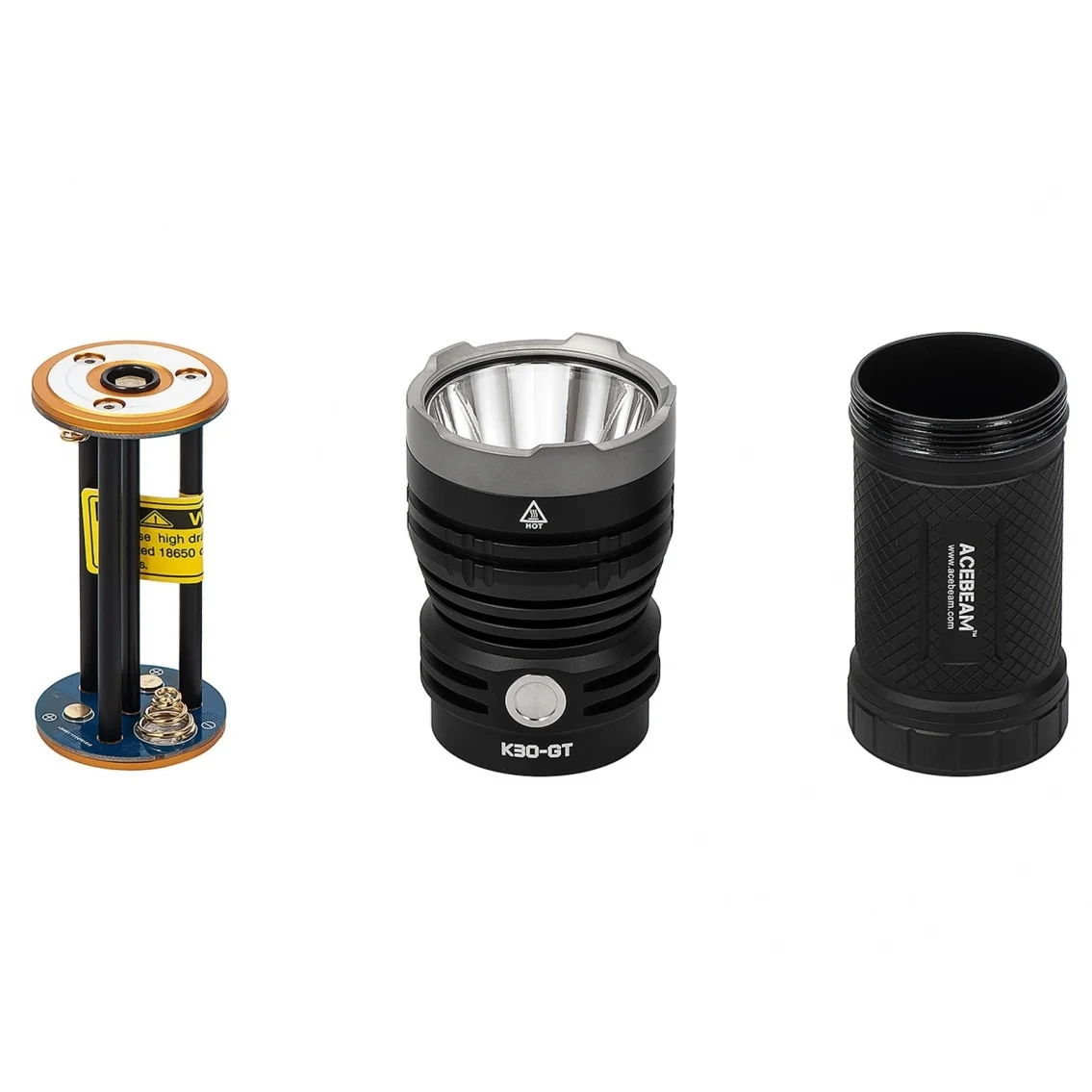
Look at the Acebeam K30 GT battery carrier, using 18650
two up, one down series voltage.

For Convoy, just do that w/ 21700s'
same Watt Hours or mAh of your cells

1785769455258.webp
 
Look at the Acebeam K30 GT battery carrier, using 18650
two up, one down series voltage.

For Convoy, just do that w/ 21700s'
same Watt Hours or mAh of your cells
I am familiar with the design. But the mAh is multiplied in a parallel configuration compared to a series configuration.

I don't know much about electronics, and have frankly almost given up on it, but I do know that one. Volts * Amps = Watts. Or in terms of mAh, it stays the same as a single battery in a series configuration. What I do NOT know anything about is how drivers work, or the voltage range of any emitters, or how many amps it's possible to feed them before they burn out.

3x 5000 mAh, 3,7 V in series = 5000 mAh, 11,1 V
3x 5000 mAh, 3,7 V in parallel = 15000 mAh, 3,7 V
Amps and Watts (and heat) of course depending on the draw (driver, number of emitters etc.), and how much the cells can deliver.

^ Do we agree on that? If we do, then we agree all the way. 😎
Higher voltage means less Amps, and that, as I said above, means less heat - and THAT is ALWAYS a good thing, on that we heartily agree!

I do wonder how my Fenix TK75 / TK76 configuration works though. They have a "2P2S", 4x 18650 battery carrier. With 3500 mAh cells, that should make each carrier 7,4 V, 7000 mAh - but how does it work with 3 such carriers in a series configuration? On paper, it should triple the overall voltage, which I would assume would be burning out the LEDs. But the light works the same whether it's with 1 or 3 carriers.

My guess has been the driver is sorting all of that out (though a 7,4 - 22,2 V driver would be wild in a flashlight, especially in a light as old as the TK76). It would also explain why Fenix says 3x carriers is the maximum. 4 carriers is borderline the physical maximum before needing to cut and shorten the carrier springs.

I would trust a parallel configuration more than a series one though, especially with unprotected cells. But again, that may just be down to my limited knowledge.
If something fails in a series config, the appliance would stop working. If something fails in a parallel config, it would still work, but with increased load on the remaining parts.
 
Last edited:
3x 5000 mAh, 3,7 V in series = 5000 mAh, 11,1 V
3x 5000 mAh, 3,7 V in parallel = 15000 mAh, 3,7 V
+

Watt Hours* are the exact same for both ^
Parallel multiplies mAh / Series multiplies Voltage
*total electrical capacity

Voltage doesn't make things hot, Amps do...
The net gain for Series is everything runs cooler.
## there's a reason why EVs' are 800V DC . if you tried to do it at 100V, everything would melt from the extreme Amps then needed!

_________________________________________________________________________
Simons 3V 20A buck driver in many lights,
it's taking Voltage (bucked from 8.4V) and making Amps with it = so the Amp draw on batteries {to produce the 20A to emitter} is only 10A

hope that all makes sense
 
Last edited:
Back
Top