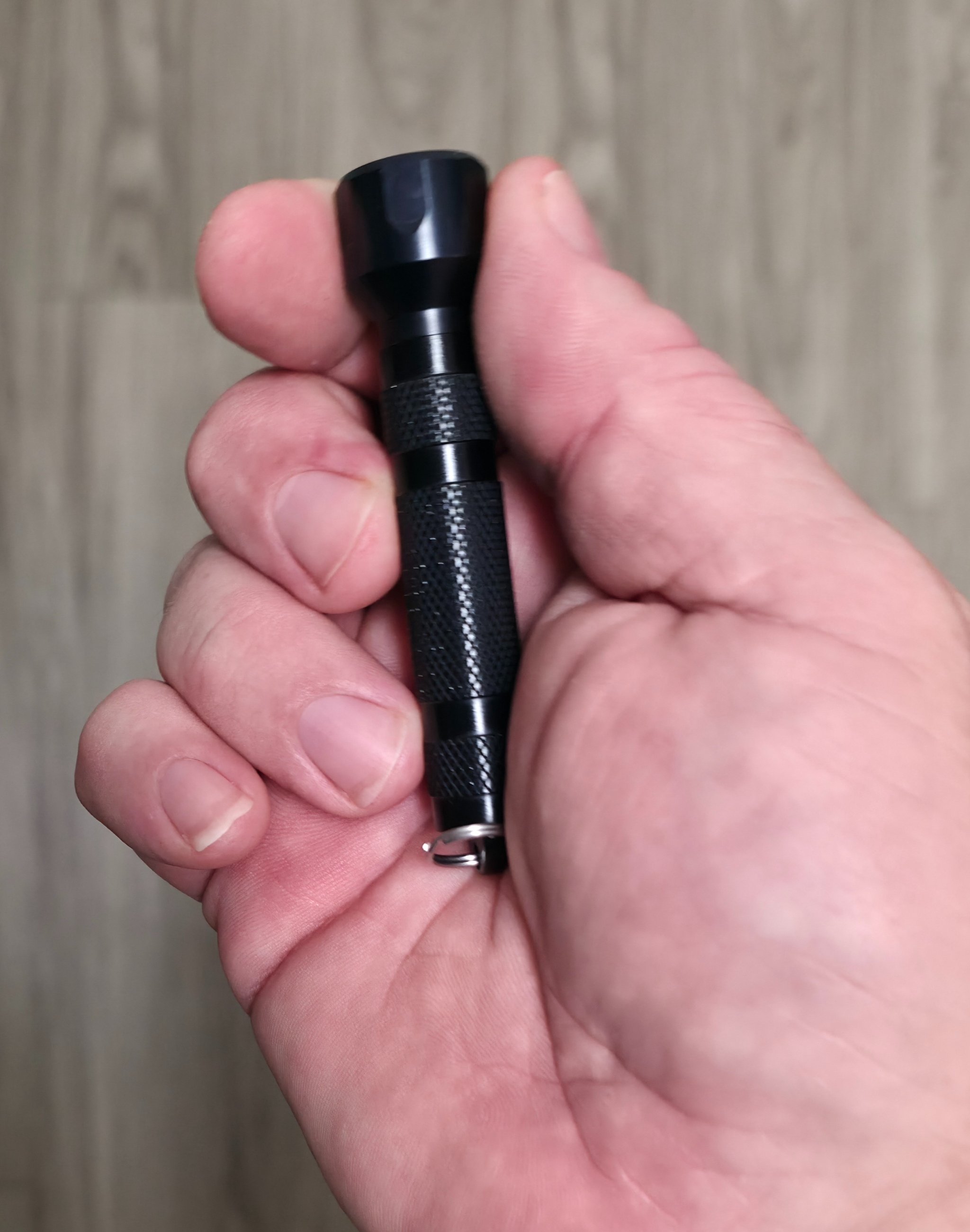
Peak aficionados, show and tell!

Candle Power Forums

Help Support Candle Power:

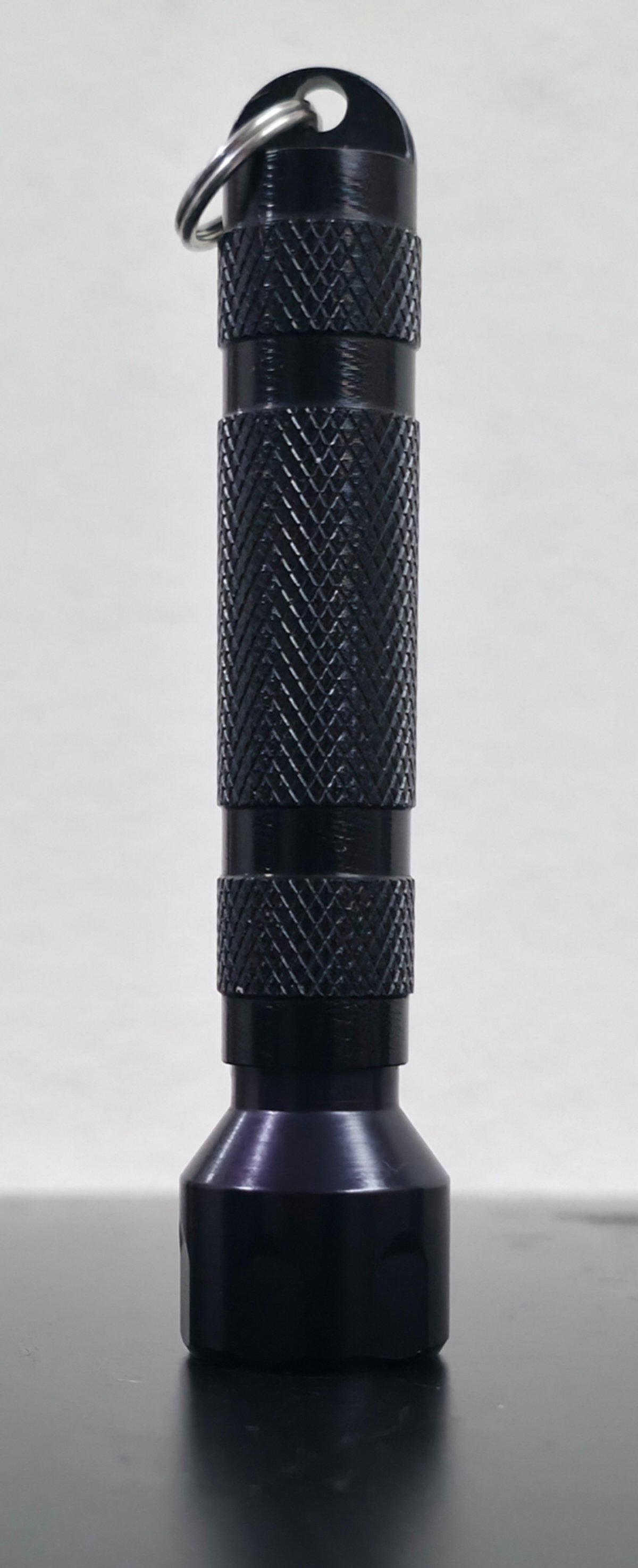
Got my El Capitan a little earlier today, and regret not getting it in stainless, lol. As my first Peak, it has a generally positive impression….

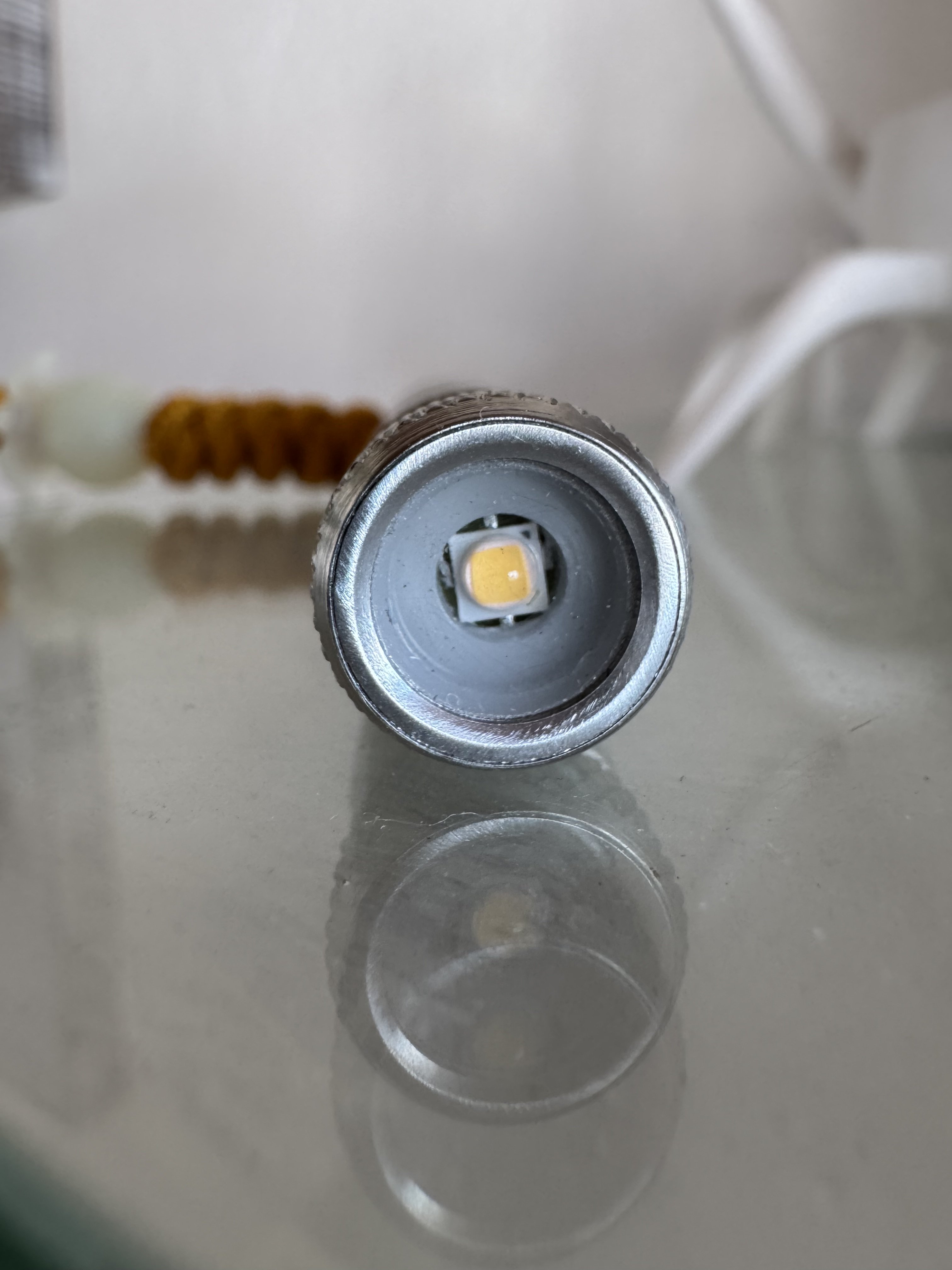
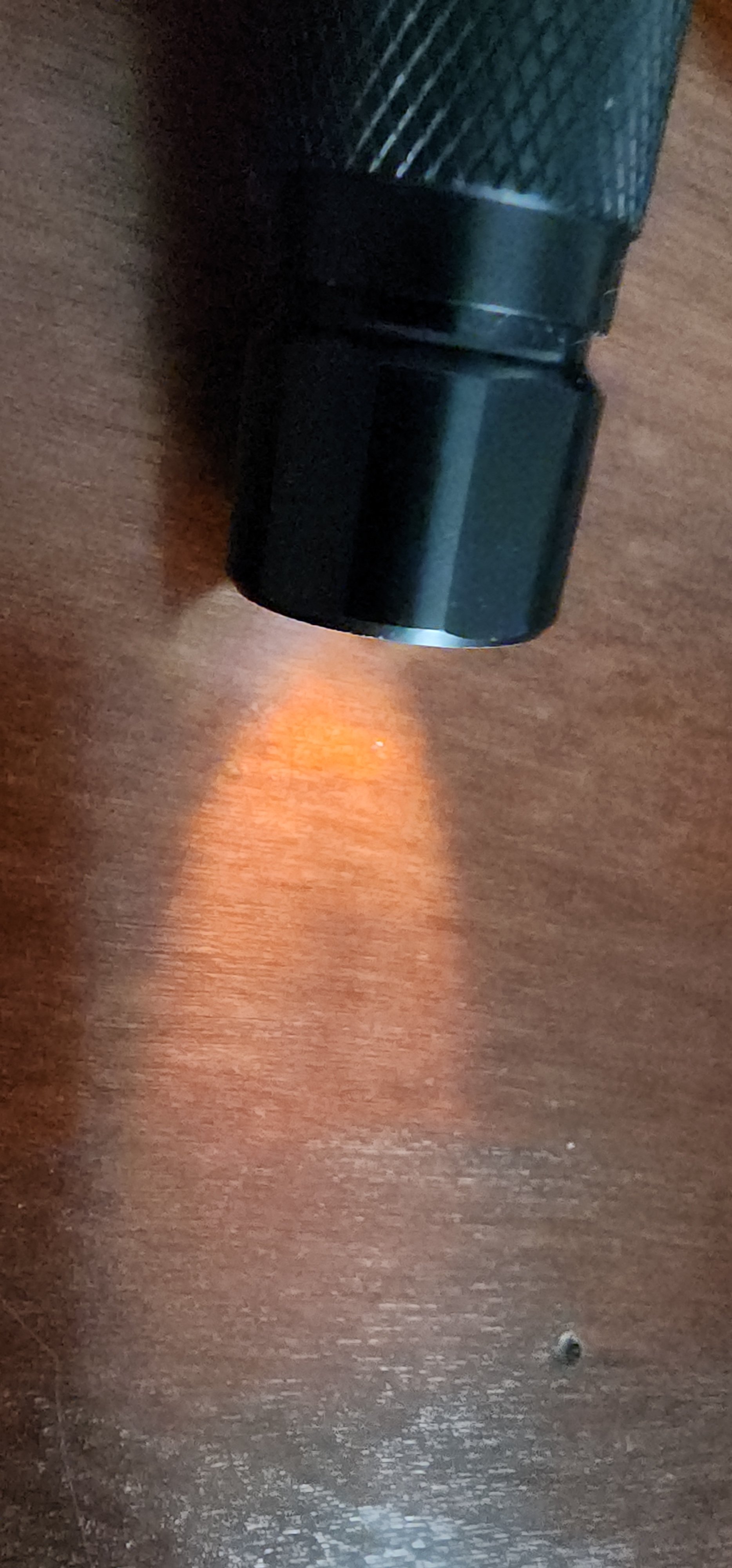
The CCT seems to be around 3000k, and feels like a more yellow sst-20. the hotspot it throws is quite nice, but has corona artefacting due to the nature of the TIR. The lens is nice and clean.
Dc38 — did you order the “hiCRI” emitter option?
And can you say more about the experience of using the QTC? What’s it like to turn on, adjust, dim, etc? How bright and how dim will it go, and how many degrees of rotation stand between the two extremes?
I’m considering trying an El Cap myself, and I’m curious.
 
Dc38 — did you order the “hiCRI” emitter option?
And can you say more about the experience of using the QTC? What’s it like to turn on, adjust, dim, etc? How bright and how dim will it go, and how many degrees of rotation stand between the two extremes?
I’m considering trying an El Cap myself, and I’m curious.
I did indeed order the hiCRI option, I don't have a photometry tool to test the cri or tint. It's very yellow compared to SST-20 in 3000k. If you have Nichia 519A on hand, I think you would benefit from getting in touch with Robyn to ask if you can send her one to use in a custom build.

**add:
Based solely on the observation that my anodizing arrived chipped, and having no experience with the other materials or finishing, I'd probably recommend the stainless option instead where dings may add character rather than removing from it...it will be much heavier as well, but with the alkaline inserted, this Aluminum iteration is about 54 grams.

TLDR**

As far as the QTC goes, it's a tiny tiny tiny bit finicky, but that's to be expected, and is much better than some other iterations I have used long ago. The threads and Oring are what give it the tight fitment, and adjustment between the range of brightnesses is quite easy to fine tune with 2 hands. The dimmest I can get it consistently after the qtc settle expandes seems to be sublumen, below half a lumen.

It can get lower momentarily when creeping the looseness, but the qtc eventually expands a little bit to restablize at that mode. Getting too loose means insufficient battery contact pressure, and it won't turn on. There is distinct battery rattle when an alkaline is used in these lower/looser modes, so if you're in a high impact/jostling environment, those lower ranges may not be consistent or accessible to you, and a 1/8 or 1/4 (45/90degree) turn should get you to a sufficiently consistent brightness. (it's one of the nags that I knocked on for quality, the uncentered positive nub means the battery can shift in lower modes, meaning inconsistent contact at those levels.)


End TLDR**

Range, finicky firefly modes to around 70 lumens on a fresh alkaline, after a few hours settles to around 20-30 lumens for a while.

Degrees of activation, about 180degrees (or pi) from point of activation to max available brightness.

Overall, I appreciate the light, and it definitely seems to be designed to be used in its middle portion of brightness range (roughly 10-120 degrees from minimum point of activation, or minus 170-60 degrees from maximum). On the lower 3-5 lumen range, I imagine this will run continuously for something like 2-3 days. On firefly, (eyeball estimating to 0.1 lumens, probably less), your guess is as good as mine...I imagine it might last up to, and maybe even over a year, lol.

Let me know if there's anything else you'd like to see/me to test

pics below:

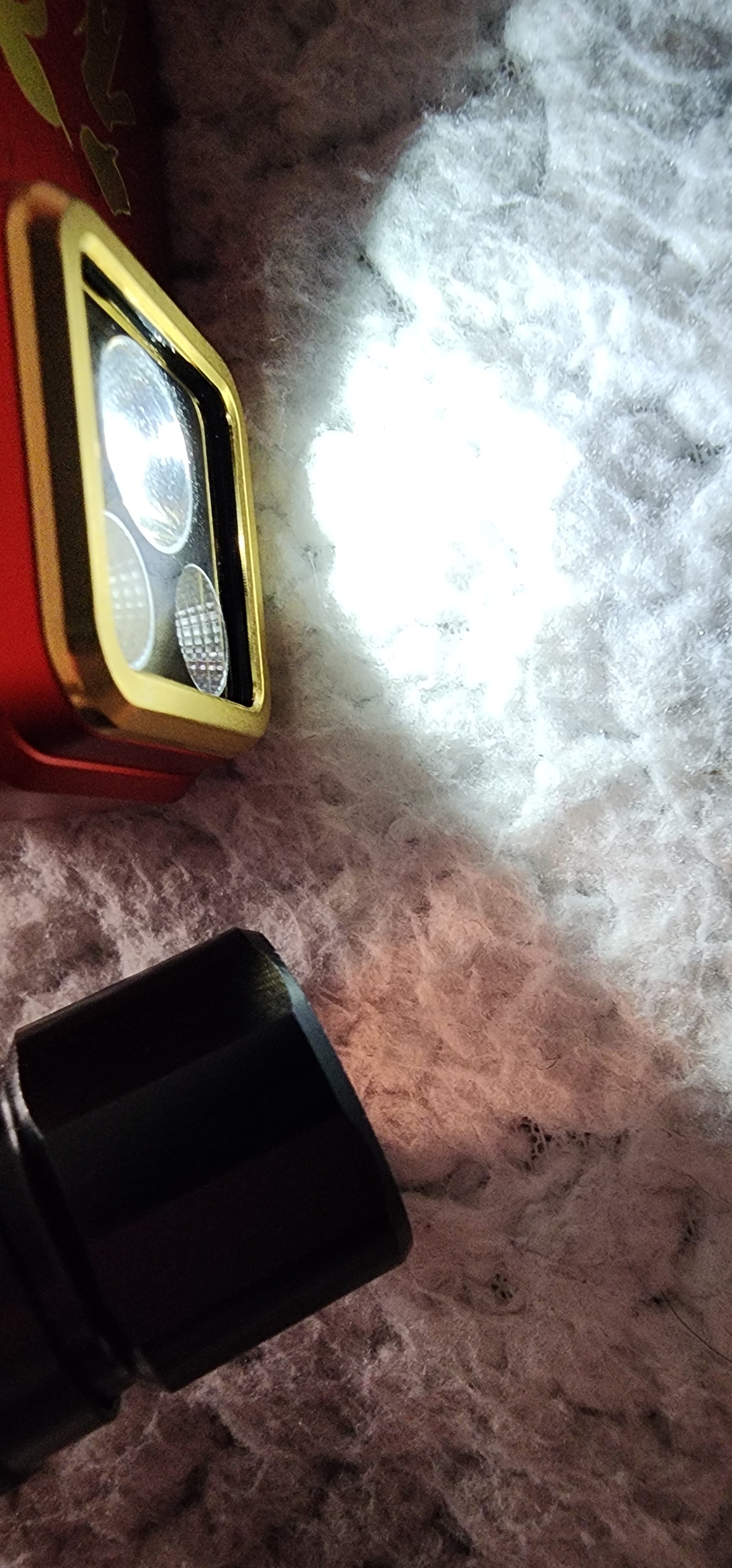
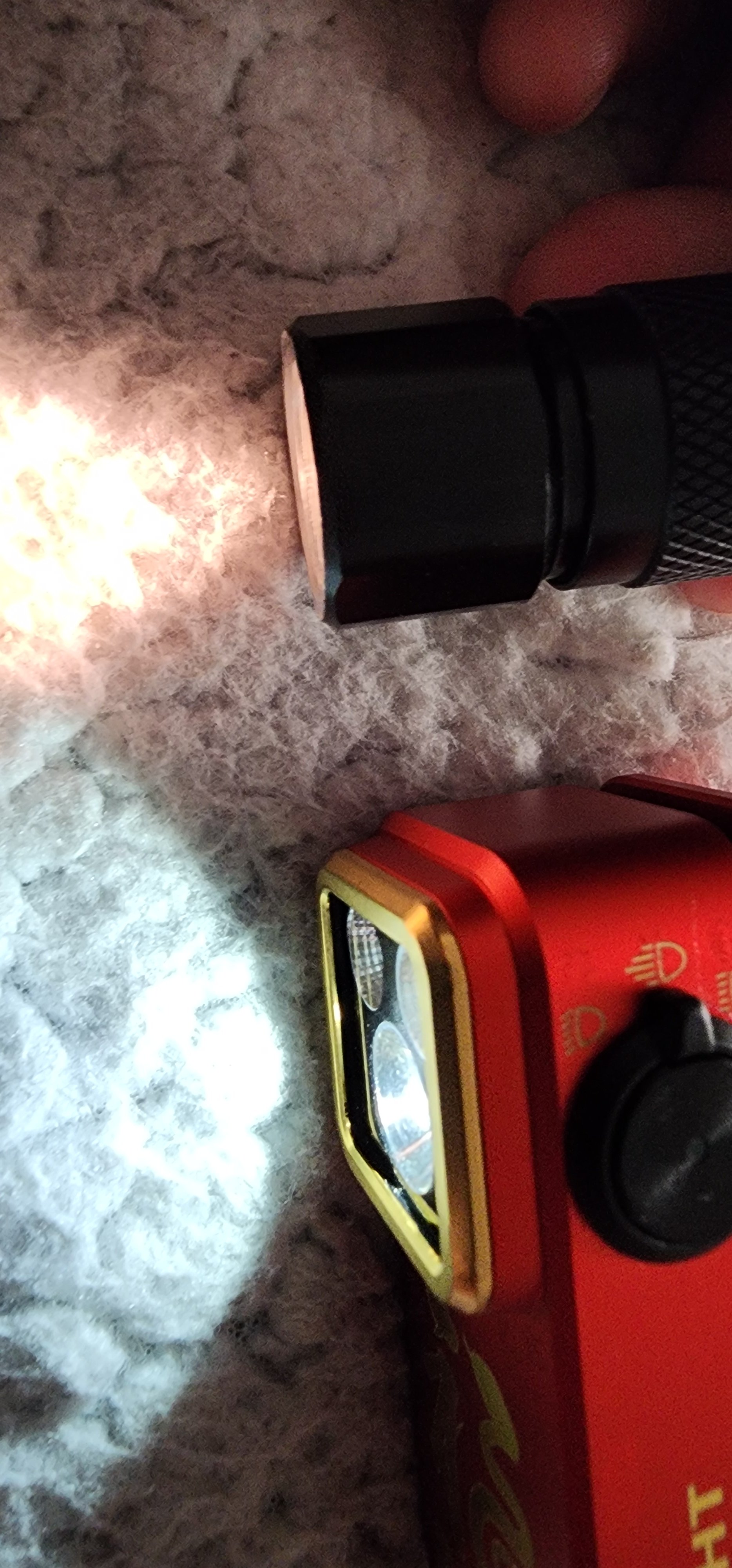
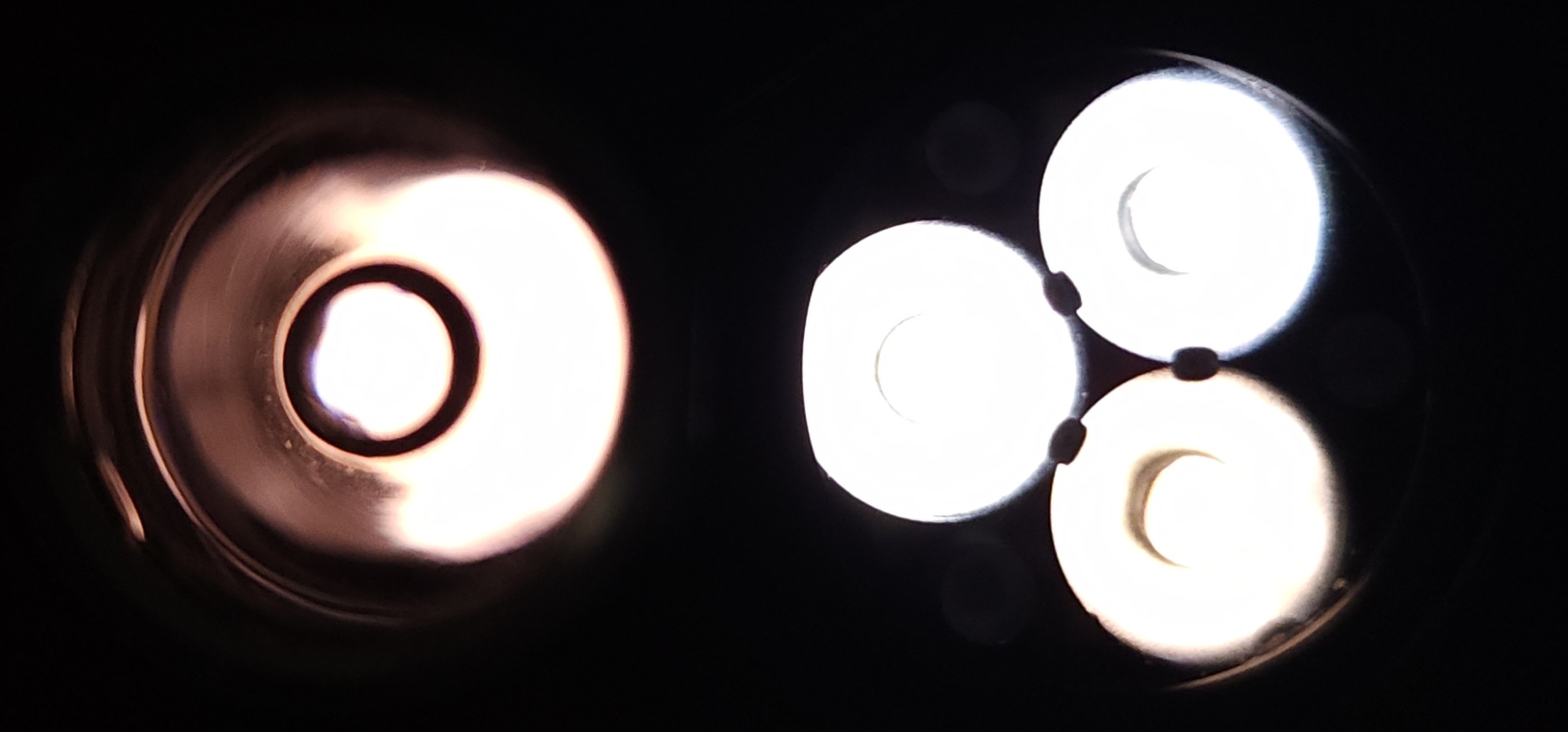
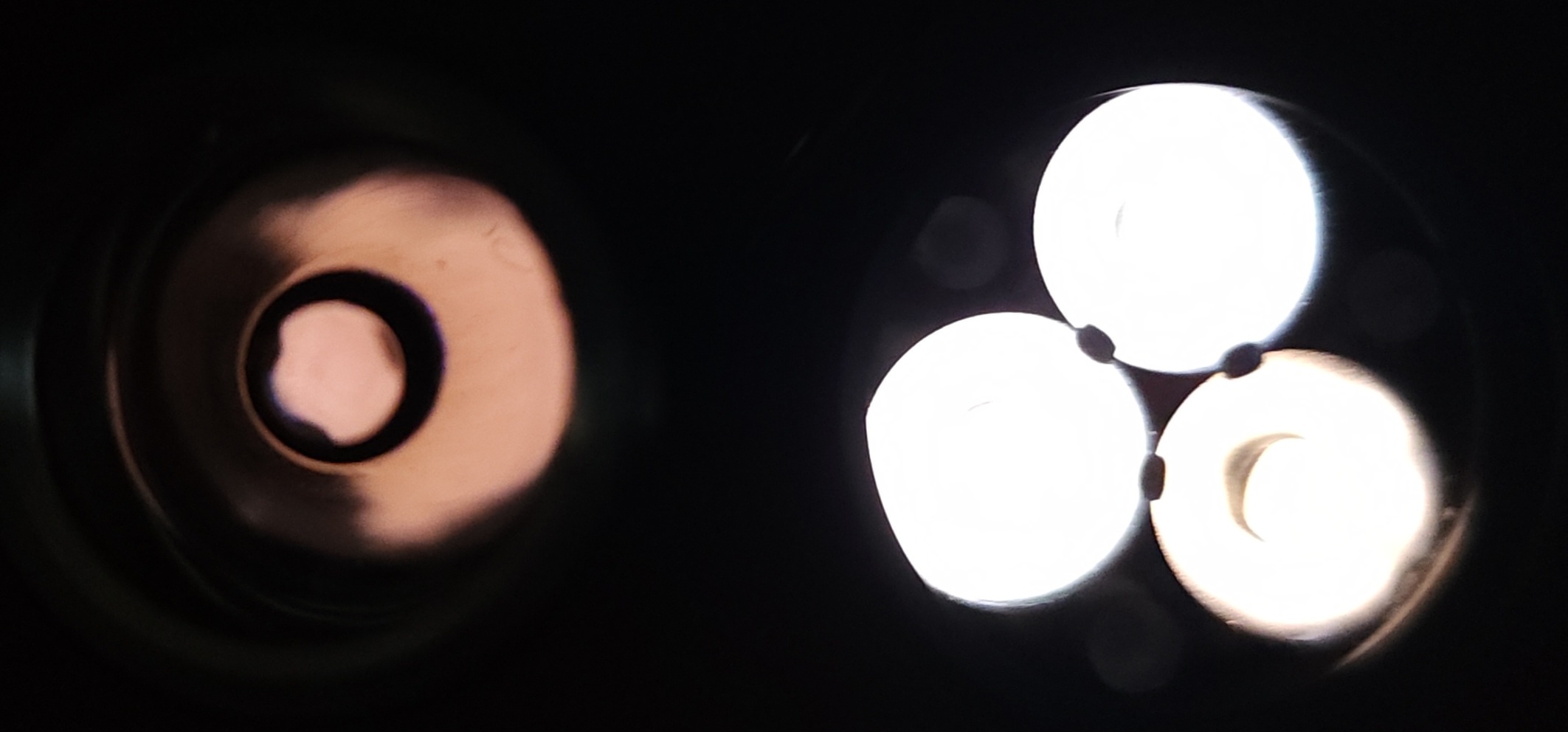
sublumen firefly and vs. oclip pro at moonlight
740.jpg
741.jpg


similar 1-2 lumen mode vs Olight Oclip Pro
744.jpg


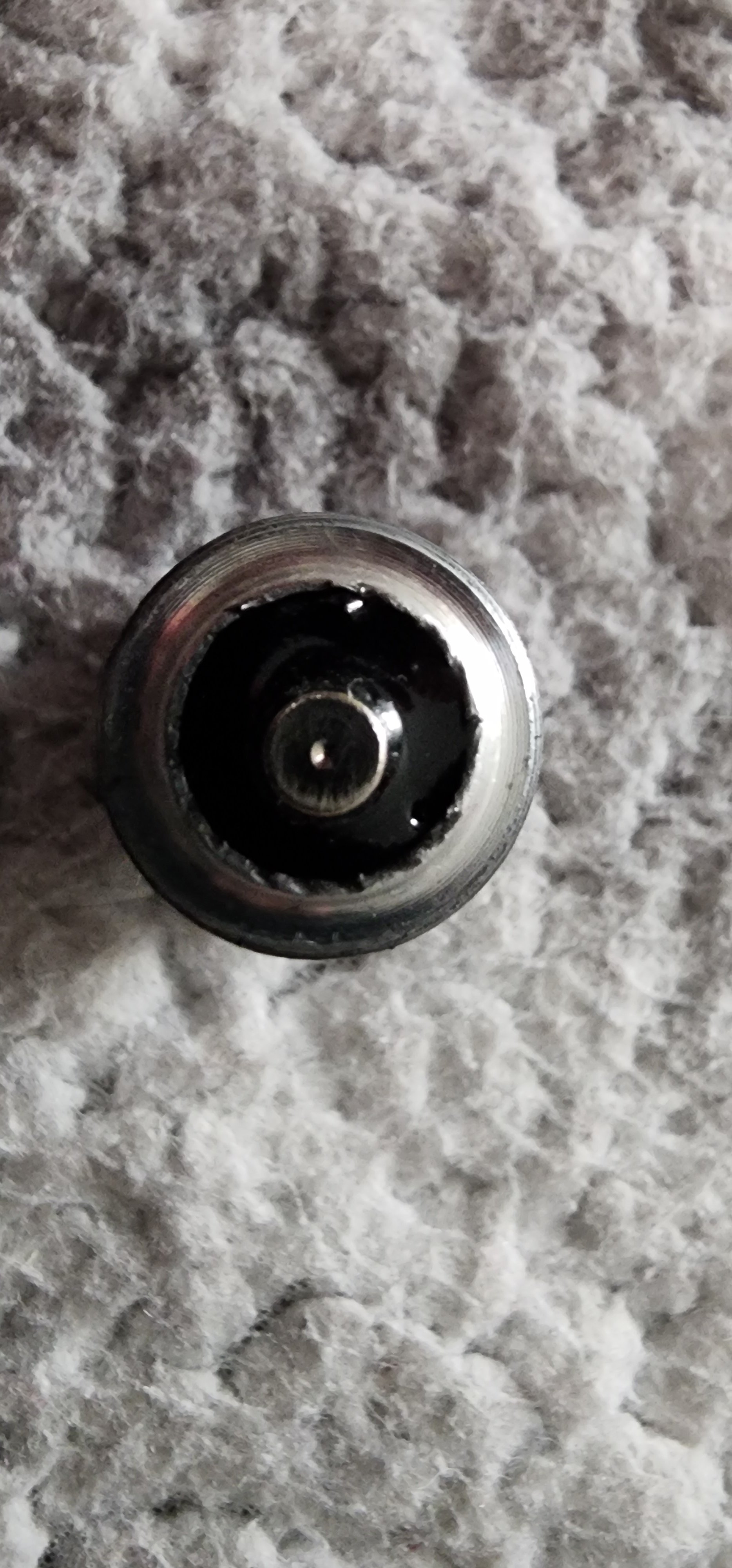
Off center positive nub, slightly yawed
743.jpg
 
Last edited:
Adding some side by sides with an Emisar D3aa on mode 1/150

The lowest semi-consistent mode I could get:
762.jpg


The lowest absolute I could get in a picture, basically a hair-sensor level of sensitivity...and yes, it does go lower than this but I can't even get it consistent enough to take a photo before the rubber/foam expands and makes it brighter again:
760.jpg
 
Dc38 — thanks for full and helpful report!
If you've got any other questions, I'll do my best to answer them.

To answer a question that I had, it functions with:
Alkaline 1.5V
NiMH 1.2V
Lithium Primary 1.7V
Olight weirdo 2.4V
Vapcell F15 3.7V.

The Olight weirdo cell might be a viable option as it seems to have LVP (low voltage protection), but I would NOT leave any of the Lithium options unattended while in operation for concerns of overdraw and thermal runaway.

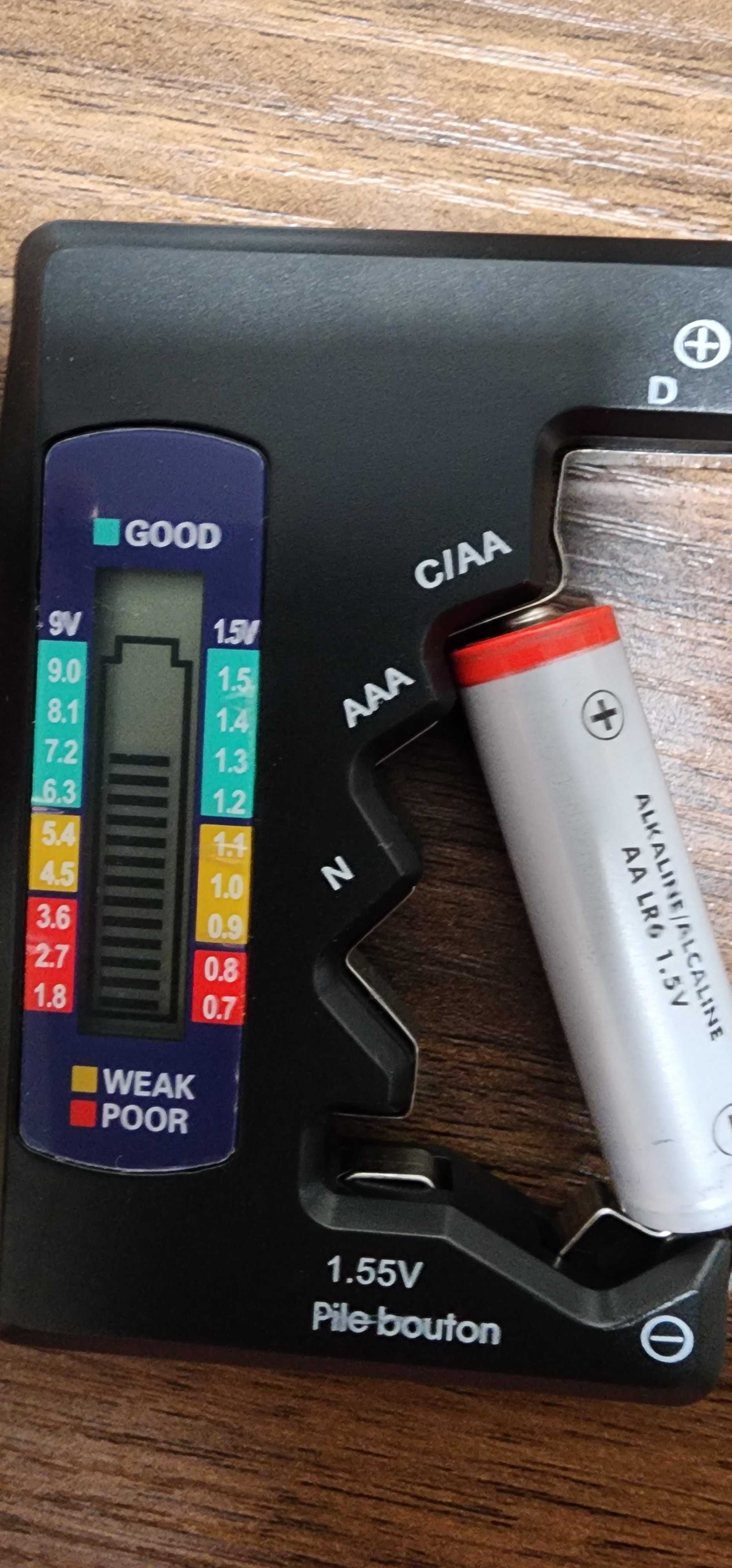
**thus far, cumulatively, I've had it cranked to max about 90% of the time. For the first 2-2.5 hours, it was consistently within the 40-70 lumen range with a slow dropoff. The next 2-3 hours had it stablized around the 30 lumen zone, and from when I got up and cranked it up this morning until now it (about 4 hours) seems to be somewhere between 10 and 20 lumens, and is fading down to around 10. So far and ongoing, cranked on max, cumulative runtime is 9 hours for around (conservatively) 300 lumenhours so far on an Alkaline.

***Another 3 hours later and it's now around the 5 lumen level.

for reference:
814.jpg
 
Last edited:
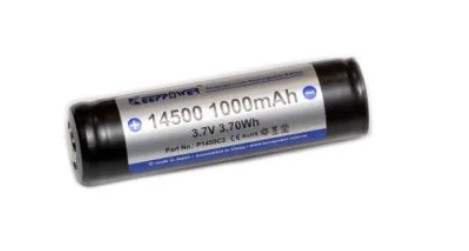
I have a SS El Capitan on the way and I'm curious as to what protected 14500 Li-ion cells I can use. Obviously, the protected cells are slightly longer than the standard AA so just want to know what works. I have attached some screenshots below of the cells I'm curious about and and why and would love some input on them and/or my assertions about each.

14500 1000mAh.jpg

Specifications:
Nominal Capacity: 1000 mAh
Nominal Voltage: 3.7V
Discharge End Voltage: 2.5V
Max. Continuous Discharging Current: 4A
Dimensions:
52.00mm (L) x 14.34 mm (D)

NOTE: I put this one first because I believe I do recall a user on here possibly using this same cell. Can someone confirm these work in an El Capitan and whether or not you experienced and issues?

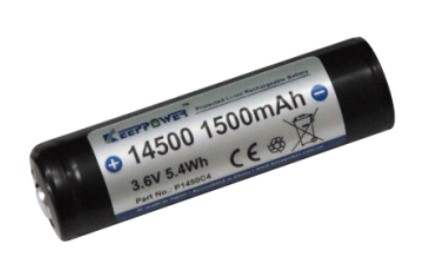
14500 1500mAh.jpg

Specifications:
Minimum Capacity: 1450 mAh
Typical Capacity: 1500mAh
Nominal Voltage: 3.6V
Discharge End Voltage: 2.5V
Max. Continuous Discharging Current: 2A
Max Pulse Continuous Current: 5A
Dimensions:
52.10mm (L) x 14.4 mm(D) (+/- 0.2mm)

NOTE: I included this cell in the mix for the obvious reason of extended runtime. Just not sure of the fit as it appears .10mm longer and .06mm thicker than the previous cell listed.

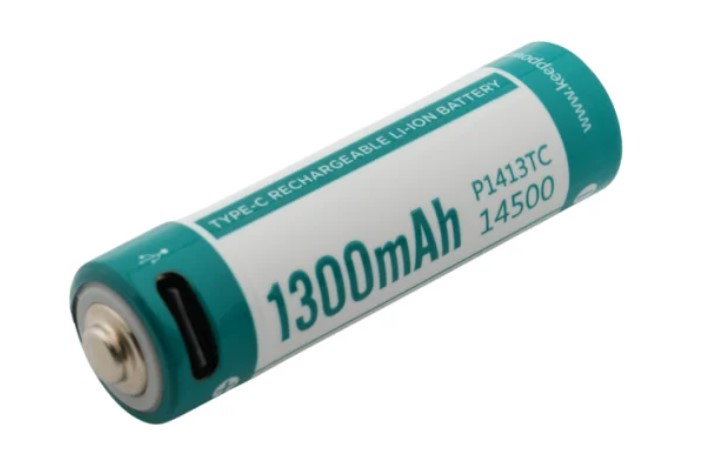
14500 1300mAh - BIC.jpg

Specifications:
Nominal Capacity: 1300mAh
Minimum Capacity: 1250mAh
Nominal Voltage: 3.6V
Standard Continuous Charging Current: 0.4-0.5A (by USB)
Maximum Continuous Discharging Current: 2A
Dimensions:
50.2 mm (L) x 14.3 mm (D)(±0.2mm)
Weight: 20.5g

NOTE: I included this cell at it is closest to AA dimensions and has the added convenience of USB-C built-in charging when on the go and is a nice balance between the runtime of the previous two options.

Lastly, I need help understanding QTC in conjunction with Max. Continuous Discharging Current (MCDC) and the affect on the LED. Is there a minimum or maximum MCDC value I should be taking note of when shopping for cells for my Peak Eiger or El Capitan? Should I limit running it at max lumens if I'm running a li-ion (running a Vapcell 10440 in my Eiger). My understanding is that it is basically running direct drive hence the importance of protected cells, I just wonder about putting in a freshly charged Li-ion sitting at 4.2v in my SS Eiger/Capitan and having the increased output negatively affect the LED. Hope this makes sense!

Thank you in advance!
 
As an Amazon Associate we earn from qualifying purchases. Product prices and availability are accurate as of the date/time indicated and are subject to change.
My understanding is that it is basically running direct drive hence the importance of protected cells, I just wonder about putting in a freshly charged Li-ion sitting at 4.2v in my SS Eiger/Capitan and having the increased output negatively affect the LED. Hope this makes sense
If you've got other devices that potentially could make use of those 14500, it wouldn't hurt to buy and try them anyway.

I don't know what kind of circuitry is in there, but at the very least I think there's a boost/buck circuit which would allow it to run the lower voltage primaries (I believe the forward voltage for the xpg3 is nominally 3V).

While the Vapcell F15 turns the light on (decently bright at that) I haven't tried it for more than 10 seconds sustained.

Below are my hypothetical Pros and Cons of the battery types, specific to the El Capitan:

Preface:
The El Capitan uses non-sprung contacts at the head and the tail. The only "damping" or "dampener" comes from the QTC, which means at full/max brightness, the battery and QTC are under "full compression". I'm unsure as to whether there is a physical seat or stopgap, but if it gets tough to tighten, it might behoove the operator to stop...

14500
Pro:
- Higher max brightness
- Longer sustained lower output runtimes
- Lighter than alky/NiMH
- Rechargeable so less physical waste
- Decent operational temperature range

Con:
- Gets very warm on max
- "Battery crusher" design could damage
----- fitment issues, esp. with protecteds
----- Repeated usage may dent cells

‐-------------------
NiMH
Pro:
- Stable sustained outputs
- Rechargeable so less physical waste
- Cost effective to operate
- Lower risk of catastrophic failure
----- i.e. leakage, thermal runaway, etc.
- Decent operational temperature range

Con:
- HEAVY.
- Repeated usage may dent cells

--------------------
Alkalines
Pro:
- Very cheap to run per instance
- Very decent shelf life
- Very good sustained low runtimes
- Disposable, "battery crusher" non-issue

Con:
- Doesn't sustain max as long
- more physical waste
----- inconvenient for responsible extended treks/camping
- Not for extreme temperatures
- AlkaLEAKs destroy lights

--------------------
Lithium Primary
Pro:
- VERY light
- Very good sustained runtimes
- Very decent shelf life
- Disposable, "battery crush" less issue
- Decent operational temperature range

Con:
- The most expensive over a lifetime
- More physical waste
- If damaged, possible catastrophic failure i.e. thermal runaway
 
So...I've been looking for an alternative method to run the El Capitan without the QTC if necessary, and came across "Chicago Screws", or "Rivet Screws". 8mm seems about the right diameter to not puncture the cell from inside, and 7mm seems to be just enough to fit from the back. The diameter of the "post" is around 4mm, with a depth of around 4-5mm would allow for a small Oring to fit from the tail end for water resistance without the keychain. We shall see...

**Also shopping for aluminum ones to prevent galvanic corrosion
 
Last edited:
Oh Capitan, Mon Capitan...I done dropped it and gave it its first non-factory ding. First full week of carry, the QTC is already shot, lol. I'm wondering if a double layered approach, each with a maximum 40% physical engagement stop, separated by a piece of conductive plate, would last longer...Hypothetically, with two separate variable resistors, it should have a fuller range of lower lows, but maintain the same high when the conductive physical stop engages...
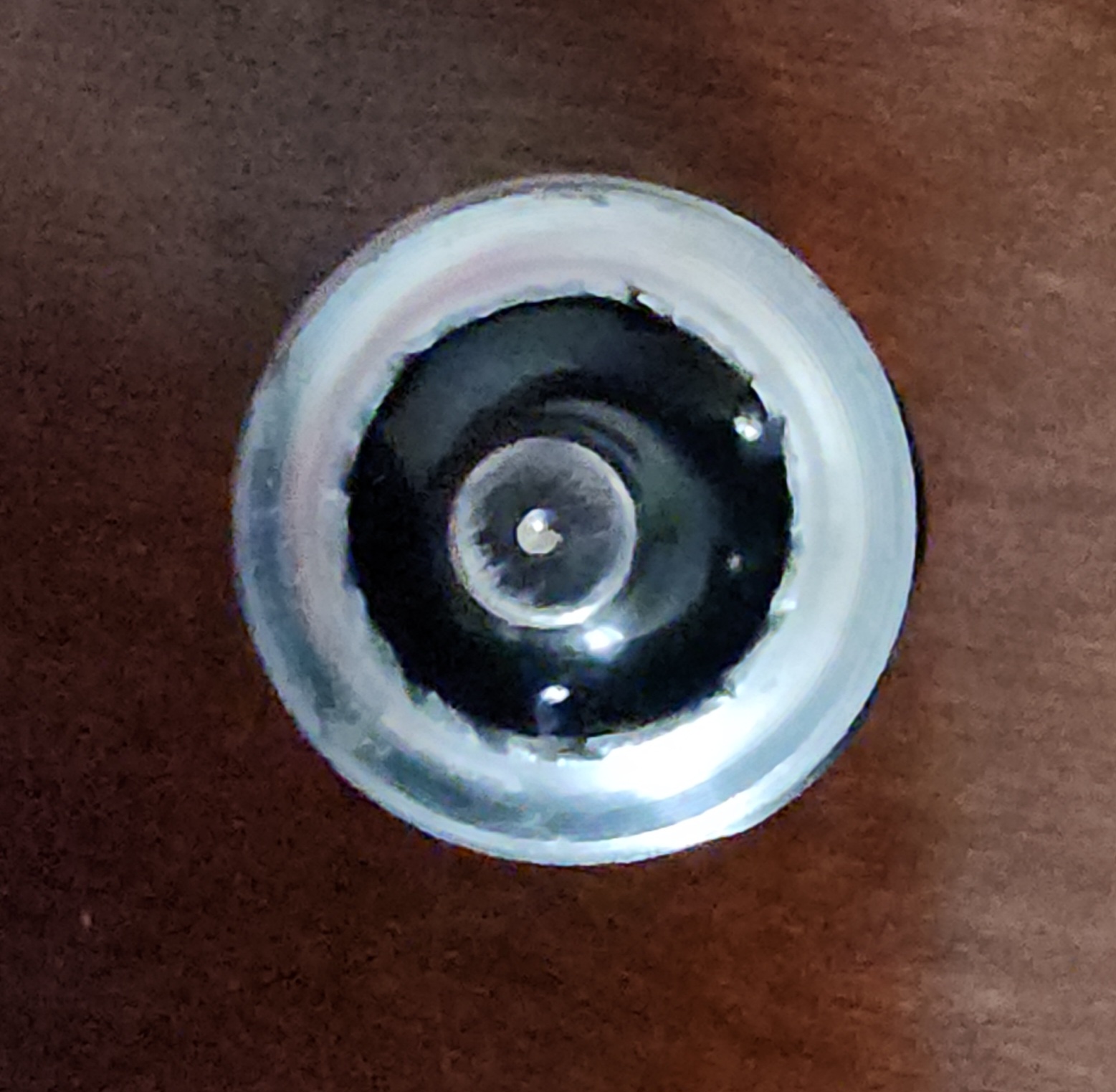
 
Oh Capitan, Mon Capitan...I done dropped it and gave it its first non-factory ding. First full week of carry, the QTC is already shot, lol. I'm wondering if a double layered approach, each with a maximum 40% physical engagement stop, separated by a piece of conductive plate, would last longer...Hypothetically, with two separate variable resistors, it should have a fuller range of lower lows, but maintain the same high when the conductive physical stop engages...
The QTC seems to be very fickle with Li-ion cells. Control is more granular with NiMH for me. The QTC I have is over 2 years old and still working quite well.
 
The QTC seems to be very fickle with Li-ion cells. Control is more granular with NiMH for me. The QTC I have is over 2 years old and still working quite well.
I've been using Alky, NiMH, and 1.5V Liion...I assume I've just been cranking it too much. Worst case scenario, I'll test out those Chicago screw rivets when they get here. It'll essentially become a QTC-less light
 
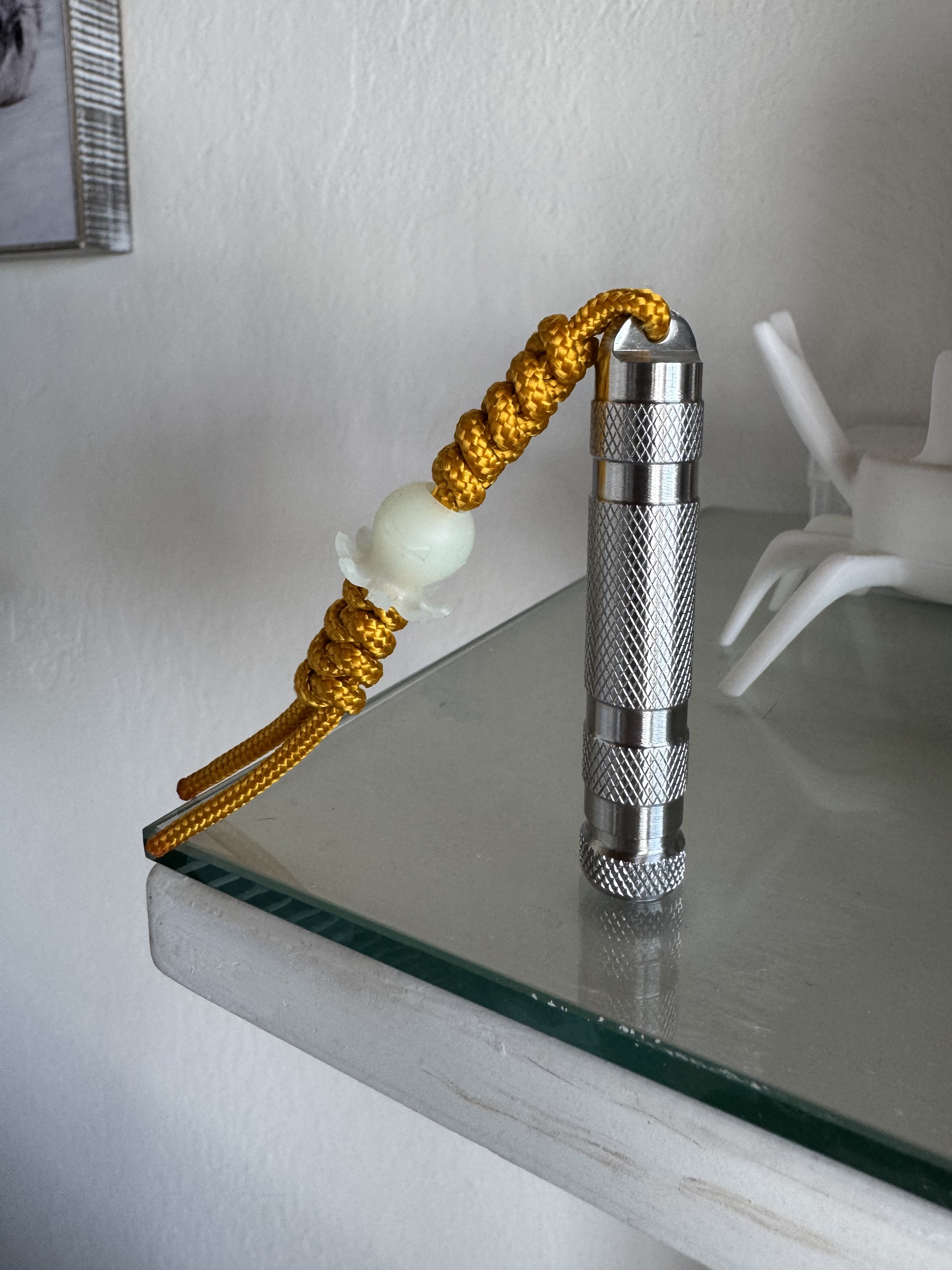
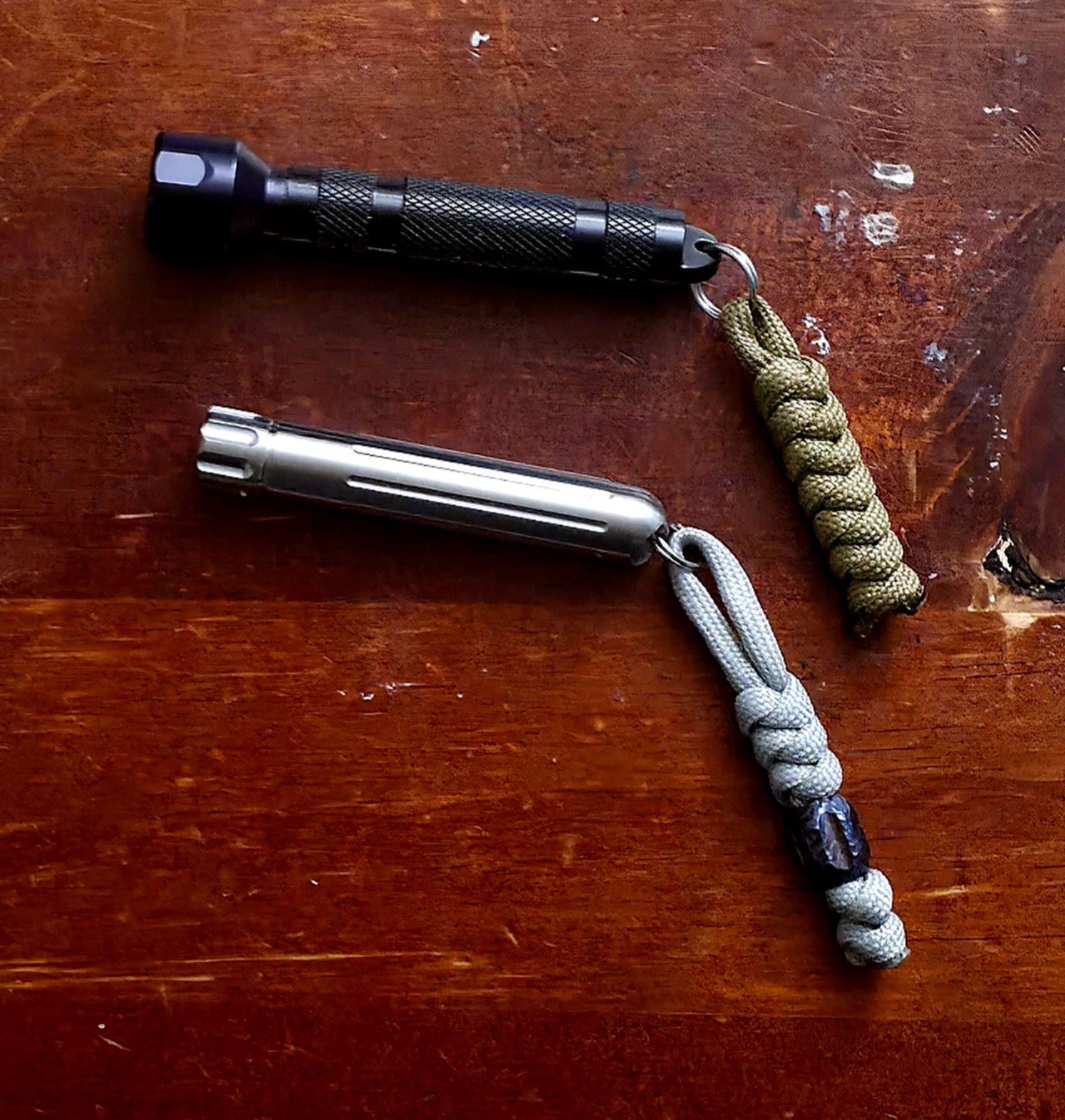
My SS Mule just arrived, goes quite well with the 219b 4k!View attachment 92743View attachment 92744
Thanks for the photos. I might get a mule head as I like the deeper knurling on it. I asked Robyn a while back about if the bodies can be knurled more deeply, but she said it might cause the formation of splinters. These splinters are supposedly very difficult to get rid of because of the stainless steel color.

Interesting to see the mule head with the deeper pattern. My only complaint with the standard head is it’s too smooth for my liking.
 
I haven't gotten a response about the 519A...I'm going to have to assume that it's a no go :(

**On a side note, Xtar 1.5V liions work great in the Capitan, but the cells are noisy AF, literally...at certain brightnesses, the cells are whining in an audible high pitched hum, which is terrible when trying to sleep.
 
All of the photos on this page have the lights ending in half-circle lugs with a hole for a split-ring/lanyard.
Which "body style" is this? I'm assuming that it is "key chain" and not "pocket". Can anyone show me a photo of a "pocket" style body, for the Eiger or El Cap?
And I'm bumming about dc38's experience with the QTC -- that's just what I had feared from that mechanism. If I wanted fickle and short-lived, I'd just fall in love again.
What happens when the QTC is shot and you are left with a single-mode light? What is the output, and what does an output curve over time look like (i.e. regulated, unregulated)?
 
All of the photos on this page have the lights ending in half-circle lugs with a hole for a split-ring/lanyard.
Which "body style" is this? I'm assuming that it is "key chain" and not "pocket". Can anyone show me a photo of a "pocket" style body, for the Eiger or El Cap?
And I'm bumming about dc38's experience with the QTC -- that's just what I had feared from that mechanism. If I wanted fickle and short-lived, I'd just fall in love again.
What happens when the QTC is shot and you are left with a single-mode light? What is the output, and what does an output curve over time look like (i.e. regulated, unregulated)?
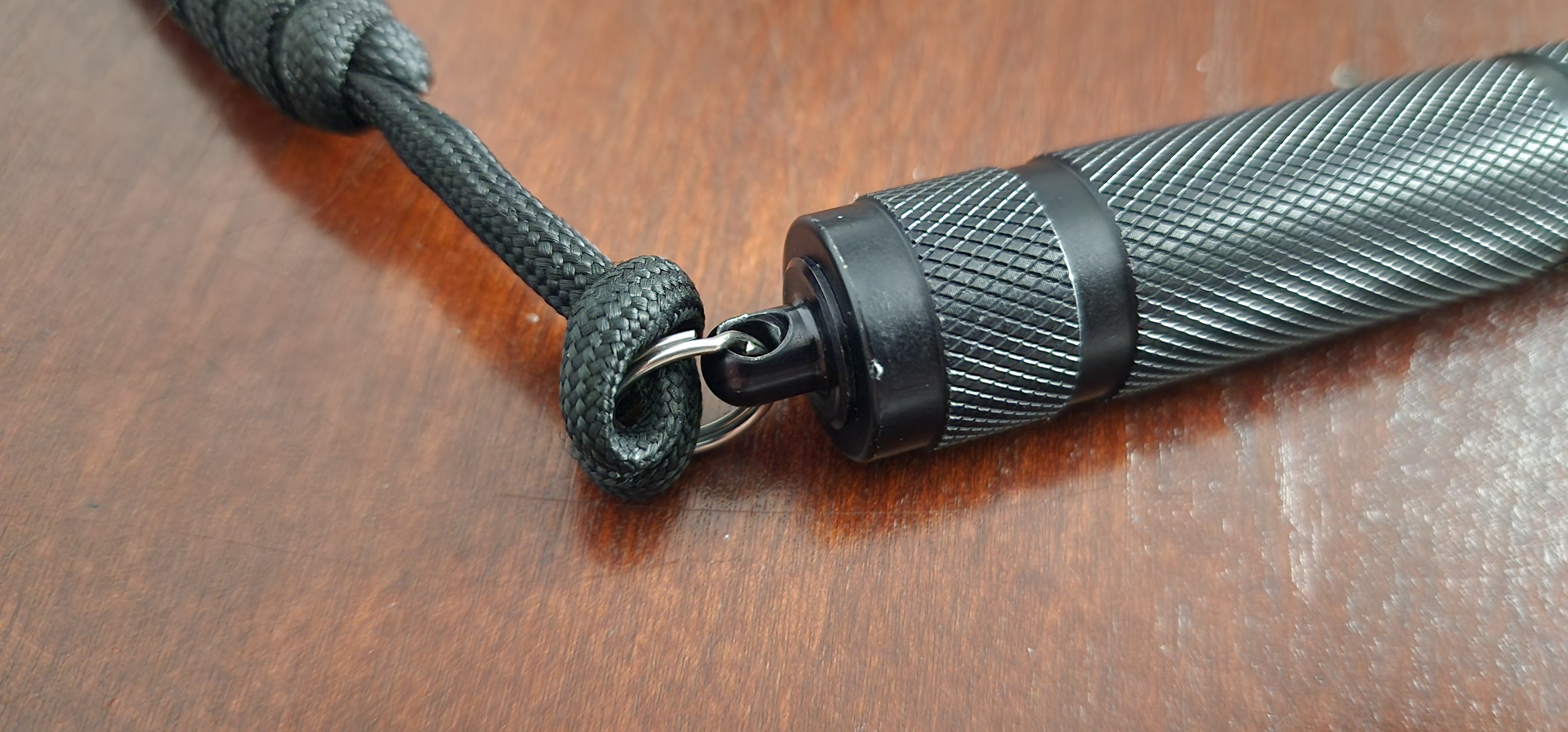
The integral semicircle with a hole punched is the "lug" design. I too would've thought that it was keychain, and the "lug" would be the screw in keychain, but the site says "switch is only compatible with keychain version".

So i ordered the "keychain version", which looks like this:
1440.jpg


In Regards to the "failed" QTC, it jumps straight up to high mode, BUT I have a feeling that it's not exactly permanent, and is moreso due to the floating design of the contact compression...If I set it to a "middle mode" where it should produce a lower output but get no light, I vigoriously wiggle/flail the light while holding the tail end until it slowly ramps to whatever brightness it "should" have been at.
1441.jpg


However, lightly dropping the light on the table can dim it if dropped on the tail, and brighten it if dropped on the head. Not sure how or why, but I surmise it has something to do with the non- centered positive contact on my iteration, allowing the battery to enter different levels of compression based on how it ends up situated.
1444.jpg
 
Back
Top