The Official Zebralight Thread

Candle Power Forums

Help Support Candle Power:

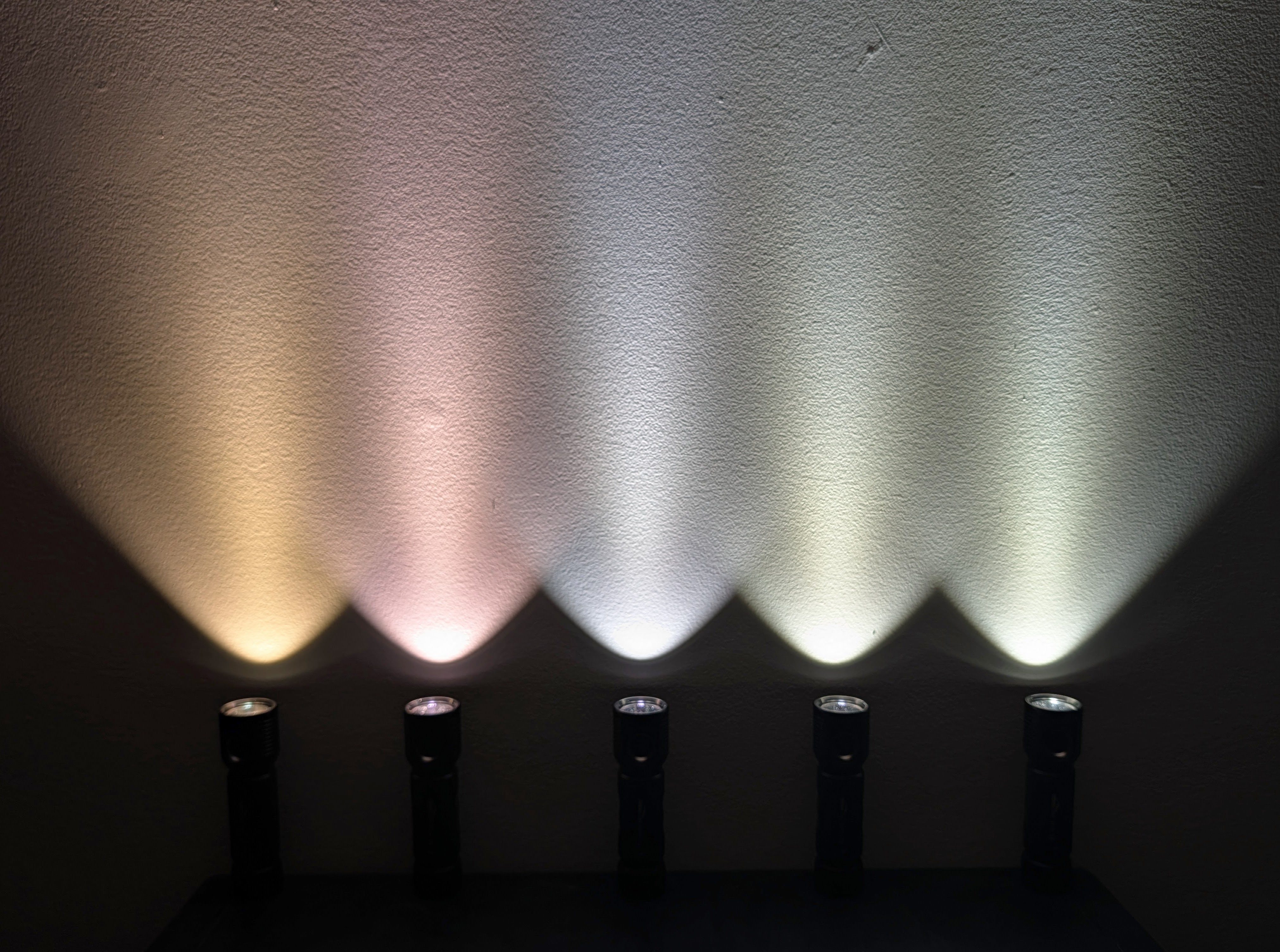
Now i can use any flat top liion unlike previously seeking for smallest button top.
Luminus SST-36F 6500K 90CRI emitter and i am very pleased to say it looks better than SFT-70 5700k 90CRI.
Congratulations! thanks for the great pics..
Love the Zebra etch
very nice LED and flat top compatible mods too

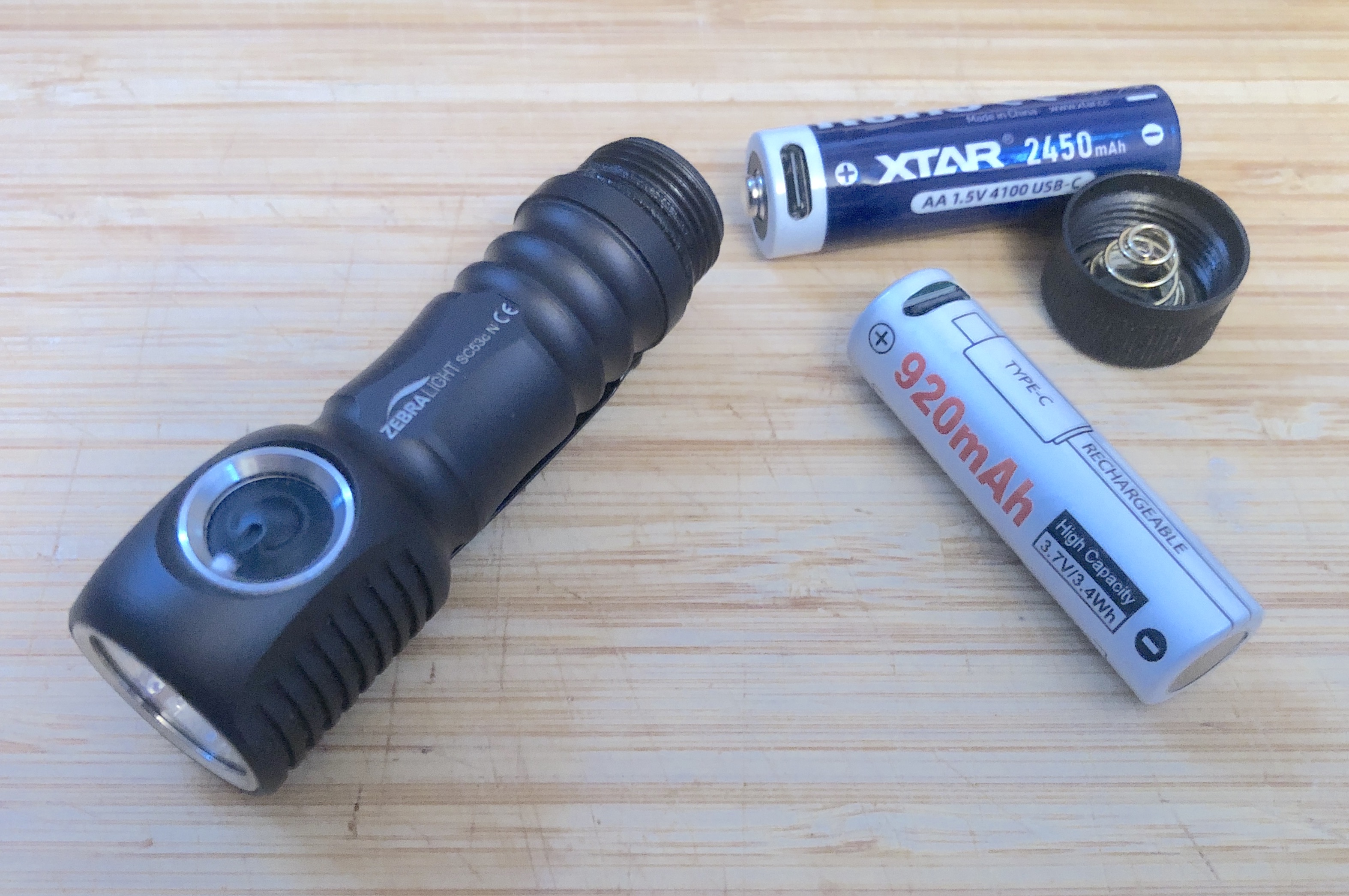
my favorite batteries have USB-C:
IMG_4493.JPG


The 1.5V LiIon w USB-C works very well in AA Zebras, and sustains H1 over 250 lm.
And they have very low Lux Riple in the dual fuel 53 model.
 
Congratulations! thanks for the great pics..
Love the Zebra etch
very nice LED and flat top compatible mods too

my favorite batteries have USB-C:
View attachment 95875

The 1.5V LiIon w USB-C works very well in AA Zebras, and sustains H1 over 250 lm.
And they have very low Lux Riple in the dual fuel 53 model.
Thank you Jon!
I like to have options to choose any cell so i went this route but mainly using flat top Liions.
 
Last edited:
As an Amazon Associate we earn from qualifying purchases. Product prices and availability are accurate as of the date/time indicated and are subject to change.
best option?
there are some pros and cons

Some people prefer Eneloop because it is a safer chemistry than LiIon.

I like to use AA 1.5V LiIon, they offer me several benefits over Eneloop:

1. Higher H1 output than Eneloop
2. Lower carry weight than Eneloop
3. The convenience of USB-C charging
4. Some 1.5V LiIon have higher capacity and therefore longer runtime than Eneloop

One disadvantage is 1.5V LiIon can cost more than Eneloop (depending which brand you choose to buy).

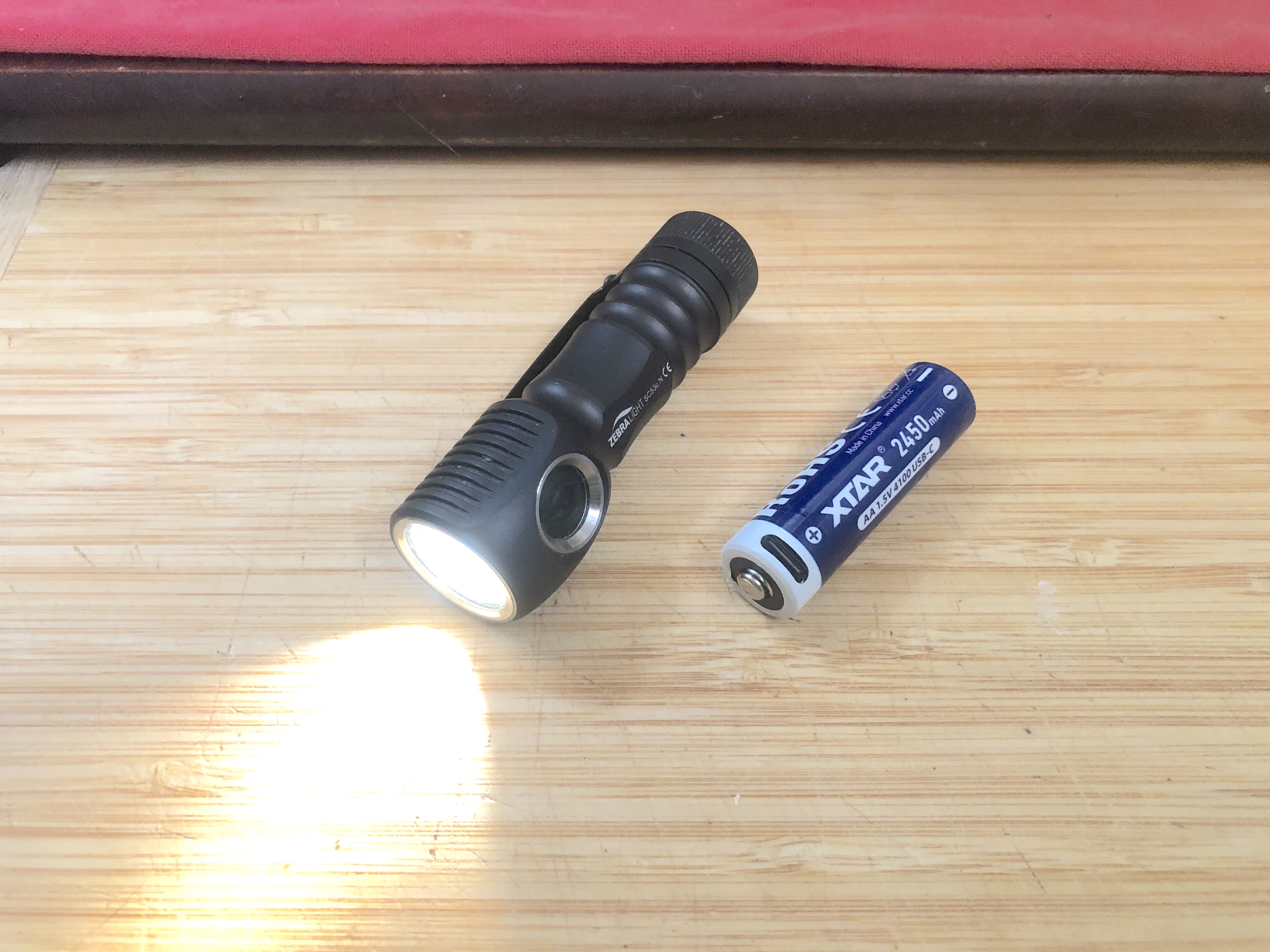
IMG_4522.jpg


I reviewed that 2450 mAh Xtar AA 1.5V LiIon battery here.

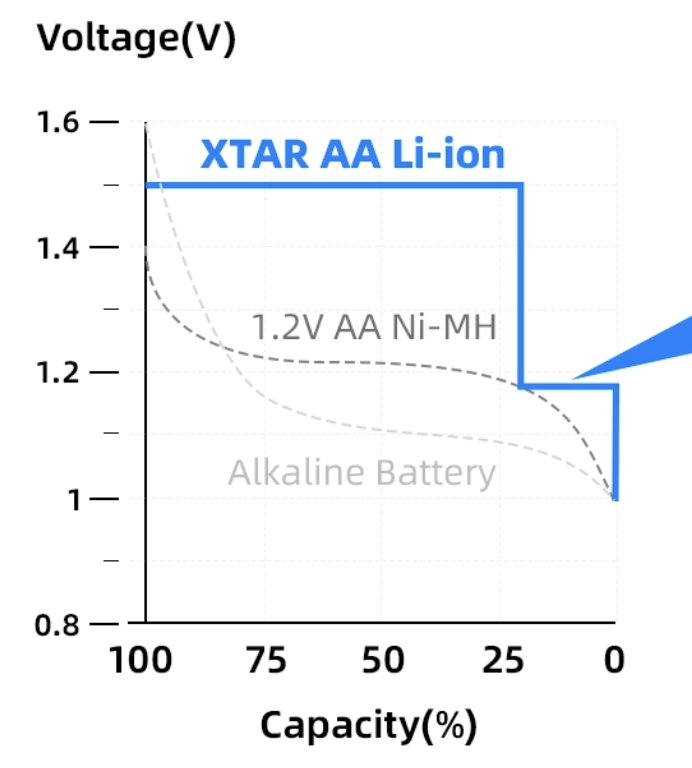
It is of a type that sustains 1.5V for most of its discharge curve. This seems to help maintain higher output in a Zebra, than Eneloop. There is one disadvantage, the chip that sustains the Voltage, generates heat. It is best not to run the Highest output (H1) for more than 10 minutes. The heat is a non issue at sustained outputs below H1.

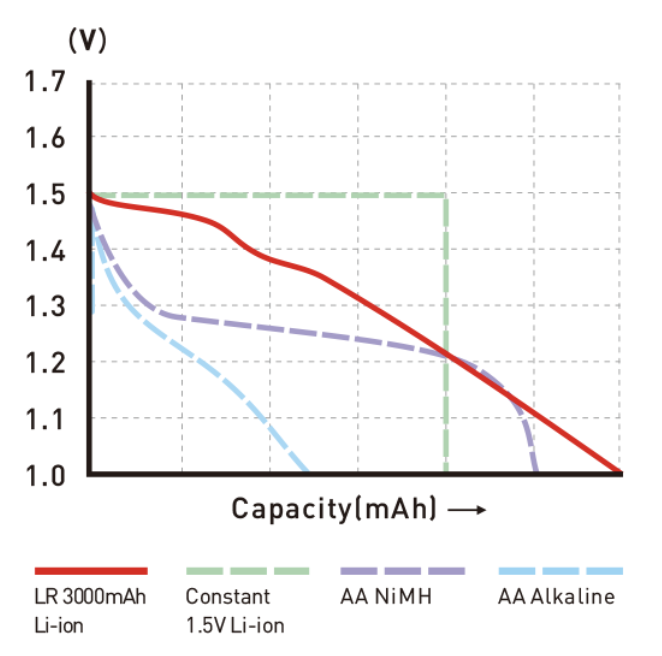
There is also another version of Xtar AA 1.5V LiIon, also with USB-C, rated for 3000 mAh, that has a gradual discharge curve. I have a review sample due for delivery in about a week. (the link is not affiliated)

I expect it will produce less heat, since reduced voltage will reduce the maximum output, more similar to how an Eneloop behaves.

I have started using 1.5V LiIon instead of Eneloop, for my general EDC. Except in the light I store in my car during summer..

Although the latest version of the 1.5V LiIon has an impressively high temperature range of 60C, I have not tested it in my car during summer heat yet, to see if it holds its charge over a 6 month period, as well as Eneloop.

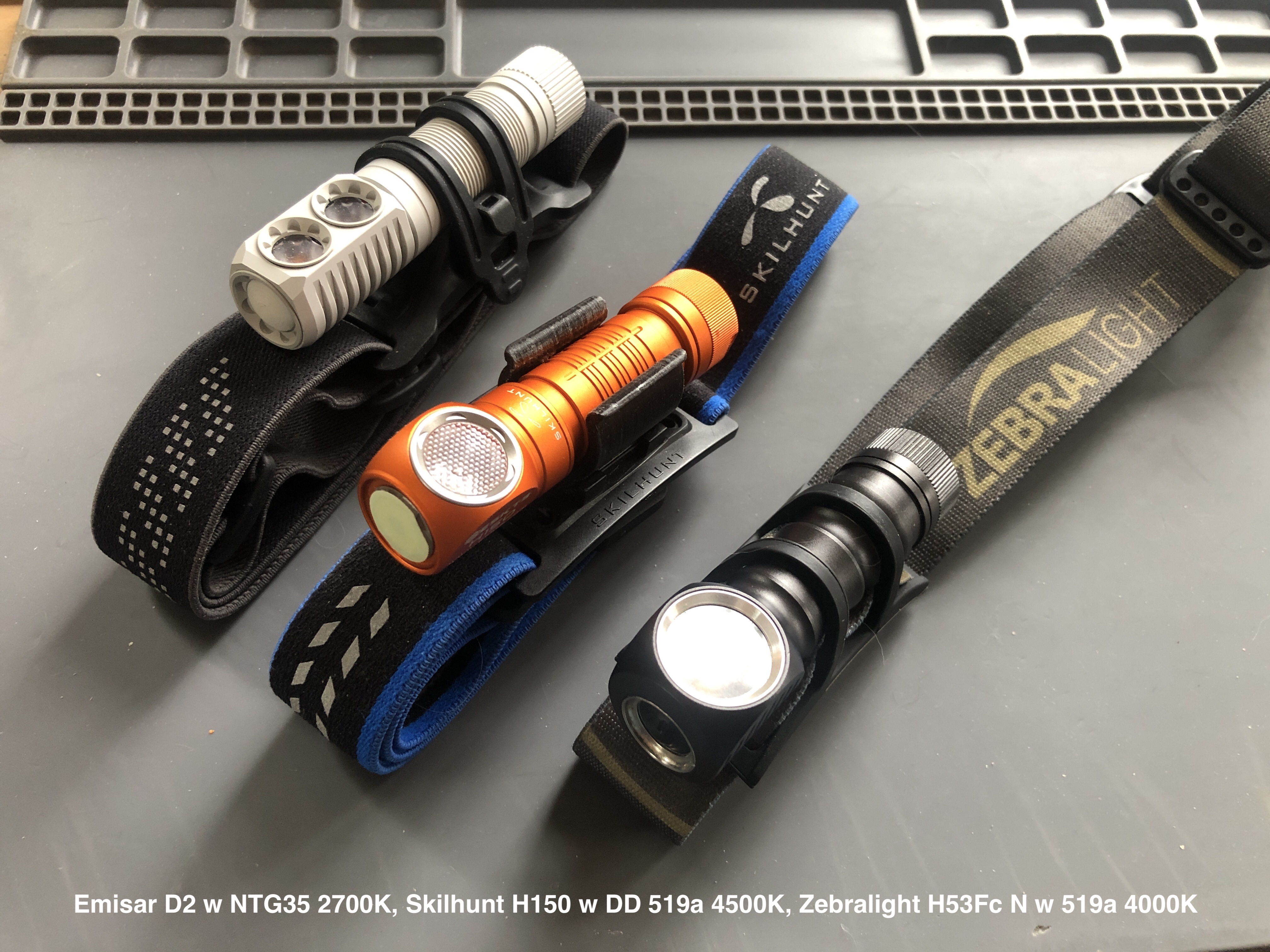
I wont know the results of that car storage test until Daylight Savings time changes. That is when I replace the batteries I keep in my car, for my emergency headlamp (a Skilhunt H150, or an AA Zebra H53c N), twice a year:
JGjHkHy.jpg
 
Last edited:

jon_slider

thank you so much!

Which rechargeable batteries is safest, without any of the heating and flickering/blinking issues, mentioned before?
 
Very welcome..

Eneloop have the safest rechargeable chemistry, for a Zebralight SC54.
I like the White Eneloops.. they have a longer service life than the Black version.

Eneloop require a separate charger.
If you dont already own a charger compatible with NiMh, you can buy a bundle with Eneloop batteries and matching charger dedicated to Eneloops.

Such as this bundle. That would be a total package for use with a Zebra SC54.
 
Last edited:
Very welcome..

Eneloop have the safest rechargeable chemistry, for a Zebralight SC54.
I like the White Eneloops.. they have a longer service life than the Black version.

Eneloop require a separate charger.
If you dont already own a charger compatible with NiMh, you can buy a bundle with Eneloop batteries and matching charger dedicated to Eneloops.

Such as this bundle. That would be a total package for use with a Zebra SC54.

Thanks, Jon, I really appreciate your help!
 
@Beard Man , I am assuming you are pursuing an eneloop setup for your zebra. I don't write this to change your mind, just to provide a bit more information. I have done some testing on my HC53 at the lower output settings, and have found that it appears the light regulates the output to the LED. By this I mean the LED gets a constant current, so it keeps a constant brightness. One result of this regulation is that the current from the cell powering the light must go up as the cell voltage goes down. I have data on my light on what I call level 3 (level 1 is the dimmest, level 12 is the brightest or H1). When the cell voltage drops from 1.3V to 1.1V, the cell current increases by 30%. This would roughly correspond to an Eneloop fresh charged to mostly depleted. When the cell voltage drops from 1.5V to 1.1 V, the cell current increases by 60%. This would roughly correspond to an alkaline cell new vs mostly depleted.

The big advantage of a rechargeable 1.5V Li cell is that it holds the voltage to the light at 1.5V. So the light will demand less current, and the runtime of the cell will increase, pretty significantly. I don't have a setup to make accurate current measurements at higher output levels, so I can't compare how the light performs at different cell voltages in that situation.

Hope this helps.
 
@Beard Man , I am assuming you are pursuing an eneloop setup for your zebra. I don't write this to change your mind, just to provide a bit more information. I have done some testing on my HC53 at the lower output settings, and have found that it appears the light regulates the output to the LED. By this I mean the LED gets a constant current, so it keeps a constant brightness. One result of this regulation is that the current from the cell powering the light must go up as the cell voltage goes down. I have data on my light on what I call level 3 (level 1 is the dimmest, level 12 is the brightest or H1). When the cell voltage drops from 1.3V to 1.1V, the cell current increases by 30%. This would roughly correspond to an Eneloop fresh charged to mostly depleted. When the cell voltage drops from 1.5V to 1.1 V, the cell current increases by 60%. This would roughly correspond to an alkaline cell new vs mostly depleted.

The big advantage of a rechargeable 1.5V Li cell is that it holds the voltage to the light at 1.5V. So the light will demand less current, and the runtime of the cell will increase, pretty significantly. I don't have a setup to make accurate current measurements at higher output levels, so I can't compare how the light performs at different cell voltages in that situation.

Hope this helps.
And how does the battery produce a constant 1.5v? By increasing current draw as the cell voltage drops, same as the light's driver would do. Bucking the voltage down to 1.5v so that the light can boost it back to 3v does not create efficiency. But if we're comparing eneloop to li-ion then the li-ion cell probably has more Wh to start with.
 
it holds the voltage to the light at 1.5V.
True for this XTAR 2450mAh model
It Does maintain 1.5V for most of its runtime
a disadvantage is battery check is not useful for most of the discharge time
we cant tell the difference between full or half empty...

Screen Shot 2026-07-05 at 4.34.11 PM.png


This new model of 1.5V LiIon has a different discharge curve:
The XTAR 3000mAh model has a tapering voltage (the red line on this chart)
I expect this version will run cooler
and battery voltage check will be more useful
Screen Shot 2026-07-05 at 4.39.30 PM.png


li-ion cell probably has more Wh to start with.
agree,
I also like that the 1.5V LiIon weigh less than Eneloop
 
Last edited:
And how does the battery produce a constant 1.5v? By increasing current draw as the cell voltage drops, same as the light's driver would do. Bucking the voltage down to 1.5v so that the light can boost it back to 3v does not create efficiency. But if we're comparing eneloop to li-ion then the li-ion cell probably has more Wh to start with.
If the light in question can run off of a rechargeable Li cell between 3 and 4.2 volts your point is spot on. My light doesn't function normally with a rechargeable Li cell.

I was addressing jon_slider's comments regarding rechargeable 1.5v Li cells and eneloop cells.
 
imo all 3 of us are talking about a light that runs on AA battery Voltage (with a 3V LED)

I think we all believe the 1.5V LiIon runs longer than Eneloop

and imo both explanations could be valid reasons for the longer runtime:
The big advantage of a rechargeable 1.5V Li cell is that it holds the voltage to the light at 1.5V. So the light will demand less current, and the runtime of the cell will increase, pretty significantly.
I think it is true, that the light has an efficiency advantage running from the 1.5 Volts from the 1.5V LiIon, over running from the Eneloop, whose voltage is less than 1.5V.. since the light has to power a 3V LED in both cases

the li-ion cell probably has more Wh to start with.
I think that is also true, that the 1.5V LiIon battery has more runtime than an Eneloop, because the LiIon that is being used to produce 1.5V, has more watt hours than an Eneloop
 
Last edited:
Want to share this info with fellow ZebraLight users:

+

Samsung 58E 21700 (5330mAh / 10.7A max continuous) so lower'ish Amp lights in your collection
Ten of them for $38 shipped is a *^*&^^*ing STEAL!

18650batterystore.com

View attachment 96259

typo fixed
Thank You, Orbital, for this Heads-Up !
😎

Bought 10 of 'em, and received my shipment today.
Excellent Service (as always) from 18650BatteryStore.com !

BTW --
Every one of them *FITS* just fine in my ZebraLight SC700 !
🥰
So no need to be scared off by Samsung's published dimensions.
 
Want to share this info with fellow ZebraLight users:


Thank You, Orbital, for this Heads-Up !
😎

Bought 10 of 'em, and received my shipment today.
Excellent Service (as always) from 18650BatteryStore.com !

BTW --
Every one of them *FITS* just fine in my ZebraLight SC700 !
🥰
So no need to be scared off by Samsung's published dimensions.
Thank y'all for this one! Just ordered 10 for my ZL SC700d and ArmyTek C2 Pro Max lights.

EDIT: OOPS! how could I possibly forget the MDC 21700...🤓

Carry On!
 
Last edited:
Clic to read the whole SC70 driver Analysis posted by thefreeman:

Here are the Cliff Notes:

"Conclusion

To improve this driver, Zebralight needs to:

* get rid of low modes visible flicker

* Get rid of the ~400~1000Hz Riple by increasing the PWM control signal frequency

* fix the low modes startup flash

* Fix instability issue in medium modes"
 
Back
Top