Gas prices

Candle Power Forums

Help Support Candle Power:

Thought I'd hit the population density discussion before getting to work this morning.

I used to travel alot to China. One trip I was flying locally into Shanghai (so local airport, not PuDong which is out of town) and the density of high rises below me just blew me away. The following day I was in a taxi on a 4 hour trip out of Shanghai - took us an hour to get out of Shanghai. I asked my Chinese counterpart what was the population of Shanghai, Beijing, Guanzhou. His response was "officially, or unofficially?" and I asked what is the difference? He said that where you are born is your official residence unless you can get it moved (not common).

So, officially the populations were 20-25 million in each of the large cities above. But unofficially, it was 30-35 million.

I'm originally from Canada & I said wow, population of Canada in one city. I said there are areas of Canada I could drive 4-5 hours and not see anyone. His response was "who's farming the land".

Totally different view...

Yeah - and changing topic. I had a very good chance of being on the Delta plane that flipped in Toronto a year ago, I chose to drive up instead. It takes me ~8 hours to drive up, or 8 hours to fly up with Delta (if everything goes well). After flying over 2 million miles with Delta my preference is to Drive. And my boss with 3 million miles has the same attitude.
 
I'll admit, I don't like flying. Not just because you get fondled by TSA agents. I know it takes longer, but the few times I travel out of state, I prefer taking a train or the bus.
I like having room to stretch my legs...a 4 hour flight vs a 4 hour train ride is very different...trains at least offer the option to hop off and choose another mode of transport. Planes, well...You either get there, or you don't. There's some comfort in knowing that for the most part, the average plane passenger isn't going to try and mug you while on the plane.
 
I'll admit, I don't like flying. Not just because you get fondled by TSA agents. I know it takes longer, but the few times I travel out of state, I prefer taking a train or the bus.
Also, I look forward to the 4 SSSStar experience. All cuz "they detected suspicious residue on my hands". I think it was because my carryon was a pelican case, lol. They searched it once, werent satisfied, so they said it wouldn't make this flight but the next one, lol...It made the flight, after I watched them pop the locks and rummage through my stuff outside.

It was an enjoyable experience, I almost got the full treatment, but didnt, probably because of how utterly unbothered and enthusiastic I was to go through the screenings. I was actually kind of disappointed when they said "you can go", and I said "wait, that's it?", to which they said I could go through again if I'd like. I told them "maybe next week, it'll keep the experience fresh...see you then!" Chuckles all around as I asked them if it was the Pelican case, or if they thought my dirty underwear was to hide the scent of the cheese I was smuggling, lol...

The following week, I was dejected to find out that I had "randomly" NOT been selected for secondary... 😢
 
Great conversation.
One thing I will agree with is the general public needs more exercise. Walking and bikes can provide that for most people. Now that I’m retired I’m looking forward to riding my bike more. Maybe I’ll get a rack for it and take it to the grocery store to pick up a few things rather than driving. I love having more options.
I can see the 15 minute city working in some areas, for some people, but not wide spread. Cars are not going anywhere anytime soon. They provide too much independence for a large segment of the population. Convenience is worth something. You’re getting dinner ready and realize you don’t have one ingredient. It’s raining out. Your choice is hop on your bike or jump in the car. I know what I’m doing. 😉
 
I'm sorry but no. That data is completely false. A perfect example of not believing everything found on the internet. Yes, people do sometimes take multiple trips a day. But half of them being only 6 miles long? No, absolutely not. Why would every dealership in America offer 12,000 miles as the standard yearly allotted number if that pie chart remotely told the truth. They wouldn't.
But you offered the example of the busy housewife which kind of shows this could be accurate. Most people take lots of very short local trips. I've seen the same data from multiple sources. As for the standard warranty, that's based on accounting, not usage. They figure out how many annual miles they can cover without it costing them much money over the expected ownership period. It's a selling point to get people to replace perfectly functional older vehicles with new ones because they're covered under warranty.

As an aside my brother sent me this. It shows what both of us already knew. Newer vehicles are garbage and a scam. They're actually designed not to last.


There's a reason he bought another 1997 Mark VIII when his original one started having issues after over 350K miles.
Even taking the former into consideration, those folks are so used to driving, they're not going to give up their cars. Also, many of them live such busy lives that they couldn't get everything done in a day that they need to if they suddenly had to walk or bike. That's the other thing, a car is a time-saver too. A trip for them that normally takes 30 minutes by car per day, is easily over 90 minutes if not longer, walking. And, when they get to where they need to be, they'd be too exhausted to do what they need to do. It's not just laziness or over dependence on their car.
But I'm hoping current events gets a significant amount of the population to reevaluate how they get around. I'm annoyed that we're so dependent upon a mode which uses a resource that helps subsidize unsavory regimes like Russia, Iran, Iraq, Saudi Arabia, and so forth. If the world collectively decided to get off oil it could happen in less than a decade. Then these regimes would all quickly fall once their primary income source was cut off. They would have to play nice with the rest of the world to have any kind of economic future. I'm tired of the price shocks and economic damage these countries can cause. Honestly maybe I should thank Trump. He just did more to promote alternative transportation and energy than all the Democratic Presidents combined, even if that wasn't his intention when he attacked Iran. As more oil infrastructure gets destroyed we'll face more time with sustained higher prices. Unlike previous times when ME countries dropped oil prices when they saw we were starting to move off oil they won't be able to do so this time. It will take years to rebuild this infrastructure, if you can even find investors willing to fund it.

Yes, I realize some might have to sacrifice a bit in the short term but don't you think when fewer people drive they'll have the voting power to push government to build alternative ways to get around? I think it's ridiculous that some people like you are forced to drive to get to work in a place like NYC. In the suburbs I understand it, but you should be able to travel anywhere in NYC quickly without a car. It's a failure of policy that you can't.
Again, that's you. (And, once again, very sorry that happened to you.) Yes, for some, their health issues are caused by a lifetime of laziness. For others, it's not their fault at all. Pre-existing medical conditions that were not diagnosed earlier. Car accidents far worse, with life-altering injuries. That's the thing about cars. They fit everyone as a basic means of transportation. The healthy, the elderly, the ones who are badly crippled. Those in wheelchairs can get specially modified mini-vans that allow even them to drive. I'm sorry but in that regard, bikes just can't compete. Sure there's public transportation. But many neighborhoods are under served. Even some in Queens. That's assuming the machine for allowing wheel-chair riders to get onto a bus is even working at all.
No disagreement on any of this but NYC really needs to complete the subway system it had planned in the 1930s. No place in the city should be more than half a mile from a subway station. And we need a network of elevated, non-stop bike lanes over arterials. This would be our second rapid transit system. Many don't ride a bike not because they can't but because they don't feel safe with the crazy drivers around here. I can't blame them for that but we have no excuse not to make a safe place for them to ride. A roughly one mile grid of elevated bike lanes above major arterials would do exactly that. Everyone would be within half a mile of these bikeways. You could reach them by riding mostly on much safer residential side streets. It's an idea I've had for over 20 years.
I mean, honestly; if we are talking about a busy stay at home mother, those savings could be HUGE! Drop the kids off at school. Hit the gym to exercise and be healthy. Go shopping for food. Return home. Do the housework, the laundry. Take a short break. Time to go pick the kids up at school. Drop them off at After-school activities. Drive home, cook dinner. Go get the kids. Drive home. Husband comes home. Eat dinner.
Yeah, in the suburbs this is normal but not in a place like NYC. Many kids walk to school once they're past kindergarten or first grade. I did. My mother walked us to school in the beginning but eventually we went on our own. Most areas have a grade and middle school within walking distance. Most parents thankfully don't drive their children to school here. There's not enough room in front of schools to park all those cars.

Ditto for shopping. Nearly everywhere in this city has a local grocery store or bodega you can walk to. If you build activity into your daily life there's no need to go to a gym. NYC can lead the way for the rest of the country if we're serious about telling the auto and oil companies to go take a hike.
How would any dedicated House-wife even remotely get half of that done, without a car? It's a time-saver for everyone. A massive time-saver for certain segments of the population. That's not something that can be calculated by mileage. I mean if anyone spotted mom jogging to school with her two little ones in her arms because she decided to live without a car, neighbors would think she snapped! They'd call the cops for a Wellness Check. More than two kids.... We're going to have a serious problem, with mom.
There are moms bringing their kids on errands in cargo bikes. This is not unusual, especially in Manhattan. Since you mentioned saving time, that's one reason why. In much of the city a bike is the fastest way to get around bar none. Add in your time spent looking for parking when you use the car. Not to mention traffic which moves at walking speed. A car is only a time saver in outer borough places like where I live. Even here it doesn't save much time. When my parents drove the 7 miles to the Lake Success shopping center it took them 15 to 20 minutes. I could consistently do the same trip by bike in 25 minutes or less. My record was 21 minutes with a nice tail wind.
I mean, you just showed my main point why car ownership is such a necessity. My work neighborhood is horribly under served with Public bus service. No subway stops at all. Two bus lines only that run on a semi-regular basis. Mainly during Rush Hour at the start and end of the day. Seriously, if I relied on Public Transportation in my work neighborhood to get there and back home, I would have been fired for coming in hours late before my first week on the job was over. Having worked 3rd Shift.
I never faulted you for driving to work. Same with my brother. Transit would take him 1.5 hours each way. Driving still takes 45 minutes to an hour to go only 15 miles but that saves him at least an hour a day. His car costs him far less than the national average. I'd be surprised if he spends more than about $3,000 a year on it. It saves him at least 5 hours a week. The cost of that time saved is roughly $12/hour. That's a fraction of his wages. Totally worth it for him.

I never had any scenario where it would have made sense for me to own a vehicle. The closest might have been when I had trouble finding work after college. In theory I might have been able to get an engineering job in Long Island but it's not like I had one lined up. The math didn't work. The extra cost of owning a car didn't offset the extra money I might have made. That's not even getting into other stuff like having to deal with traffic, the fact I don't take well to car travel, and especially the fact I would be utterly incapable of safely driving early in the mornings when I would likely need to be driving to work. I once tried to take my bike to a job which started at 8 AM. The ride was only 8 miles each way. This was an easy ride. I remember almost hitting a few people crossing the street, then almost hitting a bus. After three blocks I turned around and went home. I couldn't safely ride that time of day. It was almost like I was drunk. In the mornings I could barely find my way to the bus stop. Forget biking to work. Or driving. That would have been like these comedies where an oblivious driver leaves a path of destruction in their wake without even realizing it.
Decades of driving, twice. Spent 4 days in the jury pool. Went home. 2nd time, told to call a phone number and if my assigned jury number wasn't called after a certain number of days, I didn't have to come in. Yup, didn't have to come in. (One time I got called in before I had a license. Ended up doing jury duty for 3 weeks. I was in-between jobs so I didn't mind. Completely frivolous case.)
I think we both got lucky with jury duty. Some people get called every year like clockwork. They only get out of it for a few years if their number comes up.
 
Last edited:
Great conversation.
One thing I will agree with is the general public needs more exercise. Walking and bikes can provide that for most people. Now that I’m retired I’m looking forward to riding my bike more. Maybe I’ll get a rack for it and take it to the grocery store to pick up a few things rather than driving. I love having more options.
I can see the 15 minute city working in some areas, for some people, but not wide spread. Cars are not going anywhere anytime soon. They provide too much independence for a large segment of the population. Convenience is worth something. You’re getting dinner ready and realize you don’t have one ingredient. It’s raining out. Your choice is hop on your bike or jump in the car. I know what I’m doing. 😉
The idea behind the 15 minute city is really just a return to the past when we didn't have mechanized transportation. We had to lay out cities so people could do their errands on foot. I'm under no illusion that we'll get rid of cars but that's not the goal. The idea is to get people more active, which will reduce healthcare costs. It's also to confine cars to the outskirts of these 15 minute cities so they're safe and pleasant to walk or bike around. A car is better suited for medium to long distance transportation. In places like Amsterdam 80% of trips are by bike or walking. People have cars but they only use them for longer, occasional trips where they make sense.

If you have a grocery store a few minutes away by foot then that's your way to get a missing ingredient on a rainy day. No need to hop on a bike. I never ride in the rain. I can but I don't enjoy it.
 
As an Amazon Associate we earn from qualifying purchases. Product prices and availability are accurate as of the date/time indicated and are subject to change.
I like having room to stretch my legs...a 4 hour flight vs a 4 hour train ride is very different...trains at least offer the option to hop off and choose another mode of transport. Planes, well...You either get there, or you don't. There's some comfort in knowing that for the most part, the average plane passenger isn't going to try and mug you while on the plane.
Trains are the most civilized way to travel bar none. I could spend my life traveling by train.
 
Thought I'd hit the population density discussion before getting to work this morning.

I used to travel alot to China. One trip I was flying locally into Shanghai (so local airport, not PuDong which is out of town) and the density of high rises below me just blew me away. The following day I was in a taxi on a 4 hour trip out of Shanghai - took us an hour to get out of Shanghai. I asked my Chinese counterpart what was the population of Shanghai, Beijing, Guanzhou. His response was "officially, or unofficially?" and I asked what is the difference? He said that where you are born is your official residence unless you can get it moved (not common).

So, officially the populations were 20-25 million in each of the large cities above. But unofficially, it was 30-35 million.

I'm originally from Canada & I said wow, population of Canada in one city. I said there are areas of Canada I could drive 4-5 hours and not see anyone. His response was "who's farming the land".

Totally different view...
Yeah. China makes NYC look like a farm town. Totally unworldly levels of population density. I think China is awesome, except of course their government. You're lucky to have gotten to travel there alot. I hope to visit in the future. If the US ever gets really bad I may even consider living there.
Yeah - and changing topic. I had a very good chance of being on the Delta plane that flipped in Toronto a year ago, I chose to drive up instead. It takes me ~8 hours to drive up, or 8 hours to fly up with Delta (if everything goes well). After flying over 2 million miles with Delta my preference is to Drive. And my boss with 3 million miles has the same attitude.
That's another reason I see little point flying. The only reason to deal with the hassles of air travel is to save time. With the time to get to/from airports, plus security delays, you're saving less and less time over driving. If we had high-speed rail that would be the fastest way to travel easily. Flights between many city pairs were decimated once Europe started building out its HSR network in the 1980s and 1990s.
 
We had to lay out cities so people could do their errands on foot
In 500BC sure.

Cities were built to accommodate commerce/trade. Money. Remove the reason why everyone wanted to be in that location (money) and everyone leaves. Look at all of the cities, big and small, that are now filled with ghosts. Hundreds in the US alone.
You want less congestion in NYC now that it is what it is?
Mamdani has you covered. He'll probably run some of the businesses and the rich out of town for you. That will delete some of the jobs and thus the reasons some of the ppl are there. Money.

btw, O'Leary's cow was in a barn on a street in a city. I'll bet she didn't walk for supplies. I'll bet she rode a buggy down that street.
 
  • Like
Reactions: TPA
In 500BC sure.
Actually until post WWII cities were designed that way. We didn't migrate to suburbs in large numbers until after the war. Granted, prior to that you had so-called streetcar suburbs but those weren't heavily car dependent. You could walk or bike locally.
Cities were built to accommodate commerce/trade. Money. Remove the reason why everyone wanted to be in that location (money) and everyone leaves. Look at all of the cities, big and small, that are now filled with ghosts. Hundreds in the US alone.
Do you know the reason many cities failed? We tried to remake these cities to accommodate the automobile. In the end downtowns got filled with parking craters. People stopped coming because there was nothing worth coming for. Some cities escaped this, mostly those in the Northeast built centuries before the automobile. They made some concessions to automobiles but never fully embraced them. These cities are still quite viable.

You want less congestion in NYC now that it is what it is?
Mamdani has you covered. He'll probably run some of the businesses and the rich out of town for you. That will delete some of the jobs and thus the reasons some of the ppl are there. Money.
I happen to think he's going to turn out to be one of the greatest Mayors ever. In the end cities need the poor and middle class to function. He cares about these cohorts far more than previous Mayors who were all for the wealthy. The wealthy aren't leaving. They have too much money invested here. They'll pay higher taxes even if they moan about it.

Mamdani does need to drop some of his more grandiose ideas like universal child care. For one we can't afford it. For another it's not healthy for child development leaving young children in the care of strangers. He needs to focus on affordability instead so mothers (or in some cases fathers) can just stay home with their young children. Rents are up ten times in adjusted dollars compared to when my parents got married. That's beyond ridiculous.
btw, O'Leary's cow was in a barn on a street in a city. I'll bet she didn't walk for supplies. I'll bet she rode a buggy down that street.
Perhaps. Cities have always had personal transportation even thousands of years ago with horses and carriages.

And her cow didn't start the great Chicago fire. Trump did. 🤣 He burned down the buildings so he could put in a new casino. 🤣🤣
 
The idea behind the 15 minute city is really just a return to the past when we didn't have mechanized transportation. We had to lay out cities so people could do their errands on foot. I'm under no illusion that we'll get rid of cars but that's not the goal. The idea is to get people more active, which will reduce healthcare costs. It's also to confine cars to the outskirts of these 15 minute cities so they're safe and pleasant to walk or bike around. A car is better suited for medium to long distance transportation. In places like Amsterdam 80% of trips are by bike or walking. People have cars but they only use them for longer, occasional trips where they make sense.

If you have a grocery store a few minutes away by foot then that's your way to get a missing ingredient on a rainy day. No need to hop on a bike. I never ride in the rain. I can but I don't enjoy it.
I’ve been to Amsterdam, the biking capital of the world. If you are a pedestrian you had better be careful walking around town. Huge groups of bikes suddenly come around a corner and will run you down if you’re trying to cross the street. The sidewalks have biking lanes and if you step into one you chance being hit. It’s the craziest thing I’ve ever seen. I felt safer around cars, honestly.
 
I happen to think he's going to turn out to be one of the greatest Mayors ever.
I hope you're right.

This is coming from someone who advocates for welfare. Not government welfare per se' (there are times for that tho'), but private. We've talked about it. I won't belabor it ...too much.

Everyone wants to be in control. We certainly want to be in control of what we deem as 'ours'. Our personal stuffs.

Taxes or donations?

If you knew that your money was going toward a cause that betters society, how far would you trust strangers to put that to use? Many times it IS easier to trust a face on the TV when you see them almost daily. But is it more trust worthy? It feels familiar. but trust them?

If we're confident that either way is very trustworthy, then which is more efficient? Cost effective? Timely? What are the results?

With each person that the money passes thru', a penny (more like dollars) disappears because of the cost of having that person involved. Governments of any size are notoriously costly. $ wasting, time consuming and generally ineffective once looked at closely. Bureaucracy steals it all. Eats it up and chits it out on the opposing politicians and us.

Non-profits can also be abused. All the same issues can happen as with governments. But just on smaller scales.

This is one reason I personally don't donate to national nonprofits. If the funds stay local, then I'll donate time, money, products, whatever they need that I have access to is theirs if they are local.
(I have the same philosophy with local businesses. The feds shouldn't tax/regulate them at all. Let the state/local govs deal with them. That is until that business starts to do business across state lines. I don't care how many billions they make. If they stay local, let the locals deal with them.)

----------------------

Something I had to talk about with my board was how many ppl / $ are being served? It's never about bragging numbers here, but about calculating good, better, best ways of doing it all. Rechecking often to be sure we're on track. Or, maybe like recently, daily costs of supplies are slowly or quickly rising. I always had to track that. Including how much it was costing ME, sitting here calculating out how much it was costing the non-profit to do the stuffs.

Perhaps. Cities have always had personal transportation even thousands of years ago with horses and carriages.

And her cow didn't start the great Chicago fire. Trump did. 🤣 He burned down the buildings so he could put in a new casino. 🤣🤣
The carriages thing is my point. We need them. We need bigger roads! We need more powerful V8s! LOL

I thought our beloved king wanted to build a golf course but Obama's library took all the land. ;^)
 
I’ve been to Amsterdam, the biking capital of the world. If you are a pedestrian you had better be careful walking around town. Huge groups of bikes suddenly come around a corner and will run you down if you’re trying to cross the street. The sidewalks have biking lanes and if you step into one you chance being hit. It’s the craziest thing I’ve ever seen. I felt safer around cars, honestly.
One thing they design for there is to depend upon everyone looking out for everyone else. It's not like here where people blindly cross a street if the signal says walk, and assume they'll be safe. Instead they rely more on uncontrolled intersections which force you to look every single time. Dutch pedestrians are unfazed when bikes pass six inches away. They know the riders don't want to hit them because they can be hurt as badly or worse. They trust them. And the cyclists trust that pedestrians will not suddenly dart in front of them without looking (a big problem in NYC's bike lanes). They also negotiate who will go first through eye contact and gestures. It may seem chaotic but it works.

This is what happens when you rely on signals:


The driver who sped up when the signal turned yellow was only looking up at the signal, not at the person crossing the street right in front of them. Signals have proven to make things more dangerous.
 
One thing they design for there is to depend upon everyone looking out for everyone else. It's not like here where people blindly cross a street if the signal says walk, and assume they'll be safe. Instead they rely more on uncontrolled intersections which force you to look every single time. Dutch pedestrians are unfazed when bikes pass six inches away. They know the riders don't want to hit them because they can be hurt as badly or worse. They trust them. And the cyclists trust that pedestrians will not suddenly dart in front of them without looking (a big problem in NYC's bike lanes). They also negotiate who will go first through eye contact and gestures. It may seem chaotic but it works.

This is what happens when you rely on signals:


The driver who sped up when the signal turned yellow was only looking up at the signal, not at the person crossing the street right in front of them. Signals have proven to make things more dangerous.
 
I don't disagree with anything in that article. If anything it seems like cycling is a victim of its own success. It grew faster than the infrastructure to accommodate it did. While unfortunate this does send a clear message to the rest of the world regarding cycling as transportation. Build it and they will come.

People often think only of Amsterdam when they think of Dutch cycling but their cycling superhighways are the part of their network most applicable to the US. These are basically an analog to car highways.

I often butt heads with other cycling advocates when I suggest that we should build elevated bike highways above arterials in NYC. This would avoid all the problems seen in Amsterdam. No conflicts with motorists or pedestrians, no need to stop for signals. You could travel from one side of the city to the other in perfect safety at whatever pace you want. I get dogma like bikes belong in the streets as a response, although some love the idea. Some Asian cities have already went in this direction. When streets are crowded moving to multiple levels is really the only sensible approach.

These elevated bike lanes will also be resiliency infrastructure. If the city floods people can still get around. The cost, probably a few billion, is a rounding error over the long haul. The economic benefits will easily exceed that.
 
I hope you're right.
Here's what gives me some hope. Mamdani has talked about making government more efficient. As a socialist he seems to think the function of government is to help people, not to employ a large bureaucracy. Eventually he's going to have to take on the public employee labor unions if he's going to make government more efficient. A more efficient government is actually compatible with true socialism where the goal is to use limited tax dollars to help as many as possible.
This is coming from someone who advocates for welfare. Not government welfare per se' (there are times for that tho'), but private. We've talked about it. I won't belabor it ...too much.

Everyone wants to be in control. We certainly want to be in control of what we deem as 'ours'. Our personal stuffs.

Taxes or donations?

If you knew that your money was going toward a cause that betters society, how far would you trust strangers to put that to use? Many times it IS easier to trust a face on the TV when you see them almost daily. But is it more trust worthy? It feels familiar. but trust them?

If we're confident that either way is very trustworthy, then which is more efficient? Cost effective? Timely? What are the results?

With each person that the money passes thru', a penny (more like dollars) disappears because of the cost of having that person involved. Governments of any size are notoriously costly. $ wasting, time consuming and generally ineffective once looked at closely. Bureaucracy steals it all. Eats it up and chits it out on the opposing politicians and us.

Non-profits can also be abused. All the same issues can happen as with governments. But just on smaller scales.
All very true. I should add that direct cash payments with no strings attached are the most efficient way to help people. I like the idea of UBI. If we can't go that far then reform existing income support programs. For example why do we have an army of clerks, case workers, administrative law judges, and so forth in the unemployment insurance system? The answer typically given is to prevent fraud and encourage people to look for work while they're getting unemployment insurance. Does this bureaucracy even pay for itself? I doubt it. Why not just give everyone who is laid off six months of unemployment insurance whether they find work or not? One check and that's it. Or if you must periodic checks so those with no self-control don't spend all the money at once. Think about what this accomplishes. There is no incentive to remain unemployed. You get your six months of benefits regardless. Finding work sooner will always benefit you. Under the current system you lose benefits when you work. This creates an incentive to stay unemployed for as long as possible.

Do similar things with other income support programs.
This is one reason I personally don't donate to national nonprofits. If the funds stay local, then I'll donate time, money, products, whatever they need that I have access to is theirs if they are local.
Same here. I assume most big charities are scams. Or at best only a fraction of the money reaches those who need help. This is why my favorite way to give to charity is just hand money to people I see begging on the streets. 100% goes to the person in need. If I were a billionaire I would take it one step further. Offer these people a place to live with no strings attached for as long as they need it.
(I have the same philosophy with local businesses. The feds shouldn't tax/regulate them at all. Let the state/local govs deal with them. That is until that business starts to do business across state lines. I don't care how many billions they make. If they stay local, let the locals deal with them.)
I tend to agree. Also I think the tax system should primarily tax only discretionary income. Hence my suggestion of maybe a $50K or $75K standard deduction. Taxing people making a living wage or less literally takes food or something else they need from them. One of the best antipoverty programs is simply letting working class people keep all the money they earn.
Something I had to talk about with my board was how many ppl / $ are being served? It's never about bragging numbers here, but about calculating good, better, best ways of doing it all. Rechecking often to be sure we're on track. Or, maybe like recently, daily costs of supplies are slowly or quickly rising. I always had to track that. Including how much it was costing ME, sitting here calculating out how much it was costing the non-profit to do the stuffs.
All charities should do this. Accounting for where all the money goes is the first step towards stretching it as far as possible.
The carriages thing is my point. We need them. We need bigger roads! We need more powerful V8s! LOL

I thought our beloved king wanted to build a golf course but Obama's library took all the land. ;^)
🤣
 
I'm looking at Dad. His nose is buried in a subway map. This ignorant fool has no clue how badly he's screwing up. They might as well just have a homemade sign around their necks saying "Please Mug us." They got off a couple of stops before I did. I just sat there because I couldn't believe the Dad's level of ignorance. Yes, bring your family. Enjoy the sites. Ride the subway. But not just before frickin' Midnight!
I see this from the opposite view: WHY would that be an unreasonable thing? You can do that in Singapore without issue. Why not demand the same level of safety in the USA?

I've lived in areas where people left luxury cars parked in shopping centers, windows/tops down, keys in them. No one dares touch them as the local police have no problem shooting a fleeing purse snatcher. I like it. My dad even absentmindedly park his car there one day, with the engine running, door open. It was still there 4 hours later, still running. No one had touched it.
Given the driving habits I see when walking or riding a majority shouldn't be driving. I'd rather they ride a bike. At least they can only harm themselves. I have a big problem when someone's choice of transportation actively endangers my life.
I guess you might want to avoid the NYC subway then. In recent years, ~100-150 people a year are pushed onto the tracks, either intentionally or unintentionally. Depending on how you count crimes, there's ~2,500-10,000 violent crimes committed on the NYC subway each year. I'll gladly take my cocoon on wheels.

Obviously if you have a job which involves carrying lots of cargo a bike won't cut it. A bike can carry a few tens of pounds of cargo if it has a cargo rack. That's enough to do lots of useful errands.
Just my laptop bag alone weighs ~20 lbs at this time due to what I'm carrying. Due to what I do, that's never more than a few feet from me. Even on weekends. If I get the phone call, I need to get connected and deal with it now. Even when I was being prepped for surgery, in pre-op, I had the laptop and cell going.

Another issue with bikes: where do you have secure storage? For valuables, weapons, or anything else you don't want getting legs? It's pretty easy to move a bicycle. A bit more difficult with a car.
I detailed my reasoning on this in my response to Monocrom. If the cost of the car per hour of time saved is more than your take-home wage it's likely not worth owning a car unless you have the need to carry large amounts of cargo.
I'd agree on this for anything. It's why you don't see a lot of machinery used for roadworks in Mexico. Why buy expensive machines which require trained mechanics and operators, when you can hire Mexicans, and they already speak the language. Watching road construction in Mexico really is different than in the US/CA/EU.

It's also why hiring maids, using dry cleaners, personal assistants, and other service trades may or may not make sense for someone. Or for that matter, a luxury car. For me and my commutes, the quality of life improvement as well as increased productivity made spending the $ for a custom highway cruiser worth it. I keep my cars for 10 years or more. You know you have the right one when even after 10 years, you see it in the garage or parked in a parking lot and it still brings a smile to your face.

Many (most?) Americans buy FAR MORE car than they should have. I don't own any SUVs or trucks for a multitude of reasons. When I need one, I'll rent one. The fuel economy differences between sedans & SUVs is huge, as is the safety improvement. I get better mileage out of a Maybach than Nissan Pathfinder, despite the former being 1500 lbs heavier.

I know food is ridiculously expensive. That said your numbers seem high to me. I spend about $200 a month to feed myself and take care my cat.
Pay your grocer now or pay your doctor later. We're easily hitting $200/wk for food costs these days due to my fiancé's dietary restrictions the doctors have put her on.

I'm not saying buy organic, imported, high-end foods. Real food. Like Nona would make, with ingredients she would use. That does cost some money these days. There's a lot of cheap things on the shelves of grocery stores you can put in your mouth, but I'd hesitate to call most of them food. If the bacteria, insects, and rodents won't eat it when it's sitting on the shelf for months, it's usually a wise idea to steer clear from it. Our government doesn't subsidise real food, which is a shame.

You can eat the cheap, processed products and you'll live. Do it for a long period of time and your health will suffer. Notably, follow the old Food Pyramid and you'll definitely be in a world of hurt in a few decades.

. Give me a train any day. I commuted to Princeton for 5 out of 8 semesters. The train was faster than driving most times, plus I could study on it. Once I was on an express that did Newark to Princeton Junction (38.4 miles) in 23 minutes flat start to stop. Trains are awesome, even the crappy ones we have here in the US. I would love if we had what China or Japan or Europe has.
My experience with trains is limited, but I did enjoy Amtrak's sleeper service a few years back. Certainly more relaxing than flying the airlines. But it only works as long a you're not on a tight schedule. For me, this is a deal-breaker for regular use.
No rail won't take you door-to-door but why this obsession that we need door-to-door transportation? Even cars don't take you door-to-door in many cases. Cities are pedestrianizing more and more areas making them off limits to automobiles.
If you think door-to-door service is an 'obsession', I ask you to take Amtrak to Savannah, GA. Since you don't like cars, no cars allowed. The train station is 5+ miles from downtown, no sidewalks, not that you'd want to walk in those areas. Especially since the trains arrive at 1a and 3:30a.

A train which isn't easily accessible is useless. Even you've noted this, saying that no part of NYC should be more than 1/2 mile from a subway station. That sounds like door-to-door to me.
You must be a brave person to get in something like that. I won't even fly on commercial airliners. I consider it too dangerous. Don't tell me the statistics. All I care about are how survivable mishaps are. A plane crashes they'll likely be pulling your body parts out of the landscape. Car and especially train crashes are very survivable most of the time. I flew once and was happy to be back on the ground in one piece. Not very comfortable, either, especially take off when you're pulling a few g's.
I've been in far dodgier things than the TBM 850 in the photo: DC3s, DC6s, and even a few dodgy 737-200s operated by shady shell companies.

To me, it's far scarier to be on ground transportation, including the NYC subway. Car drivers were actually one of the reasons I got my pilot certs, to get away from the crazies on the ground. Up there, it's myself, if I'm lucky another pilot, and machine. As long as I'm not being an idiot, the aircraft will continue to fly straight and level, even if the engine packs up. In aviation, altitude buys you time. The old saying was that if something bad happened, light a cigarette. Take your time and think about what has happened and formulate a plan of action, then execute it.

In a car/truck, or even train, potential threats and accidents require immediate action. Often there isn't anything you can do due to the time and distance/speed constraints. Lots of people permanently injured/disfigured from car crashes.

I'll admit, I don't like flying. Not just because you get fondled by TSA agents. I know it takes longer, but the few times I travel out of state, I prefer taking a train or the bus.
The way out of the TSA Freedom Frisk is to act like you're enjoying the experience waaaay too much. Make them feel very uncomfortable. They'll get you on your way quickly. Apologising in advance that you're having major GI problems and are on your way to see a specialist gives you the alibi to recreate the campfire scene from Blazing Saddles, which also will get you on your way quickly. They won't even grope you at that point.
One thing I will agree with is the general public needs more exercise. Walking and bikes can provide that for most people. Now that I’m retired I’m looking forward to riding my bike more. Maybe I’ll get a rack for it and take it to the grocery store to pick up a few things rather than driving. I love having more options.
I can see the 15 minute city working in some areas, for some people, but not wide spread. Cars are not going anywhere anytime soon. They provide too much independence for a large segment of the population. Convenience is worth something. You’re getting dinner ready and realize you don’t have one ingredient. It’s raining out. Your choice is hop on your bike or jump in the car. I know what I’m doing. 😉
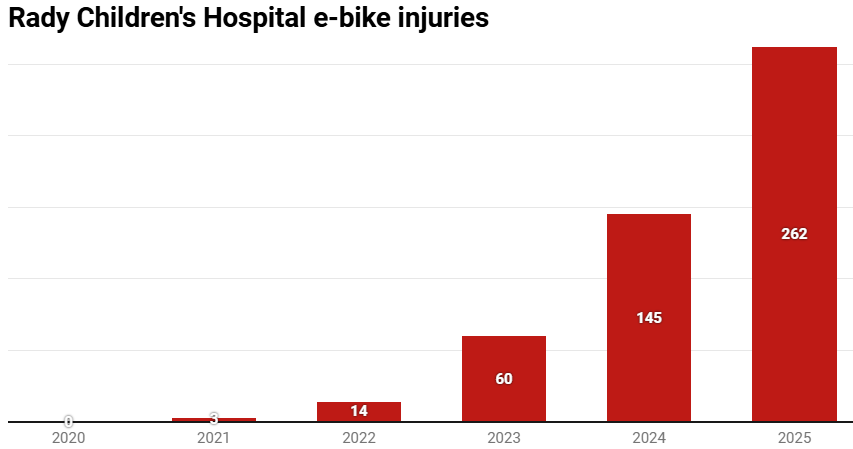
I'd agree on more opportunities for exercise. However, eBikes have taken over. I couldn't believe the number of eBikes I saw today. And almost every rider looked like they could benefit from pedaling a bit more in their life. Then there's the problem with lithium ion batteries, notably eBike ones. Lots of eBike fires, and it's increasing. As are the deaths from those fires. Similarly, eBike injuries are soaring as well.

1774680522210.png


15 minute cities don't interest me. You're not going to find a farm-to-table store in your 15 minute city, where you can meet the actual farmer. I'm not going to find an Asian grocery store which would be the only place I can buy some of the foods we eat.

If the world collectively decided to get off oil it could happen in less than a decade.
What sort of magical unicorn farts do you propose we power the world with? Do you like eating? Agricultural equipment runs on diesel. There's no 1-mile-long power cord for a combine. Do you like your store shelves stocked? Diesel powers the trains and trucks which bring products there. Like modern medicine? All of the plastic used requires petroleum. Like medicines / vitamins? Same deal, petroleum distillates. Like solar / wind power? It takes large amounts of diesel-powered peaking plants to stabilise the grid from renwables' variability. Often these peaking plants are far dirtier than the coal, oil, and gas plants the renewables are said to replace.

Then these regimes would all quickly fall once their primary income source was cut off.
That's actually the idea of "drill baby drill." Lower the price of oil so countries which normally aren't friendly to the USA are kneecapped in their primary revenue sources.

Honestly maybe I should thank Trump. He just did more to promote alternative transportation and energy than all the Democratic Presidents combined, even if that wasn't his intention when he attacked Iran. As more oil infrastructure gets destroyed we'll face more time with sustained higher prices.
Prices have been dropping here over the past few days. It's dropped $0.50 already.

And we need a network of elevated, non-stop bike lanes over arterials. This would be our second rapid transit system.
You've been getting too much second-hand from the wacky tobaccy permeating NYC streets. The physical space and cost alone are prohibitive. Then there's user resistance. They build elevated sidewalks and bike paths around here all the time. Practically no one uses them due to the grade and having to take extra steps to use them. No one wants to fight going uphill, on a bike or on foot.
 
I guess you might want to avoid the NYC subway then. In recent years, ~100-150 people a year are pushed onto the tracks, either intentionally or unintentionally. Depending on how you count crimes, there's ~2,500-10,000 violent crimes committed on the NYC subway each year. I'll gladly take my cocoon on wheels.
Look at crime rates. It's far safer down below than in the streets. I don't have to worry about a train hitting me on the platform. When I'm walking it's possible a car may jump the sidewalk and kill me. Double digits of pedestrians are killed in the city annually that way.

I checked statistics. On average about 25 people a year are pushed onto the tracks. Considering that there are 1.3 billion subway trips per year you have better odds of hitting the lottery than being pushed on the tracks. Also situational awareness helps. Move away from people who look "off", and don't stand near the edge.

I looked up some stats for car trips. Americans take about 400 billion car trips. On average about 40,000 die on the roads each year. That's one death for every 10 million car trips. There are 0 to about 10 murders on the subway annually. That total includes people pushed on the tracks. There are other deaths where people fall on the tracks, or die doing stupid things like subway surfing, but let's just count deaths caused by others. Statistically you're safer on the subway than in a car. If you want to count operational fatalities the number is generally zero most years. Most subway deaths are due to crime or user stupidity.
Another issue with bikes: where do you have secure storage? For valuables, weapons, or anything else you don't want getting legs? It's pretty easy to move a bicycle. A bit more difficult with a car.
I store my bikes inside. If I use them for errands I bring them into the store but I rarely do that. I have no need to carry anything of value which won't fit in my pockets. In fact usually when I go out I have one or two credit cards, a little emergency cash, and a pair of house keys. I just stick this is my pockets. No wallet, no cell phone. I usually don't even carry ID unless I'm riding my bike. Traveling light is very liberating.
It's also why hiring maids, using dry cleaners, personal assistants, and other service trades may or may not make sense for someone. Or for that matter, a luxury car. For me and my commutes, the quality of life improvement as well as increased productivity made spending the $ for a custom highway cruiser worth it. I keep my cars for 10 years or more. You know you have the right one when even after 10 years, you see it in the garage or parked in a parking lot and it still brings a smile to your face.
A lot of this of course depends on lifestyle. I wouldn't hire maids or any other household help no matter how much money I have. I don't feel comfortable having strangers in the house, plus I don't like people getting into my business. I have so much clutter most maids would walk out.
Many (most?) Americans buy FAR MORE car than they should have. I don't own any SUVs or trucks for a multitude of reasons. When I need one, I'll rent one. The fuel economy differences between sedans & SUVs is huge, as is the safety improvement. I get better mileage out of a Maybach than Nissan Pathfinder, despite the former being 1500 lbs heavier.
More people should follow your lead. People justify having these vehicles for the one out of 100 trips they might need their capabilities. Unless you need such vehicles regularly it makes more sense to just rent them when you need them.
Pay your grocer now or pay your doctor later. We're easily hitting $200/wk for food costs these days due to my fiancé's dietary restrictions the doctors have put her on.

I'm not saying buy organic, imported, high-end foods. Real food. Like Nona would make, with ingredients she would use. That does cost some money these days. There's a lot of cheap things on the shelves of grocery stores you can put in your mouth, but I'd hesitate to call most of them food. If the bacteria, insects, and rodents won't eat it when it's sitting on the shelf for months, it's usually a wise idea to steer clear from it. Our government doesn't subsidise real food, which is a shame.

You can eat the cheap, processed products and you'll live. Do it for a long period of time and your health will suffer. Notably, follow the old Food Pyramid and you'll definitely be in a world of hurt in a few decades.
I don't disagree with this. Eating on the cheap for short periods won't kill you. Lately I have a cash flow problem so I'm not cooking as much. But once it's resolved I'll eat better again.
My experience with trains is limited, but I did enjoy Amtrak's sleeper service a few years back. Certainly more relaxing than flying the airlines. But it only works as long a you're not on a tight schedule. For me, this is a deal-breaker for regular use.
I literally never have any need to be someplace on a tight schedule so trains work fine for me. Also I've been on the do not fly list since 2002. Air travel is out even if I wanted to use it.
If you think door-to-door service is an 'obsession', I ask you to take Amtrak to Savannah, GA. Since you don't like cars, no cars allowed. The train station is 5+ miles from downtown, no sidewalks, not that you'd want to walk in those areas. Especially since the trains arrive at 1a and 3:30a.
If the place is this lacking in amenities it's not a place I'd want visit. That said, the US rail system is generally awful. Any problems getting around by train here aren't due to mode but rather how it's implemented here. Go to Europe, and especially Asia, to see what a good rail system can do.
A train which isn't easily accessible is useless. Even you've noted this, saying that no part of NYC should be more than 1/2 mile from a subway station. That sounds like door-to-door to me.
Yes, local metro rail should be accessible from every part of the city. Again this is more a problem of poor implementation than any inherent limits of rail technology.
I've been in far dodgier things than the TBM 850 in the photo: DC3s, DC6s, and even a few dodgy 737-200s operated by shady shell companies.

To me, it's far scarier to be on ground transportation, including the NYC subway. Car drivers were actually one of the reasons I got my pilot certs, to get away from the crazies on the ground. Up there, it's myself, if I'm lucky another pilot, and machine. As long as I'm not being an idiot, the aircraft will continue to fly straight and level, even if the engine packs up. In aviation, altitude buys you time. The old saying was that if something bad happened, light a cigarette. Take your time and think about what has happened and formulate a plan of action, then execute it.

In a car/truck, or even train, potential threats and accidents require immediate action. Often there isn't anything you can do due to the time and distance/speed constraints. Lots of people permanently injured/disfigured from car crashes.
Totally agree on the car drivers. The sheer number of annual deaths on the roads is why I push for less auto use. As for trains, most modern systems are pretty much fail-safe. The train won't let the operator do anything dangerous. Try to run a red signal, the brakes are applied. Go over the speed limit the train brakes until it's under the limit. Grade crossings are the primary place where incidents happen but those largely don't exist anymore in population centers. Technically speaking if an idiot in an SUV blows the crossing gates and gets hit by a train I'd classify that as a road accident, not a rail accident. There's literally nothing a train operator can do if someone blows a grade crossing. By the same token unless the train hits a semi all the passengers will feel is a very mild bump.
I'd agree on more opportunities for exercise. However, eBikes have taken over. I couldn't believe the number of eBikes I saw today. And almost every rider looked like they could benefit from pedaling a bit more in their life. Then there's the problem with lithium ion batteries, notably eBike ones. Lots of eBike fires, and it's increasing. As are the deaths from those fires. Similarly, eBike injuries are soaring as well.
Yeah, it's a pet peeve of mine that e-bikes are lessening the health benefits of cycling. As for batteries the industry will eventually move to LFP or sodium-ion batteries as is already happening with EVs. That gets rid of the risk of fire or explosion.
15 minute cities don't interest me. You're not going to find a farm-to-table store in your 15 minute city, where you can meet the actual farmer. I'm not going to find an Asian grocery store which would be the only place I can buy some of the foods we eat.
I have an Asian grocery 10 minutes away by walking. Large cities on the east coast are inherently 15 minute cities even without planning.
What sort of magical unicorn farts do you propose we power the world with? Do you like eating? Agricultural equipment runs on diesel. There's no 1-mile-long power cord for a combine. Do you like your store shelves stocked? Diesel powers the trains and trucks which bring products there. Like modern medicine? All of the plastic used requires petroleum. Like medicines / vitamins? Same deal, petroleum distillates. Like solar / wind power? It takes large amounts of diesel-powered peaking plants to stabilise the grid from renwables' variability. Often these peaking plants are far dirtier than the coal, oil, and gas plants the renewables are said to replace.
We've had fission power since the 1950s, haven't we? Some combination of fission, hydro, solar, wind, tidal, and eventually fusion can replace most fossil fuel use. Trains readily lend themselves to electrification. In most countries everything except remote branch lines is electrified.

Cars could have been electrified even before we had decent batteries. Think something similar to slot cars where the car gets its power on the fly just like an electric train. A small battery would be enough to carry it over dead spots.

Air travel is the hardest thing to get off fossil fuels. We already have electric planes which work fine for short haul flights with small numbers of passengers. There's nothing on the horizon which can power an airliner. Maybe fusion if/when it becomes viable.

I agree we still will need petroleum but mainly as a feedstock for plastics and other things. Burning it for energy seems such a waste. Besides it's going to run out eventually. Better we start transitioning off it now. We should have done so in the 1970s.
That's actually the idea of "drill baby drill." Lower the price of oil so countries which normally aren't friendly to the USA are kneecapped in their primary revenue sources.
That doesn't work because most of the US oil costs more to extract than middle eastern oil. If we dump enough on the market to drop the prices to level you imply the oil companies here will be facing huge losses.
You've been getting too much second-hand from the wacky tobaccy permeating NYC streets. The physical space and cost alone are prohibitive. Then there's user resistance. They build elevated sidewalks and bike paths around here all the time. Practically no one uses them due to the grade and having to take extra steps to use them. No one wants to fight going uphill, on a bike or on foot.
Cost is hardly prohibitive when we spend $500 million for a highway interchange. A few billion is all we need. Most of it can be prefabbed and trucked to where it will be installed.

I think you're comparing what I propose to things like pedestrian bridges. Completely different concept. People avoid pedestrian bridges because they're going up and down at every road crossing. For my system you just go up once, and then stay on the elevated path until you reach the exit closest to your destination.

This is the general idea of what I have in mind:

 
Last edited:
Back
Top