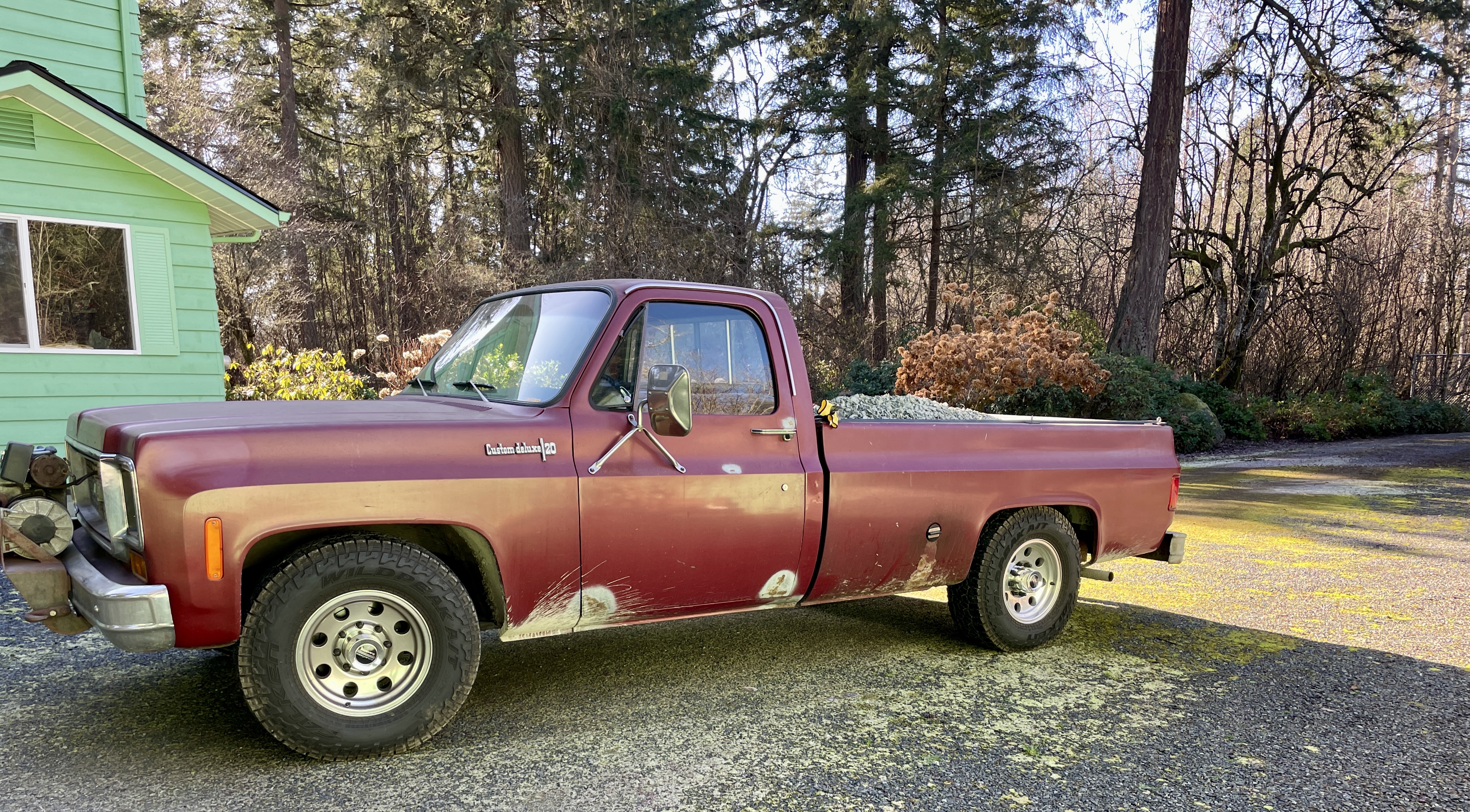
The average for my local stations is $5.39 for regular. 


 www.forbes.com
Yes. They do anywhere from 2,000 to 8,000 cycles or more, depending upon the battery.+
Yes, absolutely.
Just depends on how much you want to power.
LFP batteries are in a class of their own in life cycle, incredible charge/discharge rates they can do.
That's a drawback of all lithium chemistries. Since LFP can be safely kept indoors there's no need for them to get below freezing.One and only one drawback, you should not charge them below freezing
I have aprox. 1100Ah in 24V config ========= that's alot of LFP batteries
have to get a calculator on Watt Hours
you charge LFP at 14.6V or 29.2V (or you can double that again in series for 48V setup)
 That's 26.2 kW-hr!
That's the problem I have. I rarely have much, if any, federal or state tax liability so those tax credits would be worthless to me. They should make them fully refundable so those on the lower end of the income scale can benefit also.add: I'v deducted my panels/batteries/controllers/ect for Fed. taxes and your credit carries over year after year.
this sounds perfect, but you have to owe taxes to deduct,, not everyone owes.
Nobody is going to go out and buy a new EV due to high gas prices if their vehicle is still serviceable. What we need to look at is how many who didn't consider EVs will strongly consider one when it's time to buy their next vehicle. If high prices are sustained you might see lots full of SUVs and pickups that dealers can't give away.Why Isn’t $4-Plus Gasoline Enough To Make Americans Switch To EVs?
The EV textbook says that a geopolitical shock and spiking fuel prices would quickly lead to a spike in EV sales. Why didn't that happen in the US?
The common "reason" I've heard is they need to charge more now so they'll have enough to refill the service station tanks with higher priced gas next delivery. Of course this doesn't hold water for two reasons. One, it never seems to work in reverse. When prices drop the price at the pump stays the same until long after they tanks are filled with lower cost gas. Two, any sensible business owner would have enough liquidity to purchase several refills of their service station tanks at the very least. No need to raise prices until they actually buy the higher priced gas.+
Somewhat common knowledge:
The United States is the world's largest oil producer, having held the top spot for seven consecutive years
and setting records with over 13.3 million barrels per day (b/d) in late 2023.
Ask, why would US gasoline go up in price so much in the last month?
I have my own opinions on this
Not everyone wants to drive a sperm. It's bad enough driving SUVs which look like suppositories.0.35 Cd is awful. We should be aiming for 0.15 or less. This has a Cd of 0.13.
I've had a few "mules" as my daily driver cars over the years. As a result I've had some good conversations with R&D over the years, including some of the higher level people. At least on the projects I've worked on, the focus was genuinely on reducing fuel consumption, without ticking off the environmental regulators. We used to discuss what they'd build ideally if regulations didn't exist vs. what we have today. Indeed, many of the reasons cars don't last as long today comes down to meeting the unreasonable environmental/efficiency goals. Cast iron is superior to aluminium for durability, with a significant weight penalty. Using thinner oils is bad for engines. Shutting engines off at idle is bad for longevity. Using the engine to pre-heat the car is absolutely dumb, but US standards prohibit fuel-powered heaters in cars.The Prius is highly overrated if you ask me. As for your economy results with different software ever think this is intentional? The oil companies want you to burn more fuel so the automakers are happy to oblige with software which gives you worse mileage. If the oil companies had their way engines would be running at 100% all the time and we would be controlling speed with the brakes.
I'd personally love to see those here, along with the Taliban Taxis. Not everyone needs nor wants a large truck. When the Mercedes A-Class first came out, I was trying to figure out how to get one into the USA. 60MPG, 40.6 cu ft cargo capacity, and you could fit a ~8 ft long object inside it.Speaking of regulations Kei cars would be perfect as a city vehicle but they're a pain to get certified in the US. Our regulations need to be more in line with world standards.
Not Florida, Texas, Georgia, or Arizona. Bikes aren't practical here except for the islands or college campuses. In those areas, golf carts do well.Some combination of bikes, walking, bus, and rail can work in much of the country
Aviation works for most distances other than ultra-short (neighborhood-level). We've used it all the time for shorter hauls in our business since the 1980s. In Florida there are usually airports close to the downtown metros. It's a 20 minute flight from Naples to Punta Gorda. It's nearly a 90 minute drive. If you're going Fort Myers to Punta Gorda, that's a 10 minute flight, 45 minute drive. Naples to West Palm Beach is a 50 minute flight, 3 hour drive.Aviation by definition is only suited for longer distance transport. It still needs airports which take up far more space than train stations. Noise regulations restrict where they can be located.
They used trucks and gargantuan station wagons. While they have the loser vibes among the consumerist class of people, station wagons got the job done.And yet at one time people got by just fine without SUVs. A minivan is probably a better vehicle if you need to carry lots of stuff. More aerodynamic and lower rolling resistance tires.
Here's a well-known fact: those power plants run on fossil fuels. So that petroleum has to be refined and delivered to where it will be burned no matter where it goes.Here's a little known fact. It takes about 5 kW-hr of electricity to make a gallon of gasoline. Might as well just use that electricity to power an EV. It reduces pollution and avoids geopolitical problems like we're facing now.
But now you're (NY state) is forcing dependency on a single fuel source for everything. Power, heating, transport. Remember, Cuomo pushed hard to shutter the clean nuclear plants. The gas pipelines supporting the NYC metro are already under strain due to political and environmental concerns, so that's not going to be fixed anytime soon. Supply hasn't kept up with demand there.I'm concerned about this because we first faced this problem in the early 1970s. Not only have we not fixed it but we made it structurally worse with larger, less efficient vehicles and more car dependency. The very definition of insanity is doing the same thing while expecting a different result.
EDIT: Your figures are for total energy generation. Since EVs use electricity we're interested in the portion of electricity generation using non-fossil fuel sources. In NY state that's 46.2% (14.6% renewables and 31.6% nuclear). Nearly all the remainder is natural gas, which burns far more cleanly than gasoline or diesel. So yes moving emissions to power plants gives huge benefits, even if they're 100% natural gas.
As far as I'm concerned, EVs are worse when it comes to being subservient to others.I think we all know we can do better. I’m tired of the cost of commuting being determined by the ultra rich and politicians. While EV’s aren’t perfect I think they’re well on their way to being a viable alternative. We shall see.
That's a non-starter right there for me. I drove more than that yesterday alone.The numbers are plausible given my knowledge of batteries and the range of EVs. Let's say an EV has a range of 250 miles
Batteries specs in modern EVs are much like aircraft performance charts: Under ideal conditions, brand new aircraft, brand new engines, with a test pilot. If you rely upon those you'll find yourself in an unpleasant situation.and maybe you cycle the battery about 80% of that between charges. So 200 miles per cycle.
Eh...guess you've never owned a Chevy Volt. I have a friend whose Volt has been sitting at the dealer for months now. Still under warranty, but needs a battery replacement. No replacement battery has been shipped to the dealer yet.Manufacturers these days typically warranty the battery for at least 100K miles and 8 years. That's sort of a bare minimum warranty in the industry. If the failure rate during that time span wasn't miniscule they would go bankrupt offering such a warranty.
Even at that, EVs require HUGE amounts of power. A Tesla at-home charger is 48A, so 60A breaker. I only have a 60A service for this entire(!) home. Most of my homes only have 60A service. The exception, ironically, is my beach place which has 120A 3-phase service and a dedicated 100A 3-phase panel for the audio room. BUT, that's a mid-rise condo, so no way to plug in an EV to it.There are certainly valid reasons not to own an EV these days but battery life isn't one of them. Not having a place to charge at home is the primary reason. Fast chargers, even if they exist, cost 3 to 5 times more than charging at home.
Why? No matter where the exhaust pipe is, petroleum is what powers the world. Electricity prices will increase, probably more than gas pump prices. The process takes longer due to politics, but electric prices generally never come down.I really think this war will do more to promote EVs and public transit than everything the Dems did for the last 25 years.
A few things:As an aside EVs like this are what we really need to mass produce. Note that it has integrated solar cells. Due to the very efficient design it can gain up to 40 miles of range per day while parked just from the solar cells. It's small, nimble and a perfect city car. We should mass produce these with a sales price target of $7,500 to $10,000. On the lower end the EV tax credit will mean you get a free, very inexpensive to run new vehicle. Worst case you pay $2,500 out the door. A decent e-bike costs that much.
THIS. There's no practical way to store electricity. Yes, there are batteries, but they are lossy by nature. They even need battery management systems running 24/7 to stay safe and stable. Sometimes that will involve cooling fans, other times heaters, with the car parked. There have been many EV fires caused by the battery management systems failing or shutting down due to low state of charge.These owners think their saving the world, but can't wrap their head around this loss.
How many trillions of Watts, globally, every year in wasted energy 'loss'.
Renewables used,, is a sliver in the global pie chart
= Gasoline is a simple petroleum distill, then powering car =
btw: who's going to buy your used EV ? small laugh here
DO IT. I've had solar panels for 30+ years now. When I bought and renovated this place 20 years ago, everything was done with solar in mind. Even aircon on solar.I think this is interesting. I don’t have power to my garage (don’t ask) and have been thinking about putting a couple panels in the roof to some batteries to run lights and whatever small uses I might need.
I won't attempt to speak for the rest of the USA, but for Florida:20% of the US population live in apartments
2/3 of the US population live in single family homes
That's just one example. You can get Cd under 0.20 with more conventional vehicles. Or on the flip side if you don't mind looking different you can even get well under 0.10Not everyone wants to drive a sperm. It's bad enough driving SUVs which look like suppositories.
Three things if you're after efficiency-low drag coefficients, smaller frontal area, and ultra-low rolling resistance tires. It seems we forgot all three with many of today's vehicles.I've had a few "mules" as my daily driver cars over the years. As a result I've had some good conversations with R&D over the years, including some of the higher level people. At least on the projects I've worked on, the focus was genuinely on reducing fuel consumption, without ticking off the environmental regulators. We used to discuss what they'd build ideally if regulations didn't exist vs. what we have today. Indeed, many of the reasons cars don't last as long today comes down to meeting the unreasonable environmental/efficiency goals. Cast iron is superior to aluminium for durability, with a significant weight penalty. Using thinner oils is bad for engines. Shutting engines off at idle is bad for longevity. Using the engine to pre-heat the car is absolutely dumb, but US standards prohibit fuel-powered heaters in cars.
This is why US car regulations need to change. For that matter so do rail regulations. We have ridiculous crash standards which prevent us from using off-the-shelf passenger equipment which works everywhere else. That's driven up costs and also made trains heavier than they need to be.I'd personally love to see those here, along with the Taliban Taxis. Not everyone needs nor wants a large truck. When the Mercedes A-Class first came out, I was trying to figure out how to get one into the USA. 60MPG, 40.6 cu ft cargo capacity, and you could fit a ~8 ft long object inside it.
Looking for universal solutions is a fools errand. Rail is great where it can work but it can't work everywhere. I realize that. However, it can work in lots of places where we aren't currently using it.Not Florida, Texas, Georgia, or Arizona. Bikes aren't practical here except for the islands or college campuses. In those areas, golf carts do well.
This works if you can afford a plane, want to go through the hoops of getting a pilot's license, and aren't afraid of flying. Planes are certainly not a viable solution for most people, other than commercial airliners on regularly scheduled flights. High-speed rail offers travel times similar to those, while also stopping right in city centers, instead of airports on the outskirts.Aviation works for most distances other than ultra-short (neighborhood-level). We've used it all the time for shorter hauls in our business since the 1980s. In Florida there are usually airports close to the downtown metros. It's a 20 minute flight from Naples to Punta Gorda. It's nearly a 90 minute drive. If you're going Fort Myers to Punta Gorda, that's a 10 minute flight, 45 minute drive. Naples to West Palm Beach is a 50 minute flight, 3 hour drive.
Trains run nicely in tunnels. Given the cost of land acquisition, eminent domain fights, and so forth it's often cheaper to just tunnel. In my opinion this is what hurt the HSR project in California. People were fighting against having the train go through their land. It all could have been avoided by having it go in a tunnel beneath the land. On some of China's HSR lines fully half is in tunnels.Train stations take up little room in and of themselves, but you're forgetting that choo choos need tracks to run on. Every single mile must be cleared of all vegetation, including rights-of-way, tracks and ballast laid. That adds up quickly at 100 feet wide. Each route needs its own tracks as well.
I think general aviation will be more useful once some of these electric VTOL concepts which look like giant drones make it into production. They don't make the noise of a helicopter, and some are as fast as small planes. They can obviously land anywhere, even in someone's driveway.Once an airplane is off the ground or water, it's free to go anywhere, no infrastructure needed. Airports don't need to be large, fancy affairs. I've taken off of many grass fields or improvised runways in people's back yards. Depending on what I'm flying, 2000ft-3000ft is more than enough.
My brother says SUVs are really just tall station wagons. He's right but people are too dumb to realize this.They used trucks and gargantuan station wagons. While they have the loser vibes among the consumerist class of people, station wagons got the job done.
They run on natural gas outside of a few peaker plants. The US has an abundant supply of NG.Here's a well-known fact: those power plants run on fossil fuels. So that petroleum has to be refined and delivered to where it will be burned no matter where it goes.
Shuttering the nuclear plants was a huge mistake. We really should be building more. I really hope all the talk about commercial fusion by the early 2030s comes to pass. For many reasons I feel the human race has no future unless we develop fusion. A fusion plant is safe enough to be located anywhere, even in midtown Manhattan. Eventually we'll see scaled down versions which can power ships at first, then airliners, and perhaps even homes.But now you're (NY state) is forcing dependency on a single fuel source for everything. Power, heating, transport. Remember, Cuomo pushed hard to shutter the clean nuclear plants. The gas pipelines supporting the NYC metro are already under strain due to political and environmental concerns, so that's not going to be fixed anytime soon. Supply hasn't kept up with demand there.
No but the solar will offset some or all of the energy you use to charge the EV at night. Also, utilities usually have excess capacity at night and can charge less for electricity then.As far as I'm concerned, EVs are worse when it comes to being subservient to others.
I have a choice in gas stations.
I don't have a choice in electric companies. It's take it or leave it. (Sidenote: Why do power companies advertise?)
Sure, I could put up solar, but that's not going to charge an EV, especially at night when most people park their SUVs at home.
For most users even a 100 mile range works fine for most trips. The rare times they drive further either rent an ICE, or rent a longer range EV (some have 600 mile plus range these days). A network of fast chargers, which is still a work in progress, eliminates most of the problems with range anxiety. All you need is 250 to 300 mile range if you can recharge in 10 minutes. Figure you need to stop every few hours for bathroom breaks and/or a quick bite to eat. By the time you're done your vehicle is ready to go.That's a non-starter right there for me. I drove more than that yesterday alone.
There has been a way to electrify road vehicles since the turn of the 20th century. Simply install conductors in highways like a slot car track. The vehicle gets electricity on the fly like an electric train. It only needs a small battery to carry it through dead spots, or local roads which might not have the conductors installed. Now we have inductive pickup which is even better. No exposed conductors. I think a more viable answer given today's better batteries might be to have a few miles of inductive charging on highways every few tens of miles. The vehicles top off the battery occasionally while traveling. You can have unlimited highway range even with perhaps a small, 150 mile battery.Batteries specs in modern EVs are much like aircraft performance charts: Under ideal conditions, brand new aircraft, brand new engines, with a test pilot. If you rely upon those you'll find yourself in an unpleasant situation.
Batteries degrade with each charge, so your 250 mile car won't be able to do that past the first year of ownership.
Let's be honest: Batteries have always been the downfall of electric cars. EVs are the OLD technology. ICE is the new technology. Improvements to batteries have helped make EVs more useful, but they're still not where they need to be.
Isn't the Volt yesteryear's technology? Why even use it as a point of comparison? Besides that Americans can't make decent cars if their lives depended on it. They just can't. Once in a while you might get a winner but then again a broken clock is right twice a day also.Eh...guess you've never owned a Chevy Volt. I have a friend whose Volt has been sitting at the dealer for months now. Still under warranty, but needs a battery replacement. No replacement battery has been shipped to the dealer yet.
I'm lucky to have 200A service. Actually pretty common for private homes in NYC.Even at that, EVs require HUGE amounts of power. A Tesla at-home charger is 48A, so 60A breaker. I only have a 60A service for this entire(!) home. Most of my homes only have 60A service. The exception, ironically, is my beach place which has 120A 3-phase service and a dedicated 100A 3-phase panel for the audio room. BUT, that's a mid-rise condo, so no way to plug in an EV to it.
A Tesla Model S has a 100kWh battery. My entire electrical usage in a month runs about 300kWh. For a month. In Florida, AC going the whole time. So adding a Tesla is effectively adding another house onto the grid.
2/3rds of my electric bill is delivery charges. Those stay the same regardless of energy prices. I've seen my supply charges jump sometimes when gas is high, but I'm talking maybe from 10 cents to 12 or 14 cents per kW-hr. In terms of percent, that's about 10% of the average 35 cents per kW-hr total I pay for electricity. And this is when gas prices double. Very little of NY state's electricity comes from petroleum. A bit more than half is from natural gas. The rest is renewables and nuclear.Why? No matter where the exhaust pipe is, petroleum is what powers the world. Electricity prices will increase, probably more than gas pump prices. The process takes longer due to politics, but electric prices generally never come down.
Sure, and I'm paying indirectly via my taxes for all the problems fossil fuels cause, including the over $10 trillion we spent on middle Eastern wars since 2001, plus the long-term medical costs of cancers. If the end users of fossil fuels had to pay for all this directly we would have gotten off them long ago. I'd rather my tax dollars subsidize someone's EV or solar panel purchase than more pointless wars. That said I think at this point the solar/EV tax credits should be aimed only at low-income people. Phase them out at household incomes over about $50K to $75K, and more importantly make them refundable. Right now if you have little federal or state tax liability like me these credits are worthless, and yet they would be far more useful to me than to a high-income person.A few things:
1) A tax credit IS NOT free. That's taxpayer money. I pay quite a bit in taxes, so that's coming out of my wallet.
2) Again, no one except for Tim Waltz and Gavin Newsome want to drive a sperm on wheels.
3) A sales price of $7,500-$10k? Sure, I'll get right on that for you. While they're developing it, I'd like something on-par with a Rolls-Royce Phantom, nice interior, great sound deadening, powerful V12 engine that gets 200MPG with an out the door price of $35k. I think that's all a luxury car should cost. /sarcasm.
4) BTW, it says I can save a whopping $700/year by driving the Aptera. Not exactly a compelling reason to spend money.
Solar is my next project once I get past my current cash flow problem.DO IT. I've had solar panels for 30+ years now. When I bought and renovated this place 20 years ago, everything was done with solar in mind. Even aircon on solar.

It was just a water-bottle that rendered the SUV undriveable, and costs $12K to fix. You can have the absolute greatest technology in the world.... if moisture absolutely destroys it, it's far from the greatest. Also, for families with small children, they drop ice-cream, soda, water, all sorts of things in the backseat and floors. Hyundai made a vehicle that literally no families can use. "On no, did we leave the moon-roof accidentally open last night during the mild rain?" Enjoy your repair bill. Hyundai's dealer network living up to its reputation for denying warranty claims for the least little reason. What good is a great warranty when their dealer network is $#&%. What good is electronic technology when clearly NOTHING was done to prevent a ridiculous reason for it to utterly malfunction.So, it is clearly unacceptable to have a car that cannot survive a water-spill in the back seat.
On the other hand, the technology for waterproofing floors is pretty well-developed by now. No new scientific breakthroughs will be needed in order to make sure that water on the floor does not fry the wires. This is just an oversight in the manufacturing, and something that Hyundai should remedy -- it tells us very little about the core technologies of EVs, or how they stack up against ICE's.
Thanks for the link, though -- I'll make sure not to spill a lot of water in the back seat of our car!
Hold on, if car-makers are claiming a range of 250 miles, you have to reduce that down to 175. With full-sized electric trucks, even worse than that. We've seen YouTubers post actual mileage numbers on their channels. But the overall mileage numbers are not what we're seeing out there. Car-makers lied regarding range. They're more than likely lying regarding overall miles.The numbers are plausible given my knowledge of batteries and the range of EVs. Let's say an EV has a range of 250 miles, and maybe you cycle the battery about 80% of that between charges. So 200 miles per cycle. Decent NMC batteries get 700 to 1000+ cycles, especially in an EV with all sorts of battery protection mechanisms. So that's 140K to 200K miles before the battery degrades enough that it might need replacement. Even then if you never need the full range you can continue to use the vehicle.
I'm sorry but the numbers aren't adding up. also, where are the LFP powered vehicles on the market right now. I'm not finding them. Also, there is no way you're getting 5 million miles out of one battery. Not even remotely close in the near future. Not happening. Just like the issue with range. Overly exaggerated numbers.On more recent vehicles ranges of 300 to 500 miles are typical, and they use mostly LFP batteries good for 2,000 to 5,000 cycles. Doing the same math the battery should be good for ~500K miles on the low end, as much as 2 million miles on the high end. Sodium-ion will do even better. 10,000 cycles is possible. A 5 million mile battery is within possibility. That's a lifetime of driving for most people.
100,000 miles for a car, is pathetic! Gas-powered vehicles easily can do better than that. 100,000 miles? Heck, some vehicles (especially Toyota and Lexus) are barely broken in at that point. For car-makers to offer warranty work at such a low mileage is laughable. Yes, many offer worse. But that has to do with cheapness. And, as mentioned in a post above, dealerships nowadays will pull every stunt in the book to get out of doing warranty work. And, they usually get away with it.Manufacturers these days typically warranty the battery for at least 100K miles and 8 years. That's sort of a bare minimum warranty in the industry. If the failure rate during that time span wasn't miniscule they would go bankrupt offering such a warranty.
I'm sorry, but it is. My gasoline powered Mazda 6 is 18 years old. Still going strong. Easily last me over 20 years, if no drunk driver crashes into her. I didn't have to replace the engine 8 years ago. Didn't have to pay nearly the full cost of the car to keep her running. The economy is in the toilet. People are keeping cars much longer than they did just a few years ago. That's just not an option with an EV.There are certainly valid reasons not to own an EV these days but battery life isn't one of them.
It'll certainly make some reconsider. But again, for the masses; Hybrid technology is the best option. Unfortunately, those vehicles will have to be leased in order to avoid long-term battery issues.Not having a place to charge at home is the primary reason. Fast chargers, even if they exist, cost 3 to 5 times more than charging at home. Even if charging isn't an issue you might not be able to afford a new vehicle if your old one is still serviceable. This is why I don't tell people to run out and buy an EV now. Wait until you need a new vehicle, then strongly consider one. I really think this war will do more to promote EVs and public transit than everything the Dems did for the last 25 years. In the end pocketbook issues are what gets people to adopt new technology.
Again, solar is in its infancy. And if the Sun doesn't come out, their effectiveness drops like a stone. That target sales price just isn't happening. Lobbyists will get that EV type of vehicle banned for some reason. Anything to not make something THAT affordable that will siphon off large sales from gasoline-powered vehicles.As an aside EVs like this are what we really need to mass produce. Note that it has integrated solar cells. Due to the very efficient design it can gain up to 40 miles of range per day while parked just from the solar cells. It's small, nimble and a perfect city car. We should mass produce these with a sales price target of $7,500 to $10,000. On the lower end the EV tax credit will mean you get a free, very inexpensive to run new vehicle. Worst case you pay $2,500 out the door. A decent e-bike costs that much.
Nah, that's overstating the case. Any technology can be defeated by a stupid oversight, and that generally tells you little about the value of the technology. You might as well say, "what good is LED technology when this fabricator left a lump of solder that shorted the leads?" "What good is computer technology when I can pour a can of Coke into the mainframe?" "What good are Ohio-Class boomers when this guy left the hatch open?"What good is electronic technology when clearly NOTHING was done to prevent a ridiculous reason for it to utterly malfunction.
You actually have ranges up to 600 miles for some models but that aside of course they give you numbers under best-case conditions, just like ICE manufacturers give you best-case mpg numbers which are rarely realized in practice. Car makers have been lying from day one. They had to. Owning a car, including an EV, is a bum deal. Always was, always will be. Sadly very few realize this. Only way to sell their products is to massively brainwash people while also actively destroying funding for alternatives like transit.Hold on, if car-makers are claiming a range of 250 miles, you have to reduce that down to 175. With full-sized electric trucks, even worse than that. We've seen YouTubers post actual mileage numbers on their channels. But the overall mileage numbers are not what we're seeing out there. Car-makers lied regarding range. They're more than likely lying regarding overall miles.
Right here, made in the USA using LFP batteries:I'm sorry but the numbers aren't adding up. also, where are the LFP powered vehicles on the market right now. I'm not finding them. Also, there is no way you're getting 5 million miles out of one battery. Not even remotely close in the near future. Not happening. Just like the issue with range. Overly exaggerated numbers.

That's the minimum warranty on the battery these days. Tesla offers 8 years or 150,000 miles. Remember if warranties like this are offered the failure rate under warranty has to be miniscule or the manufacturers would go bankrupt. We see similar ICE warranties with engines. The warranty is often 100,000 miles but in practice the engines usually last 300,000 miles or more. It's the same thing with batteries. For a brand new EV figure 300K miles at least, more if you rarely fast charge it.100,000 miles for a car, is pathetic! Gas-powered vehicles easily can do better than that. 100,000 miles? Heck, some vehicles (especially Toyota and Lexus) are barely broken in at that point. For car-makers to offer warranty work at such a low mileage is laughable. Yes, many offer worse. But that has to do with cheapness. And, as mentioned in a post above, dealerships nowadays will pull every stunt in the book to get out of doing warranty work. And, they usually get away with it.
Why is the economy in the toilet? Another oil price shock? Do you see a pattern here? I fully agree if a person has a perfectly serviceable vehicle buying an EV now makes no sense. On the other hand when that vehicle needs replacement current events might get them to more strongly consider an EV.I'm sorry, but it is. My gasoline powered Mazda 6 is 18 years old. Still going strong. Easily last me over 20 years, if no drunk driver crashes into her. I didn't have to replace the engine 8 years ago. Didn't have to pay nearly the full cost of the car to keep her running. The economy is in the toilet. People are keeping cars much longer than they did just a few years ago. That's just not an option with an EV.
The only type of hybrid which might make sense are plug-in hybrids. With a 40 or 50 mile range battery you can do most of your local errands on electric. You plug in at night to recharge. On longer trips you run on gas and avoid range anxiety.It'll certainly make some reconsider. But again, for the masses; Hybrid technology is the best option. Unfortunately, those vehicles will have to be leased in order to avoid long-term battery issues.
They can try to get such a vehicle banned. Doesn't mean it'll happen. Big auto already started a campaign against e-bikes spreading FUD so legislators pass restrictive laws requiring licenses or registration. NJ just did this. The automakers are scared that for many an e-bike might be all the personal transport they need. Nowadays quite a few young people are just saying no to owning a car or even getting a driver's license. I hope the trend continues so we put big auto and big oil out of business. I've had it with the oil price shocks and the resulting profiteering.That target sales price just isn't happening. Lobbyists will get that EV type of vehicle banned for some reason. Anything to not make something THAT affordable that will siphon off large sales from gasoline-powered vehicles.
Honestly, if I could genuinely live without a car.... I would. But its a necessity to me. To the vast majority of Americans. Yes, we get screwed over owning them. But there are things folks can do to ease the financial burden. Keep a car long after the last payment was made. Purchase one that runs off of Reg. instead of Premium fuel (easily saves hundreds of dollars every year). When the car gets older, reduce the insurance coverage to just liability (the legal limit needed to drive a car on public streets). Shop around for insurance coverage. Buy a Cash Car. Go to an independent Used car dealership NOT attached to a new car dealership, pay the price advertised on the car in full; no monthly payments at all (though absolutely pay for an independent mechanic to inspect any Used car before buying).It's time the American public starts fighting back against companies that see them as a cash cow. Cars are the ultimate example of how they get an income stream from people. Payments every month for the car loan, the fuel, the insurance, regular maintenance, etc. This is why I never drank the Kool-Aid. I saw how much cars cost other people and said to myself if I owned one I'm essentially working just to pay for it. The extra time some trips might take is offset by needing to work far less.
Yeah, don't carry a gun in NYC. Recently, an elderly man was attacked. Shot the one who did it. Everyone, including the District Attorney, agreed it was a blatant case of self-defense. But he was still prosecuted, anyway. D.A. decided to toss him a bone. ONLY 4 years in prison if he plead Guilty. He took it! What was he to do? He didn't want substantially more years for having used a gun. He didn't want to die in prison. As far as a knife, yeah; same. Back when I was a younger man. Honestly, pepperspray works better.Carry a gun or a knife. I'm serious. I used to carry the latter all the time until the late 1990s when crime rates started dropping. It probably saved my life several times just pulling it out when things got tense. Remember people get carjacked, too. Not to mention you're surrounded by sociopaths driving other vehicles. Half the drivers in NYC are sociopaths. I would be damned if I were forced to own an expensive, finicky piece of machinery when we have subways.
I agree with you. I just don't see such a massive (and expensive) city-wide project happening in our neck of the woods.The city is doing it wrong. I've been pushing elevated bike lanes on viaducts above arterials for a long time. That's the way forwards. Riding a bike doesn't lend itself to stopping frequently. You need to engineer bike lanes with little or no stopping as they did in the Netherlands. The only way to do that in a big city is to put the lanes above (or below) the streets. Tunnels aren't feasible given the utility lines underground so we need to use viaducts.
I'm sorry but I just don't see that. There's a Citibike station literally across the one-way street from my 3rd shift job. No one ever goes near it. Ridership is low. Tons of such stations in that neighborhood. Yet I literally have seen one rider in the last several years of working there on a daily basis. Speaking of bike thefts, that one time; I saw a young man nearly take off on said Citibike after the renter left it outside the doors of a Wal-greens when he ran inside to grab something. Thankfully, for him, he saw what was happening and stopped it. Had it been stolen, his Credit card would have been charged the full amount to replace it, by the city.As for Citibike a full dock isn't a sign of anything. They need to keep the docks reasonably full so bikes are there when people need them. The usage numbers for Citibike are very high. Bike share is a great answer for people worried about bike theft if they use their own bikes.
Plug-In hybrids are the worst. With a Hybrid, literally no need for a charging station.Hybrids are the worst of both worlds. Frankly ICE vehicles aren't much better. They have a huge number of complex mechanical parts. EVs don't. If they have hub motors they don't even need gears.
Again, not realistic. It's not just personal transportation for going to and from work. Businesses use SUVs and large vans for transporting goods. They can't cater to a city full of customers without those vehicles. Trucks? Salvage companies need those. Construction companies needs those. Ban those types of vehicles, and in very short order you'll cripple the entire city. Oh, could you imagine if such a ban was extended to garbage trucks?The answer in cities is bikes, walking, public transit, and city-sized vehicles like Kei cars. I recognize the need for personal transportation but SUVs and pickups don't belong in cities at all unless you need them as a commercial vehicle. NYC should ban them, or at the very least require a CDL to drive them.
Even if solar panels could do that, what happens if the Sun disappears for a few days of rain and snow? Any stored up energy will be gone, very quickly. Plus again, infant stage of technology. It's been decades of Solar Tech. Improvement is going at a snails pace.An SUV no. A small, light radically streamlined EV yes. Solar panels are feasible to add tens of miles of range daily just sitting in the sun to such a vehicle. Solar panels are actually in a midway state in their development comparable to where LEDs were maybe 15 years ago. Efficiency of the best panels is in the low 20s. Lab research says we can eventually more than double this.
Definitely agree with you regarding that last part. Nissan tried it when they first released The Leaf. Buyers had an option where they bought the vehicle but leased the battery, indefinitely. Pay a fee every month. When the battery crapped out. Nissan would replace it with a brand new one, for FREE! And, Nissan did this each and every single time. Not just once.... Nissan lost so much money on that program that they discontinued it after only a handful of years. If those battery stations came to America, no way would it be a free swap. The money would have to come from somewhere (tax-payer dollars) or a fee would apply.The swap stations have two benefits. Faster turnaround times than many of today's EVs which take 10 minutes or more to charge, and the end user no longer has to worry about potential battery replacement. It's also less costly to buy a vehicle when you're not buying the battery.
Problem is, I can't buy such a vehicle NOW.It does exist. Production LFP cells are now exceeding 200 Wh/kg. You need fewer components for an LFP so on a pack level LFP is now very competitive with NMC in terms of range per kg of battery mass.
To me it's like saying cellphones cause Cancer. If car exhausts did such a horrendous job, you'd have people dropping like flies all over the place, or mass diagnosis of Cancer. Truth is, most scientists have no clue what's going on with most Cancer causes outside of Smoking, and prolonged exposure to the Sun. We're now at a point where some scientists claim that beer causes Cancer, if you enjoy a bottle every now and then.I won't minimize the effect of lithium fires but that is becoming less and less of an issue as we move away from NMC batteries. Car exhaust may not have such drastic immediate effects but breathing it in daily, combined with outgassing from the plastic interiors of today's vehicles, is why cancer rates are through the roof. We've known for well over a century that burning fossil fuels causes cancers and other health issues. We knew this from the time we started burning coal during the Industrial Revolution. These illnesses are a huge burden on society.
Thing is, if that was viable; where would the money come from? America would absolutely bankrupt itself going that route. We have an existing system. It's far from perfect. But it works well enough. It's like having a car that works reliably. You need a truck to haul things out to your property for one job. Do you sell your car and buy a truck? No, you rent a truck for a few days, and keep your car.No, the long-term answer would be investing heavily in rail transit, both local and long distance, to replace most car travel and most domestic air travel. We could just as easily have chosen this path instead of the one we did. China is hedging their bets. Yes, unfortunately they built highways and pushed auto ownership as a sign of "prosperity", despite the fact car ownership makes you broke. But they also massive built out local and high-speed rail. And they're pushing EVs for those that do own cars. I can't help but think they're better positioned to weather shortages in oil supplies. Economic competitiveness dictates we should do likewise. Think of all the jobs a domestic metro and high-speed rail industry would create here.
Actually no, it tells you a whole heck of a lot about it's value.... or, lack thereof.Nah, that's overstating the case. Any technology can be defeated by a stupid oversight, and that generally tells you little about the value of the technology.
600?? Maybe going about 6 miles per hour. Realistic numbers are far shorter for EVs. Car-makers have absolutely saturated the Market with EVs. Dealerships are stuck with them! They WANT to sell them. Only ones lying are the ones promoting EVs for sale. The more they sell, the bigger their profits. So, they over exaggerate how good EVs are.You actually have ranges up to 600 miles for some models but that aside of course they give you numbers under best-case conditions, just like ICE manufacturers give you best-case mpg numbers which are rarely realized in practice. Car makers have been lying from day one. They had to. Owning a car, including an EV, is a bum deal. Always was, always will be. Sadly very few realize this. Only way to sell their products is to massively brainwash people while also actively destroying funding for alternatives like transit.
Where are all of these LFP vehicles flooding the market like the current state of EVs? And, who wants to be the Beta Testers paying the dealerships for the privilege of trying out the new battery technology? I'll wait for the human testing to be over, first.Right here, made in the USA using LFP batteries:
Exploring Tesla LFP Battery Technology: Which Models Have It?
Exploring Tesla LFP Battery Technology: Which Models Have It?www.evlithium.com
LFP gets at least 2,000 cycles. That's how you get 1 million miles or more out of a battery. I can lead a horse to water but I can't make it drink. If you don't want to believe simple engineering facts I can't help you. The technology has advanced considerably from even 5 years ago.
Results on paper rarely translate to Reality. These batteries are going to be a Wait & See approach.Sodium-ion can get 10,000 cycles or more. That's how you get 5 million miles out of a battery. Even better it works fine down to at least -30°C. Some variants can work down to -70°C, which is Antarctica cold. BYD is already making vehicles with sodium-ion batteries. This is the future of EVs. They also cost about 1/2 to 1/3 of what LFP costs.
That's not how warranties work. Again, many dealerships will find a way to refuse warranty repairs long before the warranty is up. A warranty is a way to incentivize a purchase. It has little to do with reality. It's just that KIA and Hyundai are the absolute worst offenders of denying legit warranty claims for ANY reason.That's the minimum warranty on the battery these days. Tesla offers 8 years or 150,000 miles. Remember if warranties like this are offered the failure rate under warranty has to be miniscule or the manufacturers would go bankrupt. We see similar ICE warranties with engines. The warranty is often 100,000 miles but in practice the engines usually last 300,000 miles or more. It's the same thing with batteries. For a brand new EV figure 300K miles at least, more if you rarely fast charge it.
Why? Trump and his policies. Policy change by Trump = Food prices that were already a bit inflated, skyrocketed! Oil Prices going up = Trump wants to nuke Iran. He can't do so, so declares war on them! Oil prices were downright reasonable before Trump's declaration.Why is the economy in the toilet? Another oil price shock? Do you see a pattern here? I fully agree if a person has a perfectly serviceable vehicle buying an EV now makes no sense. On the other hand when that vehicle needs replacement current events might get them to more strongly consider an EV.
Plug-Ins are the worst of both worlds. You get the disadvantages of a Hybrid and the disadvantages of an EV with literally zero advantages of both. Not needing a recharging station? Nope! No needing to have the gasoline engine and parts serviced by a professional? Nope!The only type of hybrid which might make sense are plug-in hybrids. With a 40 or 50 mile range battery you can do most of your local errands on electric. You plug in at night to recharge. On longer trips you run on gas and avoid range anxiety.
The issue is Big Auto has billions of dollars at their disposal. They might need a few years to get what they want. But it'll happen. Throw massive amounts of money around to the people in power, you'll eventually get what you want.They can try to get such a vehicle banned. Doesn't mean it'll happen. Big auto already started a campaign against e-bikes spreading FUD so legislators pass restrictive laws requiring licenses or registration. NJ just did this. The automakers are scared that for many an e-bike might be all the personal transport they need. Nowadays quite a few young people are just saying no to owning a car or even getting a driver's license. I hope the trend continues so we put big auto and big oil out of business. I've had it with the oil price shocks and the resulting profiteering.

But most don't do what you do. Average cost of vehicle ownership per the AAA is now up to $12K annually. If gas prices stay high then it'll probably be $15K next year. That's fully half the take-home pay of an average salary. Cars are keeping many people poor. There's no reason why needing a license or vehicle shouldn't be the exception rather than the rule except massive failure of public policy.Honestly, if I could genuinely live without a car.... I would. But its a necessity to me. To the vast majority of Americans. Yes, we get screwed over owning them. But there are things folks can do to ease the financial burden. Keep a car long after the last payment was made. Purchase one that runs off of Reg. instead of Premium fuel (easily saves hundreds of dollars every year). When the car gets older, reduce the insurance coverage to just liability (the legal limit needed to drive a car on public streets). Shop around for insurance coverage. Buy a Cash Car. Go to an independent Used car dealership NOT attached to a new car dealership, pay the price advertised on the car in full; no monthly payments at all (though absolutely pay for an independent mechanic to inspect any Used car before buying).
That's disgusting. Four years for simply defending himself? I think he has a nice lawsuit though. Since NYC won't allow him to carry a weapon for self-defense the city needs to have enough police presence to prevent the kind of attacks he experienced all the time.Yeah, don't carry a gun in NYC. Recently, an elderly man was attacked. Shot the one who did it. Everyone, including the District Attorney, agreed it was a blatant case of self-defense. But he was still prosecuted, anyway. D.A. decided to toss him a bone. ONLY 4 years in prison if he plead Guilty. He took it! What was he to do? He didn't want substantially more years for having used a gun. He didn't want to die in prison. As far as a knife, yeah; same. Back when I was a younger man. Honestly, pepperspray works better.
It's entirely possible it could happen under the current Mayor. I want to see if I can get any feedback from the administration on the idea. In terms of infrastructure projects it's not terribly expensive. You can prefab the viaducts and mass produce them cheap, especially if China makes them. You just need to install them on site. Install support piers, then bolt on the viaduct. We could probably install 500 miles of these in a year if we make an effort.I agree with you. I just don't see such a massive (and expensive) city-wide project happening in our neck of the woods.
Question for you since you seem big on hybrids. What exactly is the advantage of a hybrid over a straight ICE vehicle if it's not a plug-in hybrid because I'm just not seeing it?Plug-In hybrids are the worst. With a Hybrid, literally no need for a charging station.
Absolute best solution for apartment dwellers.
I'm talking about personal transportation only. Obviously businesses need and will continue to use larger vehicles.Again, not realistic. It's not just personal transportation for going to and from work. Businesses use SUVs and large vans for transporting goods. They can't cater to a city full of customers without those vehicles. Trucks? Salvage companies need those. Construction companies needs those. Ban those types of vehicles, and in very short order you'll cripple the entire city. Oh, could you imagine if such a ban was extended to garbage trucks?
We went from under 1% efficiency to mid 20s since the 1960s. We're poised to get to about 50% relatively soon. The big hurdle is getting lab samples into mass production.Even if solar panels could do that, what happens if the Sun disappears for a few days of rain and snow? Any stored up energy will be gone, very quickly. Plus again, infant stage of technology. It's been decades of Solar Tech. Improvement is going at a snails pace.
In China they charge a fee for each swap. No idea if long-term it's more expensive than owning the battery outright.Definitely agree with you regarding that last part. Nissan tried it when they first released The Leaf. Buyers had an option where they bought the vehicle but leased the battery, indefinitely. Pay a fee every month. When the battery crapped out. Nissan would replace it with a brand new one, for FREE! And, Nissan did this each and every single time. Not just once.... Nissan lost so much money on that program that they discontinued it after only a handful of years. If those battery stations came to America, no way would it be a free swap. The money would have to come from somewhere (tax-payer dollars) or a fee would apply.
Of course you can. They've been available for at least the last 5 years, albeit in smaller numbers in the beginning.Problem is, I can't buy such a vehicle NOW.
Cancer rates are epidemic now. Until the Industrial Revolution cancer was virtually unheard of, and then only occasionally among the very old. Now lots of young people, even non-smokers, are getting cancer. Something is going on. Environmental pollution is most likely to blame. I have an aromatic hydrocarbon allergy. Things like auto exhaust affect me long before I inhale enough to potentially cause cancer. Trust me when I say our air is poison. I can't even go out in the summers until after about 10PM without feeling nauseous. I can't ride in a late model car for more than a few minutes due to the outgassing from the interior.To me it's like saying cellphones cause Cancer. If car exhausts did such a horrendous job, you'd have people dropping like flies all over the place, or mass diagnosis of Cancer. Truth is, most scientists have no clue what's going on with most Cancer causes outside of Smoking, and prolonged exposure to the Sun. We're now at a point where some scientists claim that beer causes Cancer, if you enjoy a bottle every now and then.
Let's factor oil wars into this. $10 trillion plus and counting since 9/11 but since we just added it to the national debt people don't notice. Had we paid as we went that would have been an extra $3K to $4K in taxes annually on average for every working adult in the US. China was a third-world country when they built out their rail system. If they did it the US certainly can. I'm tired of excuses. We used to be a can do country. Now we're a can't do country.Thing is, if that was viable; where would the money come from? America would absolutely bankrupt itself going that route. We have an existing system. It's far from perfect. But it works well enough. It's like having a car that works reliably. You need a truck to haul things out to your property for one job. Do you sell your car and buy a truck? No, you rent a truck for a few days, and keep your car.
Not FAR shorter. I'll admit in the real world EVs rarely reach their advertised range but ICE cars rarely meet their advertised mpg.600?? Maybe going about 6 miles per hour. Realistic numbers are far shorter for EVs. Car-makers have absolutely saturated the Market with EVs. Dealerships are stuck with them! They WANT to sell them. Only ones lying are the ones promoting EVs for sale. The more they sell, the bigger their profits. So, they over exaggerate how good EVs are.
I'm surprised being a long-time CPF member that you don't know LFP is about 20 years old. I first bought A123 cells from Scott back in 2008 I think. I thought even then how much better these were than NMC lithium-ion in terms of safety and peak power capability. Unfortunately energy density was low at under 100 Wh/kg. That shortcoming was fixed (thanks to CATL, a Chinese company). Now we're at over 200 Wh/kg. I think 230 Wh/kg cells are starting to reach production. BYD is making the bulk of LFP EVs. Unfortunately the 100% tariffs make these vehicles uncompetitive in the US. I'm waiting for a new administration to allow them in without tariffs. $10K to $15K EVs will sell like hotcakes in this country. Far cheaper than any ICE vehicle. Lower operating costs also.Where are all of these LFP vehicles flooding the market like the current state of EVs? And, who wants to be the Beta Testers paying the dealerships for the privilege of trying out the new battery technology? I'll wait for the human testing to be over, first.
Sodium-ion is working well in the real world. The numbers I mention are what production batteries can do.Results on paper rarely translate to Reality. These batteries are going to be a Wait & See approach.
No arguments there. Every manufacturer tries to get out of paying warranties.That's not how warranties work. Again, many dealerships will find a way to refuse warranty repairs long before the warranty is up. A warranty is a way to incentivize a purchase. It has little to do with reality. It's just that KIA and Hyundai are the absolute worst offenders of denying legit warranty claims for ANY reason.
I'm glad you admit this. The markets were doing great also prior to the Iran "excursion". I lost over $50K but did recover a little last week, and so far this week. I hope Israel doesn't kill the current ceasefire with their war mongering. They've done this in the past every time peace seems imminent.Why? Trump and his policies. Policy change by Trump = Food prices that were already a bit inflated, skyrocketed! Oil Prices going up = Trump wants to nuke Iran. He can't do so, so declares war on them! Oil prices were downright reasonable before Trump's declaration.
No arguments there but NYC should get with the program and install massive numbers of curbside charging stations.Again, you live in an apartment, EVs are not a viable option. A smaller gas-sipping car will be a good one for some.
No kidding. The only thing which might stop big oil and big auto is if the war continues to destroy oil infrastructure. Given the instability of that region, good luck getting investors to bankroll replacements. Long term that means permanent high prices and a shift away from fossil fuels and cars. It also means countries where cars aren't totally entrenched, like India and China, might decide to forget the automotive age.The issue is Big Auto has billions of dollars at their disposal. They might need a few years to get what they want. But it'll happen. Throw massive amounts of money around to the people in power, you'll eventually get what you want.

There's been very few SUVs out there with decent design, for sure. I also find most of them ugly. A conventional pick-up truck (like the ones made 20 years go) didn't look to bad, but made sense for what they were -- work vehicles. Modern ones have also been beaten with ugly sticks.Yeah, SUVs are fugly, and pickups are even worse. I just don't see the appeal. SUVs look like giant roller skates to me.
Fully agree on all of that. When it comes to train accidents, the train always wins. Passengers usually live. Then again, the same is true for cars & regulations. Why can't the US allow the same instrument cluster which the rest of the world is perfectly happy with? Certainly the gauges need to read in US units rather than metric, but that should be the only change needed. Canada & Mexico use the same instrument clusters which the rest of the world uses.This is why US car regulations need to change. For that matter so do rail regulations. We have ridiculous crash standards which prevent us from using off-the-shelf passenger equipment which works everywhere else. That's driven up costs and also made trains heavier than they need to be.
I actually like rail travel, even Amtrak. About 20 years ago a group of businessmen tried to get rail service between TPA-ORL-MIA. A lot of push and effort, but too much resistance and politics. Brightline has done a good job so far and was able to complete the MCO-MIA line, privately funded. If their prices were more reasonable, I'd use them. As it stands now, it's cheaper to rent a car or take a plane.Looking for universal solutions is a fools errand. Rail is great where it can work but it can't work everywhere. I realize that. However, it can work in lots of places where we aren't currently using it.
You can still buy Cessnas for less than what a new Honda Accord goes for. Certainly far less than SUVs go for. Operating costs actually aren't bad and generally runs less than my cars. The Diamond DA40 I sometimes fly gets 30MPG and does so doing ~160MPH. Drop the speed down to 140mph and you can squeak out 32MPG. If you're in a hurry, firewall it and you go down to 24MPG at 175MPH. Insurance is WAAAY less than my cars ($497.76/year) and is very straightforward. Aircraft generally don't lose value and depreciate like cars, unless you're buying the brand new, latest "hot" aircraft release. UNlike cars and even EVs, they are VERY repairable and rebuildable.This works if you can afford a plane, want to go through the hoops of getting a pilot's license, and aren't afraid of flying. Planes are certainly not a viable solution for most people, other than commercial airliners on regularly scheduled flights. High-speed rail offers travel times similar to those, while also stopping right in city centers, instead of airports on the outskirts.
Tunnels work nice with NYC's geology. Down here? not so much. and in no place in history has tunneling been cheaper than overland. The 2nd Ave subway cost $2.5BN(!) per mile. Let that sink in. The route Miami->NY Penn Station is 1,389 miles. That's $3.5 TRILLION dollars. That's larger than the entire federal budget of the United States.Trains run nicely in tunnels. Given the cost of land acquisition, eminent domain fights, and so forth it's often cheaper to just tunnel.
Rail has an efficiency advantage, but it's not as high as you'd think. For Amtrak, trains like the Zephyr get about 0.25 MPG - 0.5 MPG. Dividing that out per passenger improves that number dramaticallyOnce you get the initial infrastructure built the long term energy savings alone more than pay for the cost. The thing with aviation is that it's very energy intensive compared to rail.
I'd agree. In many ways, nuclear power and lithium batteries have the same issue: They're great when they work. Things get catastrophic when they don't. It's that "when they don't" we need to focus our energy on.Shuttering the nuclear plants was a huge mistake. We really should be building more. I really hope all the talk about commercial fusion by the early 2030s comes to pass. For many reasons I feel the human race has no future unless we develop fusion. A fusion plant is safe enough to be located anywhere, even in midtown Manhattan. Eventually we'll see scaled down versions which can power ships at first, then airliners, and perhaps even homes.
There is no "offset". There is no storage. Electricity is produced by the power plants and put on the grid in real-time. If you're charging your car in anything but sunny weather, the vast majority of it, or the entirety of it will be fossil fuel. With NY State pushing to go all-electric, there won't be excess capacity at night, especially in heating season.No but the solar will offset some or all of the energy you use to charge the EV at night. Also, utilities usually have excess capacity at night and can charge less for electricity then.
Agreed that most car users don't drive the full range of an EV in a day, but a serious problem remains: They still need to be charged, more often than an ICE vehicle needs fuel. Charging, even on a Tesla supercharger, takes ~30 minutes, so let's be generous and say 2 cars per hour, assuming everything goes right and the EV owner actually comes back in time. And that's ideal conditions, with Tesla's chargers, the fastest out there. Everything else runs much slower, 1+ hr per car. A gas pump can serve 10-15 cars per hour. You'd need a Walmart/Costco-sized parking lot full of superchargers to make it work. Even then, the electrical grid can't handle that. NY State is trying to go all-electric with buses, but in Rochester NY, the utility company made it clear that the grid can't handle it and can't be upgraded fast enough to accommodate the new buses, mainly due to regulations and pressure by the same politicians who are pushing the electric buses. :For most users even a 100 mile range works fine for most trips. The rare times they drive further either rent an ICE, or rent a longer range EV (some have 600 mile plus range these days). A network of fast chargers, which is still a work in progress, eliminates most of the problems with range anxiety. All you need is 250 to 300 mile range if you can recharge in 10 minutes. Figure you need to stop every few hours for bathroom breaks and/or a quick bite to eat. By the time you're done your vehicle is ready to go.
 :
:Slots won't work in climates with freezing precipitation, especially with salt in use. Even on our roads in Florida, there's enough contaminates on the road to get an electric current across the road. Inductive coils are a terrible idea. Wireless cell charging is ~50% efficient and that's with the phone's coil millimeters away from the charging coils. Increase this distance and inefficiency increases exponentially.There has been a way to electrify road vehicles since the turn of the 20th century. Simply install conductors in highways like a slot car track. The vehicle gets electricity on the fly like an electric train. It only needs a small battery to carry it through dead spots, or local roads which might not have the conductors installed. Now we have inductive pickup which is even better. No exposed conductors. I think a more viable answer given today's better batteries might be to have a few miles of inductive charging on highways every few tens of miles.
Volts, at least the one in question, uses Li-Ion batteries, not NiMH, so current tech. and more realistically, a car made by a major manufacturer which is still under warranty. This is the exact situation I worry about with this. Warranties are just words on a paper without action.Isn't the Volt yesteryear's technology? Why even use it as a point of comparison? Besides that Americans can't make decent cars if their lives depended on it. They just can't. Once in a while you might get a winner but then again a broken clock is right twice a day also.
Burning stuff= fossil fuels. I'm not going to split hairs about what the fuel looks like. You put it in a chamber, light it on fire, it makes steam, exhaust goes out the smokestack. Doesn't matter whether it's coal, oil, natural gas, or burning fetuses to make heat to turn the tubines, you're still burning hydrocarbons.2/3rds of my electric bill is delivery charges. Those stay the same regardless of energy prices. I've seen my supply charges jump sometimes when gas is high, but I'm talking maybe from 10 cents to 12 or 14 cents per kW-hr. In terms of percent, that's about 10% of the average 35 cents per kW-hr total I pay for electricity. And this is when gas prices double. Very little of NY state's electricity comes from petroleum. A bit more than half is from natural gas. The rest is renewables and nuclear.
If you don't like fossil fuels, I'd suggest you stop using them. Start with food. Unless you're rolling with the Amish (and yes, I do), it took petroleum and fossil fuels to produce, harvest, and transport that food to the store. Electricity and internet/cloud services could be your next cut. After all, those data centres use tremendous amounts of power and water. Heating is a luxury. You should just put on a few more layers of clothes or you could live in a smaller space, perhaps a 1-room 200sqft apartment. It's far more efficient than trying to live in a wasteful multi-room home/apartment. Oh, don't forget that most blankets / jackets use synthetic, petroleum-based fibers. You mention medical. If you're against fossil fuels and oil, steer well clear of modern medicine. Where do you think the source/starter material for medications and vitamins comes from? Petroleum distillates. IV bags, IV lines? Petroleum-based. And everything in medicine is wrapped in plastic. Sterilisation of tools? That's all fossil fuel powered too.Sure, and I'm paying indirectly via my taxes for all the problems fossil fuels cause, including the over $10 trillion we spent on middle Eastern wars since 2001, plus the long-term medical costs of cancers.