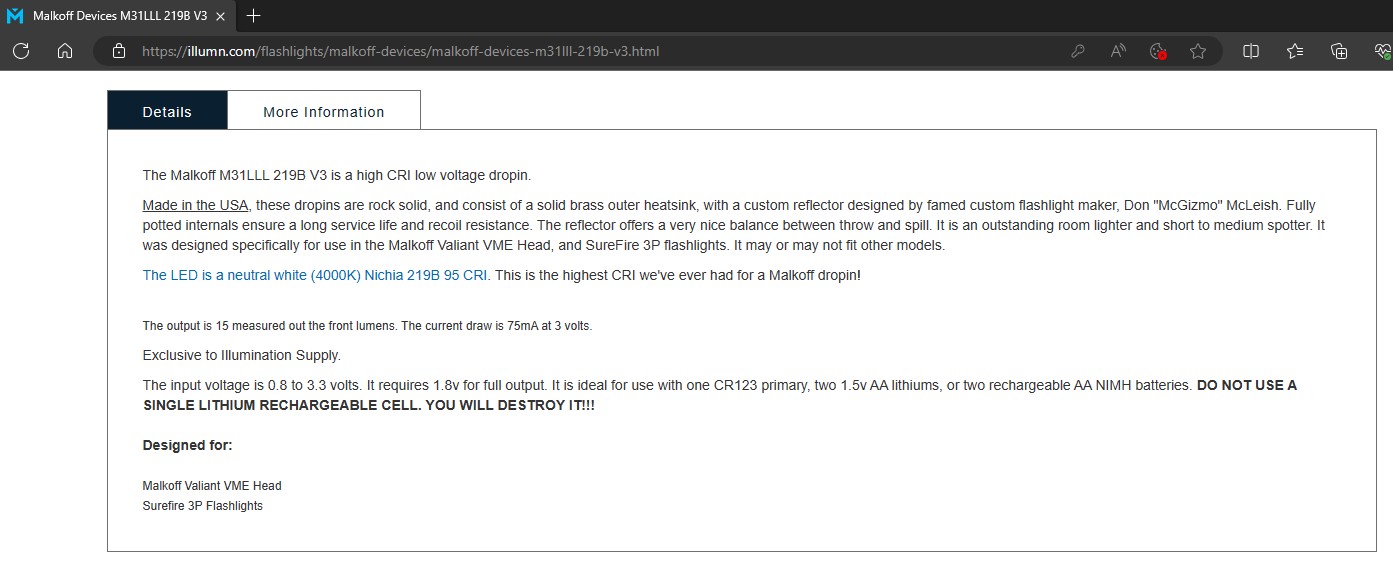
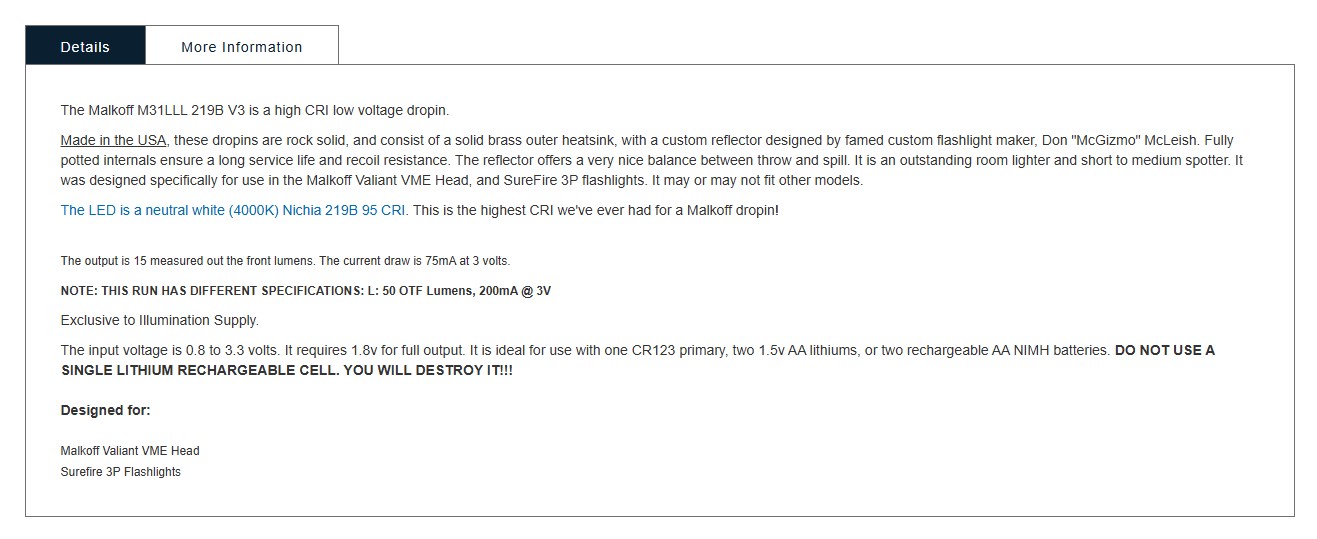
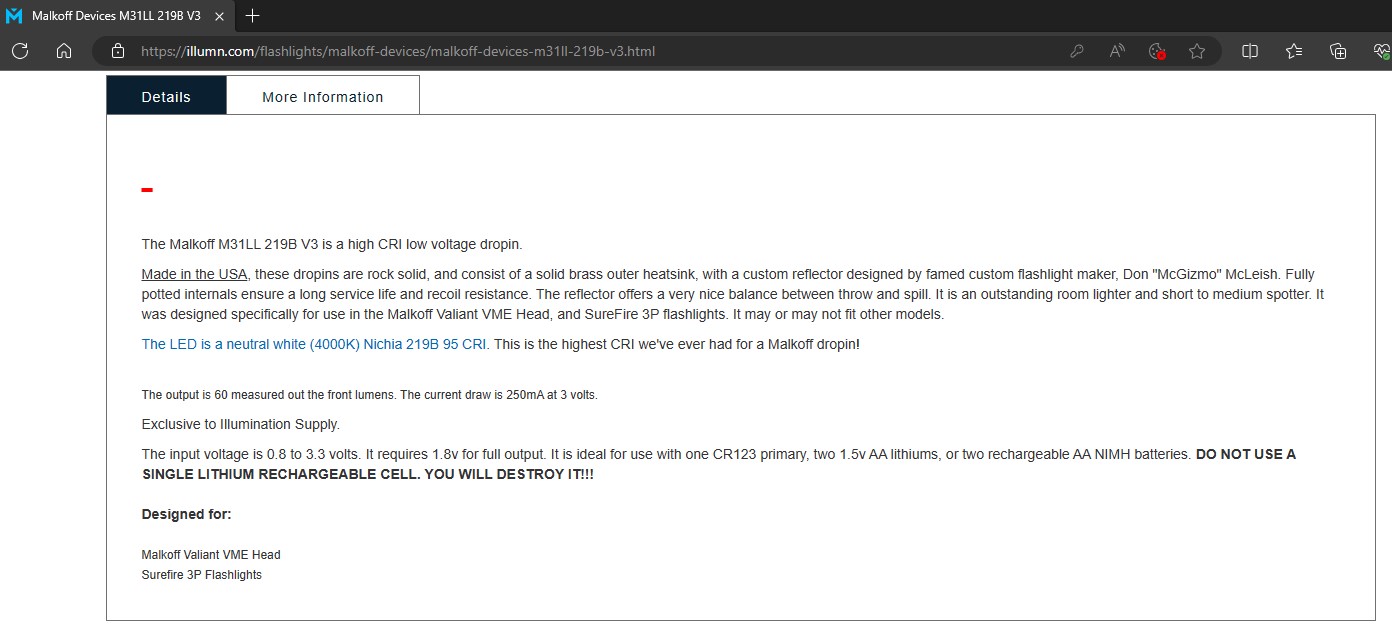
I hope they aren't like that where the outcome is that unpredictable from light to light. I know there will be small variation, but if you read a review where some light ran for 10 hours on a certain battery, buy it, and yours only runs 4 hours because it is pulling 150% more current, that would be pretty poor. I hope it was some intentional difference, even if it was just like using up parts, that led to the special note versions of Illumn drop-ins.
I get what you mean about binning, diamonds, CPUs, night vision tubes, even with LEDs the process or the starting materials have some variation that yields different outcomes. But by the time you get them they are already binned. Electronic components should already have some known and somewhat tight tolerance. I would expect any two of the same lights to vary in output a bit, as the LED seems like the most variable component (plus I imagine some cheaper bins have wider variation). But I'd expect the runtimes to be very similar as I don't think a driver should have wide variance. So the output from it would be pretty consistent, just LED variation might mean one light is 500 lumens while another is 475 or something. I have no expertise in this though. I guess I think such a large variability would have manifest itself in some way. Especially in low cost lights. And why don't we see different versions of the same light offered at different output levels from more manufacturers? What do they do with the low vs high binned products? Sell them all as the same? Why don't we see more variation across independent reviewers if that were the case? Maybe it's a very wasteful industry or maybe they sell them in different markets.